Indoor plants rarely develop problems without warning. In most cases, they show visible signs long before serious damage occurs. Yellow leaves, brown tips, drooping stems, or slow growth are your plant’s way of telling you that something needs attention.
The good news is that many common plant problems are easy to fix once you identify the real cause. Rather than treating every symptom the same way, it helps to understand what your plant is trying to tell you.
This guide covers the common plant problems seen in indoor plants, what causes them, how to diagnose the correct issue, and the practical steps you can take to help your plant recover. You’ll also learn how to prevent these problems from returning.
Quick Diagnosis Guide
The table below provides a quick overview to help with common plant problems identification.
| Symptom | Most Likely Causes | Recommended First Action |
|---|---|---|
| Yellow leaves | Overwatering, underwatering, aging leaves, poor light, nutrient deficiency | Check soil moisture before watering |
| Brown leaf tips | Dry air, inconsistent watering, fertilizer build-up, tap water minerals | Review watering habits and increase humidity if needed |
| Drooping leaves or stems | Too much or too little water, heat stress, root problems | Check soil moisture and inspect the roots if necessary |
| Slow growth | Low light, root-bound plant, nutrient deficiency | Evaluate light levels and feeding schedule |
| Crispy leaves | Underwatering, low humidity, direct sun | Water thoroughly and adjust plant placement |
| Leaf drop | Sudden environmental changes, watering stress, cold drafts | Look for recent changes in the plant’s environment |
| Mushy stems | Overwatering, root rot | Stop watering and inspect the roots immediately |
| Pale leaves | Lack of light or nutrients | Move to brighter light and fertilize if appropriate |
| Root rot | Poor drainage and consistently wet soil | Repot into fresh, well-draining soil |
| Common pests | Spider mites, mealybugs, aphids, fungus gnats | Isolate the plant and inspect leaves closely |
This quick reference can help you narrow down common plant problems before making changes to your watering or care routine.
Yellow Leaves
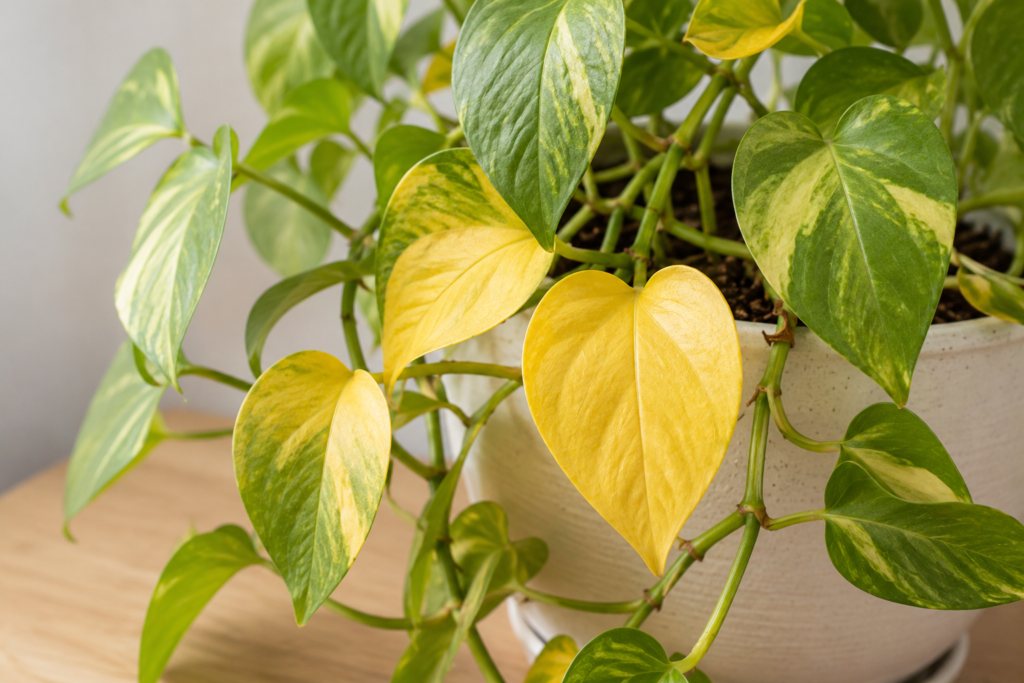
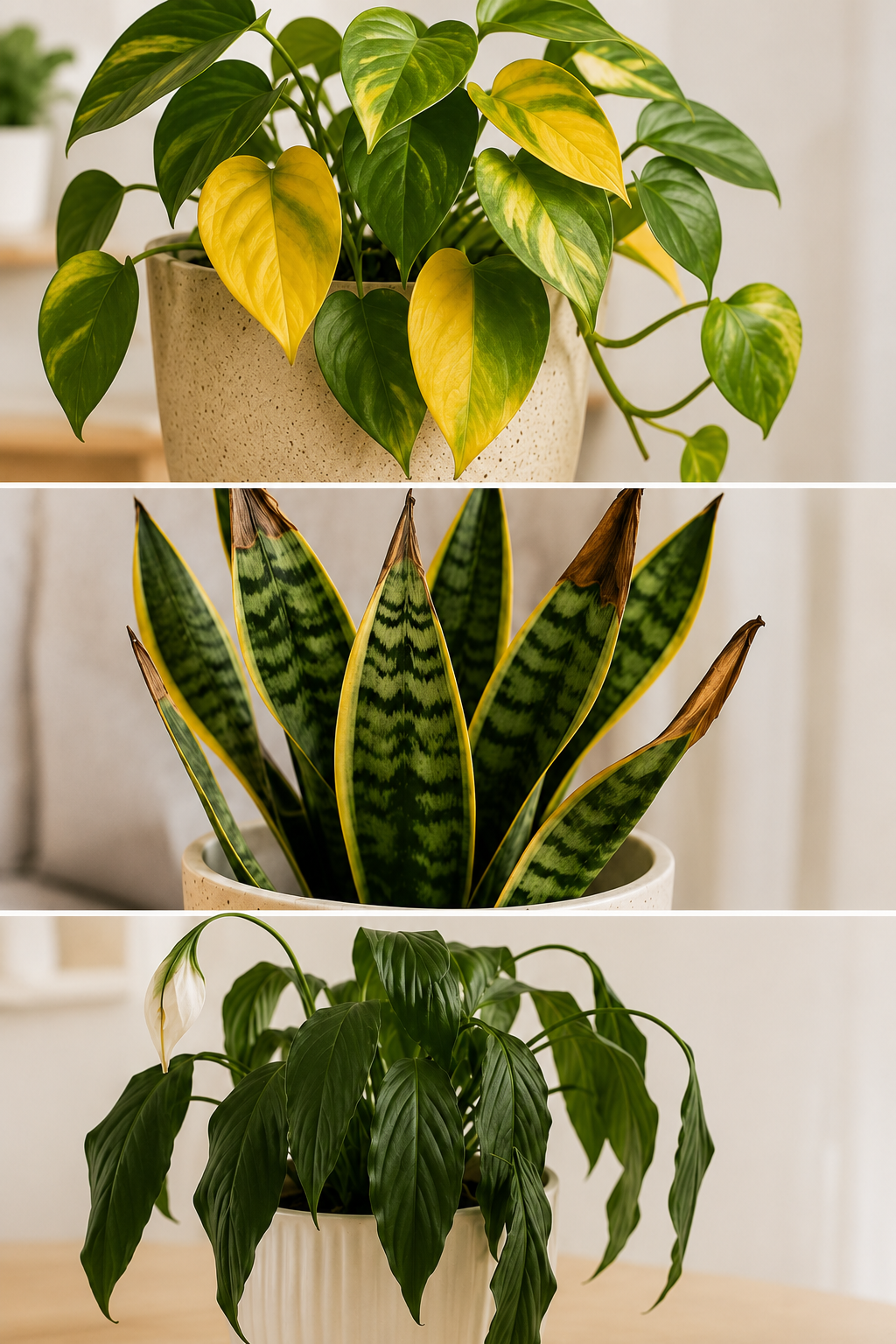
Yellow leaves are one of the most common plant problems indoor gardeners face. While they often indicate watering issues, several other factors can produce the same symptom.
What Yellow Leaves Usually Mean
Yellow leaves usually indicate that the plant is under stress. Sometimes this stress is temporary and easy to correct. Other times it points to a more serious issue affecting the roots or growing conditions.
If your Pothos is affected, our guide on Why Is My Pothos Turning Yellow? (Causes and Easy Fixes) explains the problem in greater detail.
Most Common Causes
- Overwatering
- Underwatering
- Natural aging of older leaves
- Insufficient light
- Nutrient deficiencies
- Sudden environmental changes
How to Identify the Correct Cause
Ask yourself these questions:
- Is the soil wet several days after watering?
- Is the soil completely dry?
- Are only the oldest leaves turning yellow?
- Has the plant recently been moved?
- Is new growth healthy?
Signs of Overwatering
- Soil stays wet
- Yellow leaves feel soft
- Stems may become mushy
- Plant smells musty
Signs of Underwatering
- Dry soil
- Yellow leaves become crispy
- Plant wilts
- Pot feels unusually light
Step-by-Step Solutions
If Overwatered
- Stop watering until the soil partially dries.
- Improve drainage if necessary.
- Empty excess water from saucers.
- Check the roots for rot if symptoms continue.
If the roots have become crowded or damaged, our 7 Clear Signs Your Houseplant Needs Repotting Soon guide can help you decide whether it’s time to repot.
If Underwatered
- Water thoroughly until excess water drains out.
- Allow the soil to absorb moisture evenly.
- Resume watering only when the top inch of soil dries.
For more guidance, read How Often Should You Water Indoor Plants?
If Light Is the Problem
Move the plant closer to a bright window without exposing it to harsh afternoon sun.
If your home has limited natural light, you may also like Best Indoor Plants for Beginners in Low Light.
Prevention Tips
- Water based on soil moisture, not a schedule.
- Use pots with drainage holes.
- Match the plant to the available light.
- Rotate plants occasionally for even growth.
Brown Leaf Tips
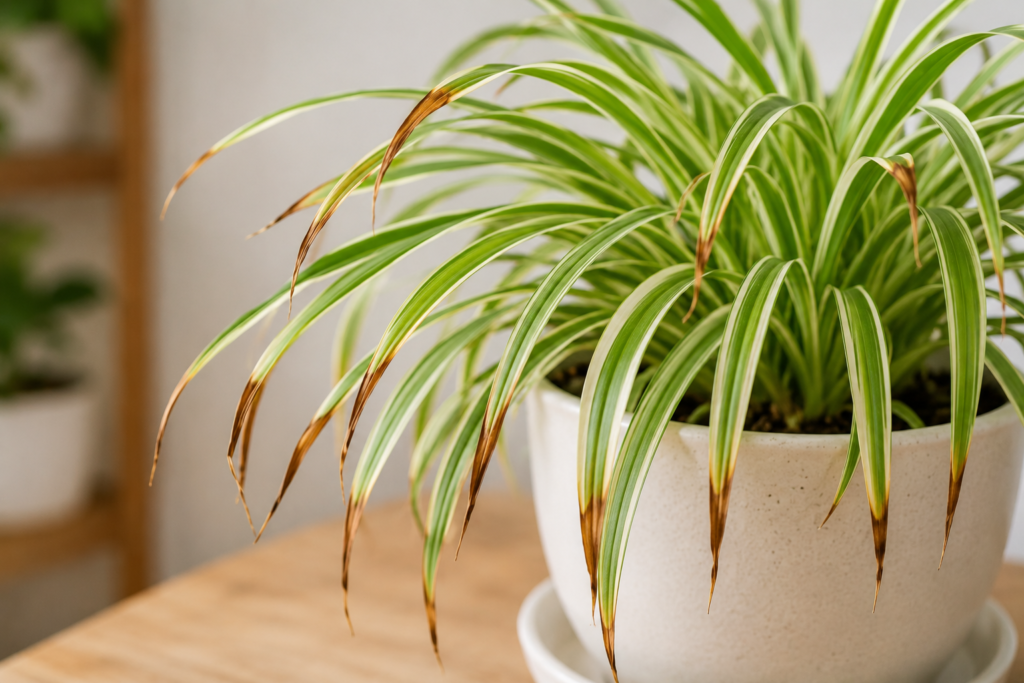
Brown tips are another one of the most common plant problems and solutions people search for because the symptom appears on many different houseplants.
Common Causes
- Low humidity
- Inconsistent watering
- Fertilizer buildup
- Minerals in tap water
- Natural aging
Spider plants are especially prone to this issue. You can learn more in Spider Plant Brown Tips (Common Causes).
How to Confirm the Cause
Check:
- Is the air especially dry?
- Has fertilizer been applied recently?
- Are only the leaf tips affected?
- Is watering inconsistent?
White crust on the soil often indicates fertilizer salts or mineral buildup.
Practical Fixes
- Water consistently.
- Flush the soil every few months to remove excess salts.
- Increase humidity with a humidifier or grouped plants.
- Reduce fertilizer if overfeeding.
Trim brown tips with clean scissors if desired, but avoid cutting into healthy green tissue.
Prevention
- Avoid letting soil become completely dry too often.
- Fertilize according to the plant’s needs.
- Use well-draining soil.
- Maintain moderate humidity.
Drooping Stems or Leaves
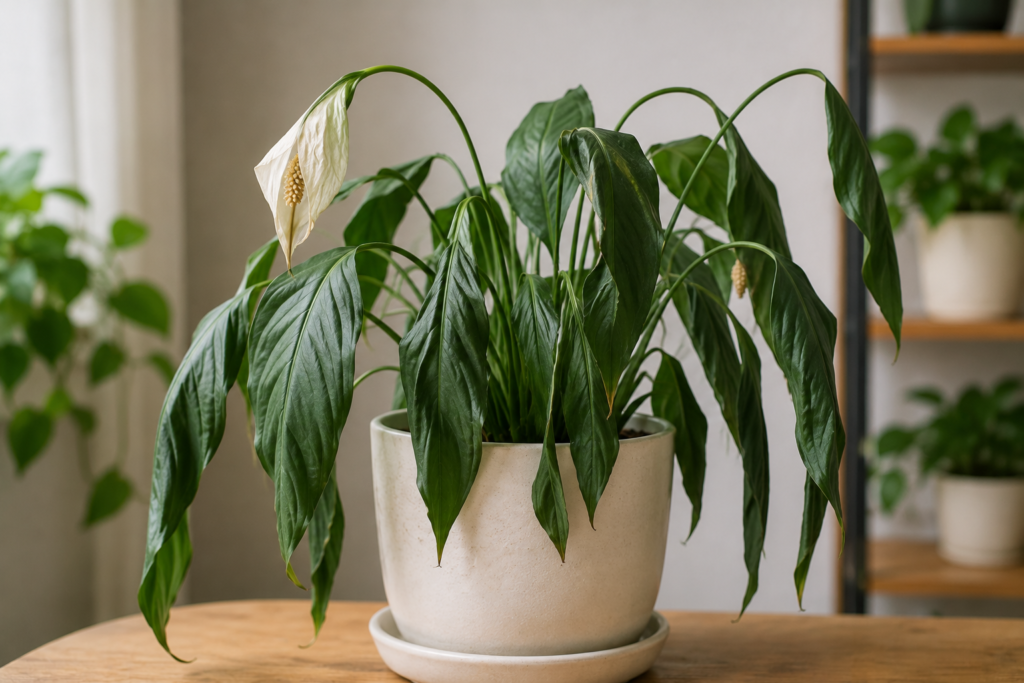
Drooping is often mistaken for underwatering, but too much water can produce the exact same symptom.
Common Causes
- Overwatering
- Underwatering
- Heat stress
- Root damage
- Recent repotting
A drooping Peace Lily may have additional causes covered in Peace Lily Drooping Even After Watering.
How to Diagnose Correctly
First, feel the soil.
Wet Soil
Likely overwatering.
Dry Soil
Likely underwatering.
Moist Soil but Still Drooping
Check:
- Light levels
- Root health
- Temperature
- Recent transplant shock
Recovery Steps
- Correct watering practices.
- Remove damaged leaves.
- Improve drainage if necessary.
- Give recently repotted plants time to recover.
- Avoid moving the plant repeatedly.
Prevention
- Water according to soil moisture.
- Avoid placing plants near heating or cooling vents.
- Repot before plants become severely root-bound.
Other Common Indoor Plant Problems
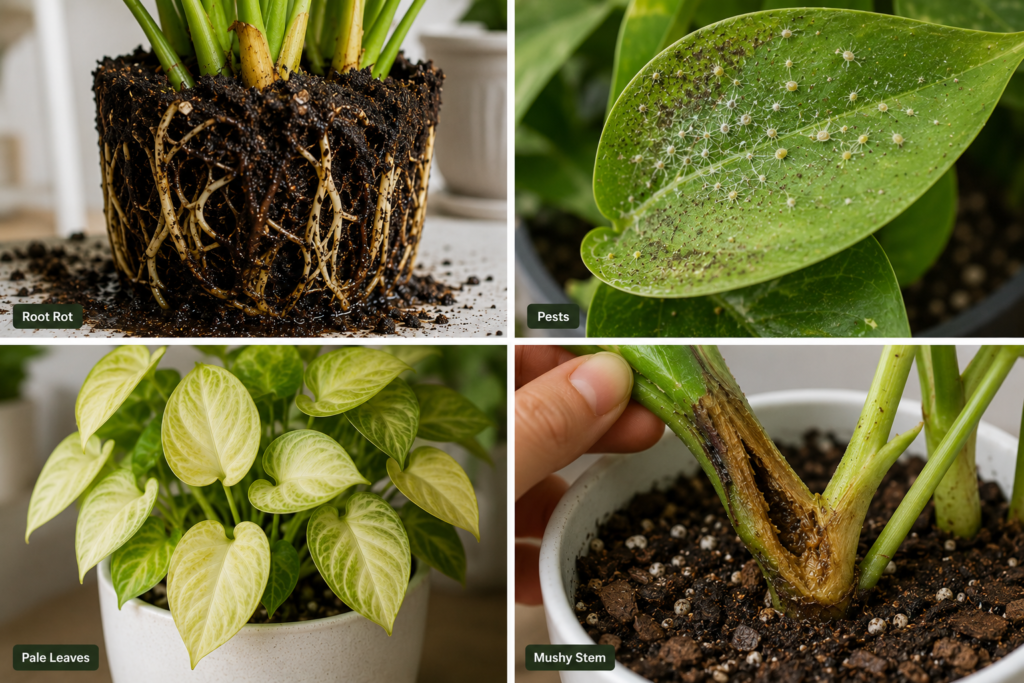
Slow Growth
What It Means
Growth naturally slows during winter, but persistent slow growth often indicates a care issue.
Likely Causes
- Low light
- Root-bound plant
- Lack of nutrients
- Small pot
Quick Solution
Increase light, feed during the growing season, and repot if roots fill the container.
Crispy Leaves
What It Means
Leaves have lost too much moisture.
Likely Causes
- Underwatering
- Dry indoor air
- Excessive direct sunlight
Quick Solution
Water thoroughly, improve humidity, and move the plant away from intense afternoon sun.
Leaf Drop
What It Means
Plants sometimes drop leaves while adjusting to stress.
Likely Causes
- Sudden temperature changes
- Overwatering
- Underwatering
- Low light
- Drafts
Quick Solution
Keep conditions stable and avoid frequent changes.
Mushy Stems
What It Means
This usually indicates advanced overwatering or stem rot.
Likely Causes
- Waterlogged soil
- Poor drainage
- Root rot
Quick Solution
Remove affected parts, inspect the roots, and repot into fresh, well-draining soil if necessary.
Pale Leaves
What It Means
The plant isn’t producing enough chlorophyll.
Likely Causes
- Low light
- Nutrient deficiency
- Overwatering
Quick Solution
Provide brighter indirect light and fertilize appropriately during active growth.
Root Rot
What It Means
Roots have begun dying because they remain constantly wet.
Likely Causes
- Overwatering
- Heavy soil
- Poor drainage
Quick Solution
- Remove the plant from the pot.
- Trim black, mushy roots.
- Repot using fresh potting mix.
Choosing the right soil can make a big difference. See Best Soil Mix for Indoor Plants for help selecting a well-draining mix.
Common Pests
What It Means
Small insects feed on leaves, stems, or roots.
Common Indoor Plant Pests
- Spider mites
- Mealybugs
- Aphids
- Fungus gnats
- Scale insects
Quick Solution
- Isolate the plant.
- Wipe leaves clean.
- Treat with insecticidal soap or neem oil if needed.
- Continue monitoring for several weeks.
How to Diagnose Plant Problems Correctly
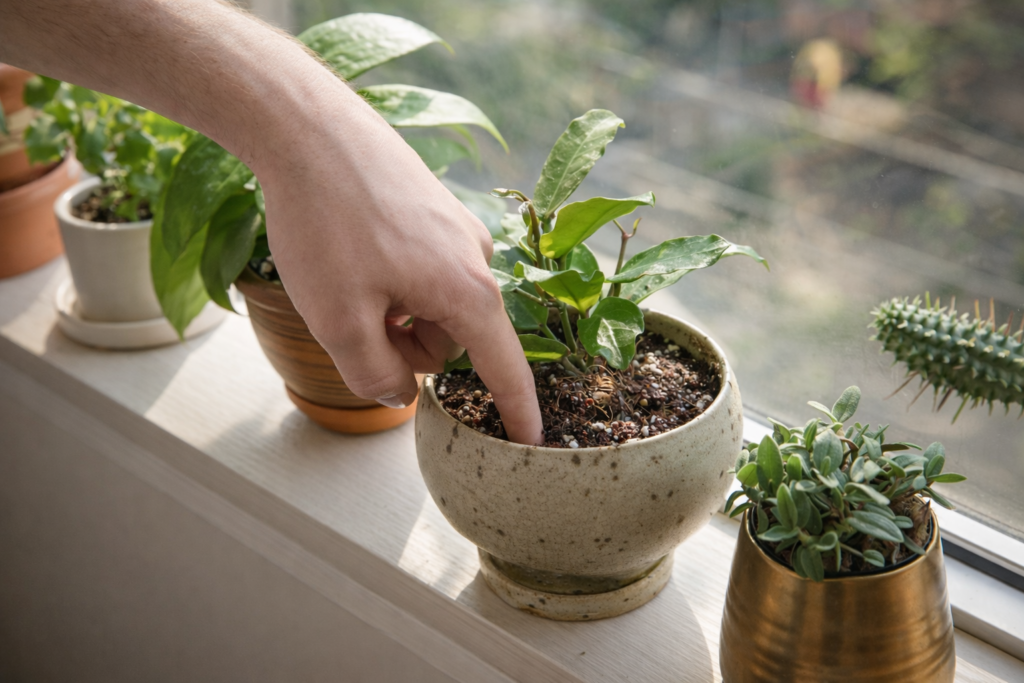
One symptom can have several possible causes. Before treating your plant, work through a simple inspection process.
Observe the Leaves
Notice:
- Which leaves are affected?
- Are they yellow, brown, pale, or spotted?
- Are older or newer leaves showing symptoms?
Patterns often provide valuable clues.
Check Soil Moisture
Insert your finger about one inch into the soil.
- Wet soil suggests waiting before watering.
- Dry soil usually indicates the plant needs water.
Avoid watering simply because several days have passed.
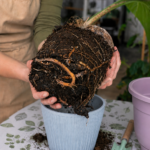
Inspect the Roots When Necessary
If symptoms continue despite proper care, gently remove the plant from its pot.
Healthy roots are:
- White
- Cream-colored
- Firm
Unhealthy roots are:
- Black
- Brown
- Soft
- Mushy
Consider Light, Temperature, and Humidity
Ask yourself:
- Has the plant been moved recently?
- Is it receiving enough indirect light?
- Is it exposed to drafts or heaters?
- Has indoor humidity dropped?
Environmental stress often explains problems that watering alone cannot.
Rule Out Multiple Causes
Several issues can occur together. For example, a plant growing in poor light may also be overwatered because the soil dries more slowly.
Instead of making several changes at once, correct one likely cause, observe the plant for a week or two, and then reassess if needed.
Preventing Common Indoor Plant Problems
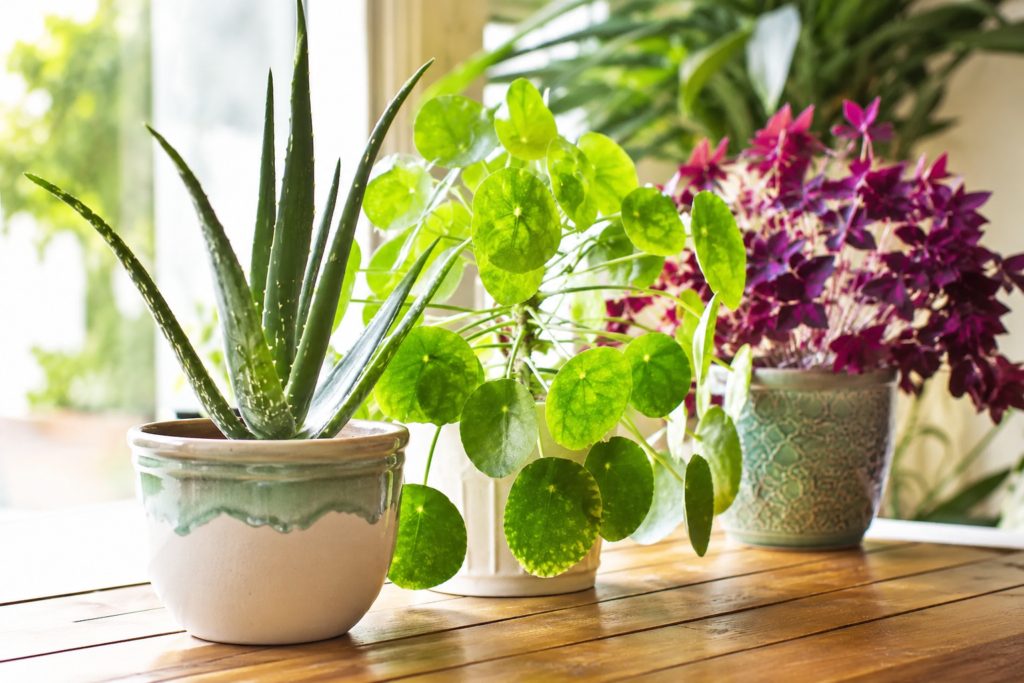
Preventing common plant problems starts with consistent watering, proper lighting, and regular inspections.
Water Properly
Water only when your plant actually needs it.
Checking soil moisture is much more reliable than following a calendar.
Provide Suitable Lighting
Different plants have different light requirements.
If you’re just starting out, consider easier species from our 10 Easiest Indoor Plants for First-Time Plant Owners list.
Use Good Drainage
Always choose containers with drainage holes and avoid leaving water sitting in saucers.
Choose the Correct Soil
Quality potting mix provides:
- Good drainage
- Air circulation
- Moisture retention
- Root support
Different plants may need slightly different soil blends.
Inspect Plants Regularly
Every week, look for:
- Yellowing leaves
- Brown tips
- Drooping
- Pests
- Mold
- Soft stems
Finding problems early makes recovery much easier.
Adjust Care Seasonally
Most indoor plants grow more slowly during winter.
This usually means:
- Less watering
- Little or no fertilizer
- Extra attention to indoor humidity
Frequently Asked Questions
Most common plant problems can be solved once the underlying cause is correctly identified.
Why are my indoor plant leaves turning yellow?
Yellow leaves are commonly caused by overwatering, underwatering, poor lighting, nutrient deficiencies, or natural aging. Check soil moisture first, since watering problems are the most frequent cause.
Can brown leaf tips turn green again?
No. Damaged leaf tissue will not recover. Once the cause is corrected, new growth should appear healthy, and you can trim the brown tips for a neater appearance.
Should I remove damaged leaves?
Yes. Remove leaves that are completely yellow, brown, or dead using clean scissors. Leaving healthy leaves in place allows the plant to continue producing energy through photosynthesis.
How do I know if I’m overwatering?
Signs include constantly wet soil, yellow leaves, mushy stems, and a musty smell from the pot. Healthy soil should dry slightly between waterings for most indoor plants.
Can plants recover from root rot?
Yes, if caught early. Remove the affected roots, repot the plant into fresh, well-draining soil, and adjust your watering routine to prevent the problem from returning.
Why is my plant drooping even after watering?
If watering doesn’t improve drooping, the soil may already be too wet, the roots may be damaged, or the plant may be experiencing heat, low light, or transplant stress. Check the soil and roots before watering again.
What is the easiest way to identify common indoor plant problems?
Start by observing the symptoms, checking soil moisture, inspecting the leaves and stems, and considering recent changes in care or environment. Looking at the whole plant instead of a single symptom usually leads to a more accurate diagnosis.
Conclusion
Learning common plant problems identification takes practice, but your plants provide helpful clues when something isn’t right. Yellow leaves, brown tips, drooping stems, and other symptoms often point to issues with watering, light, soil, or the growing environment.
Rather than making several changes at once, take time to observe the plant, check the soil, and rule out possible causes before treating it. A careful diagnosis leads to better results and prevents unnecessary stress on the plant.
With regular observation, consistent care, and a little patience, most common plant problems can be corrected before they become serious, helping your indoor plants stay healthy and continue growing for years to come.