Getting the soil right is one of the most important things you can do for healthy indoor plants. The best soil mix for indoor plants should drain well, stay light, and hold enough moisture for healthy roots. Unlike outdoor plants, indoor plants rely entirely on the soil in their pot. If that mix holds too much water, roots rot. If it dries too fast, plants struggle. Many common houseplant issues actually start with poor watering and heavy soil. You can also read our guide on how often you should water indoor plants for more help.
Many beginners make the same mistakes. Using garden soil indoors, picking dense mixes with no drainage, or relying on a single bag of generic potting soil. These usually lead to yellow leaves, slow growth, or root problems.
This guide will help you understand what actually makes the best soil mix for indoor plants, how to choose the right ingredients, and how to create a simple mix at home without overcomplicating things.
The Best Soil Mix for Indoor Plants (Quick Answer)
If you want a reliable, beginner-friendly mix, start with this:
Basic indoor plant mix:
- 2 parts potting soil
- 1 part perlite
- 1 part coco coir (or compost)
This mix works well for most indoor plants because it:
- Drains excess water
- Keeps roots airy
- Holds just enough moisture
If you only remember one thing from this guide, use this combination. It covers the essentials of the best potting soil mix for indoor plants.
What Makes a Good Indoor Plant Soil Mix
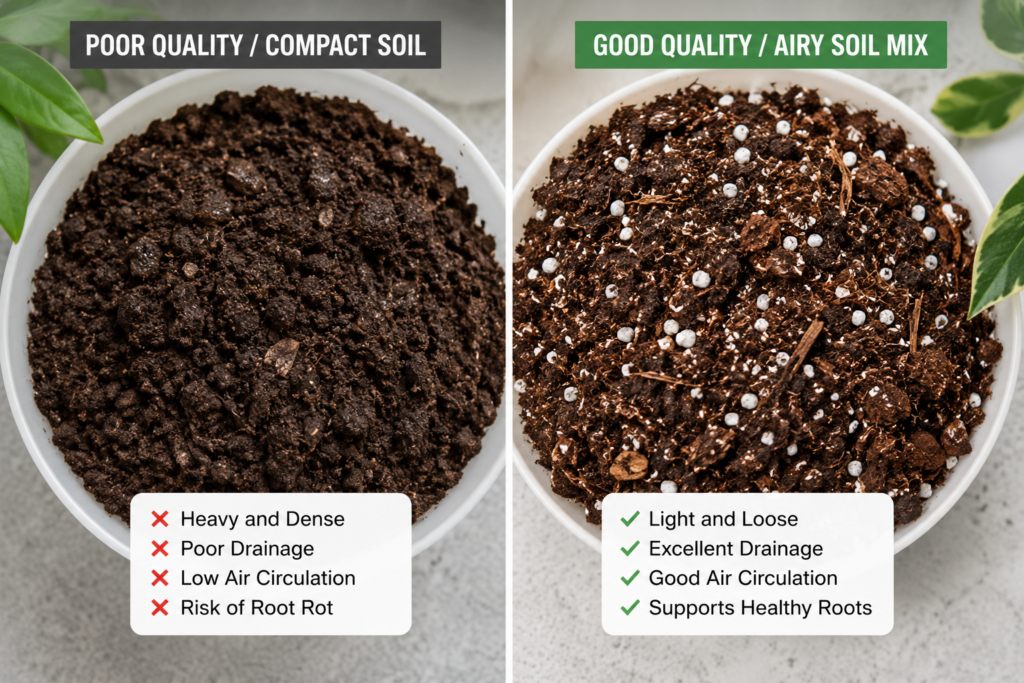
The best soil mix for indoor plants is not just “soil.” It’s a balance of different properties working together.
Drainage
Indoor plants hate sitting in water. A good mix allows excess water to flow out quickly so roots don’t rot.
Aeration
Roots need oxygen. Loose, airy soil prevents compaction and keeps roots healthy.
Moisture Retention
The soil should hold some moisture but not stay soggy. This balance reduces how often you need to water.
Nutrient Balance
Plants need nutrients, but not in heavy amounts indoors. A mix should support steady, gentle growth.
When these four elements are balanced, you get the best potting mix for indoor plants that works across different conditions.
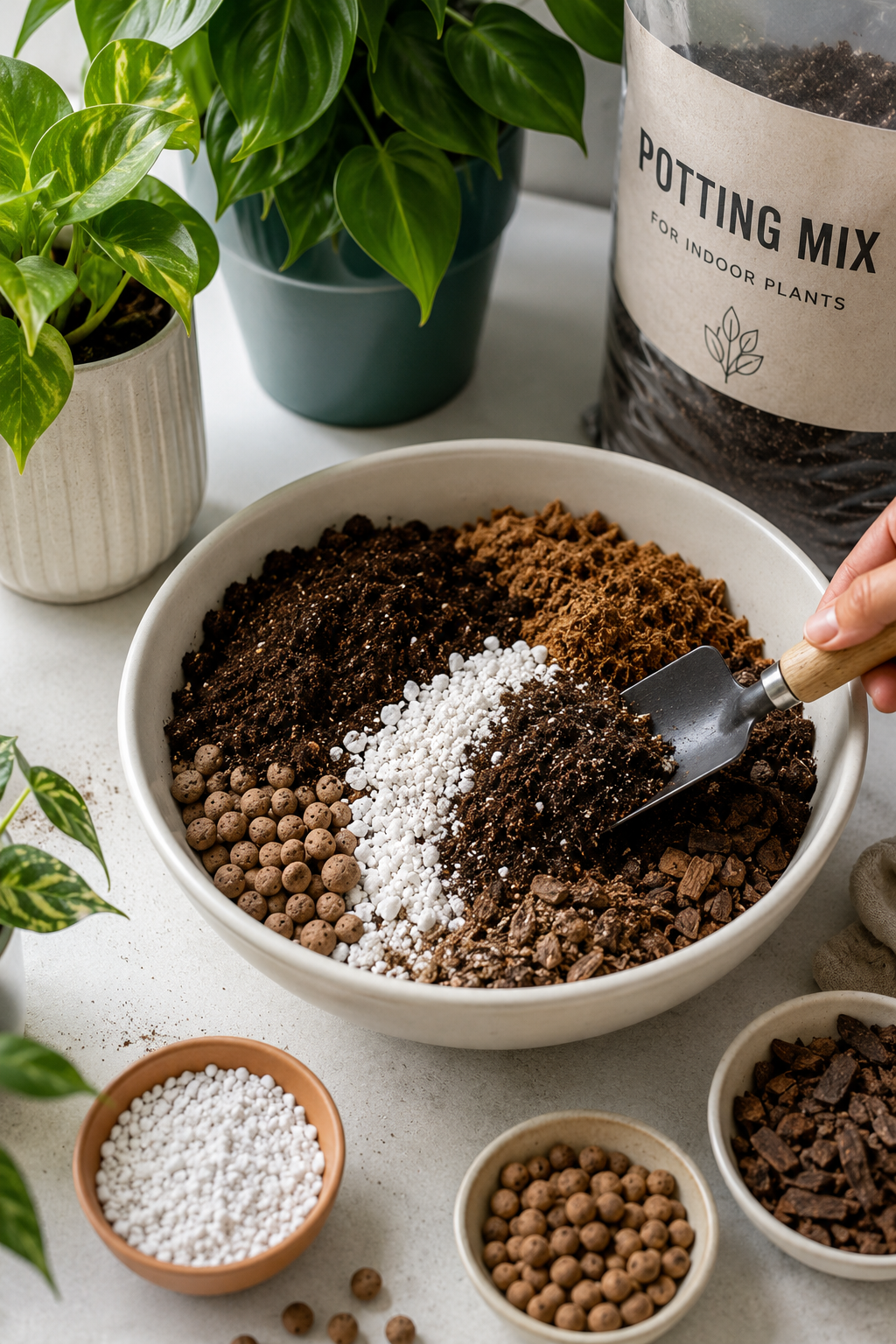
Common Ingredients in Indoor Plant Soil
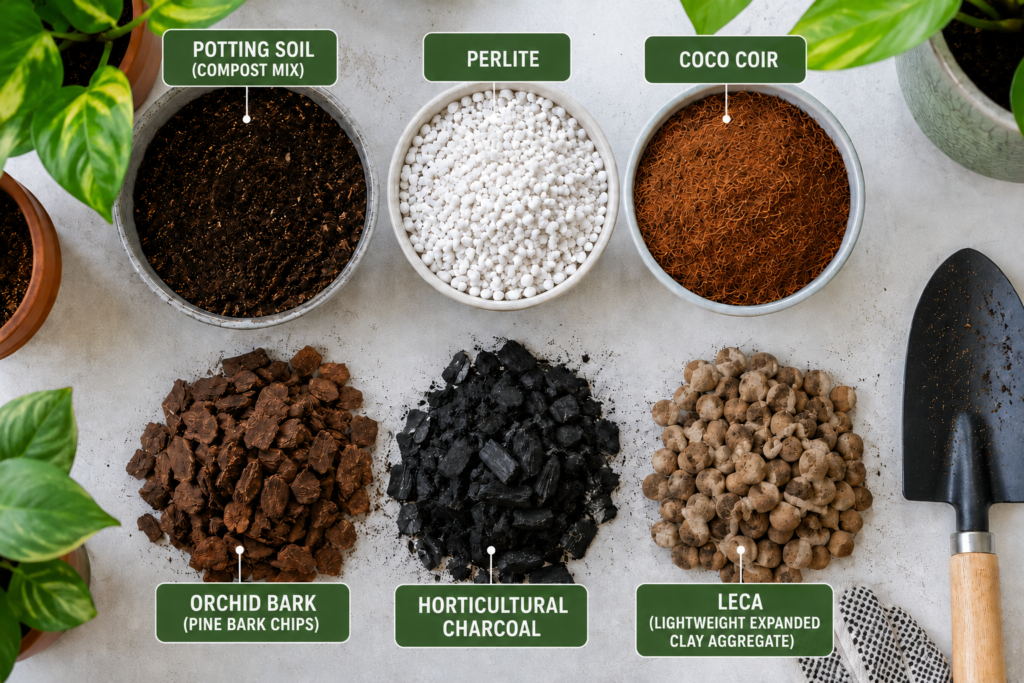
Understanding ingredients makes it much easier to adjust your mix.
Potting Soil
This is your base. It usually contains compost, peat, or coco-based material. It provides nutrients and structure.
Coco Coir
Made from coconut husk, it holds moisture well without becoming heavy. A great alternative to peat.
Perlite
Small white particles that improve drainage and airflow. Essential for avoiding compact soil.
Vermiculite
Holds more moisture than perlite. Useful for plants that like consistent moisture.
Bark (Orchid Bark)
Chunky pieces that improve aeration. Often used for orchids and tropical plants.
Horticultural Charcoal
Charcoal can help keep soil fresher by improving airflow and reducing excess moisture buildup in some mixes.
LECA
LECA consists of lightweight clay balls that improve drainage and are sometimes used instead of traditional potting mixes for indoor plants.
Each ingredient has a purpose. Mixing them properly is what creates the best potting soil for plants indoors.
Best Soil Mix Recipes for Indoor Plants
You don’t need complicated formulas. Keep it simple and adjust based on plant type.
General Indoor Plant Mix
- 2 parts potting soil
- 1 part perlite
- 1 part coco coir
Works for most houseplants like pothos, peace lilies, and philodendrons.
Succulent and Cactus Mix
- 2 parts potting soil
- 2 parts perlite (or sand)
- 1 part coco coir
This mix drains very fast, which succulents need to avoid root rot. Fast-draining soil is especially important for beginner-friendly plants that are sensitive to overwatering.
Tropical Plant Mix
- 2 parts potting soil
- 1 part bark
- 1 part perlite
Great for plants like monstera, ferns, and calatheas that like airflow and light moisture.
These simple recipes cover most indoor plants and help you build the best soil mix for indoor plants DIY without guesswork.
How to Make Your Own Soil Mix for Indoor Plants
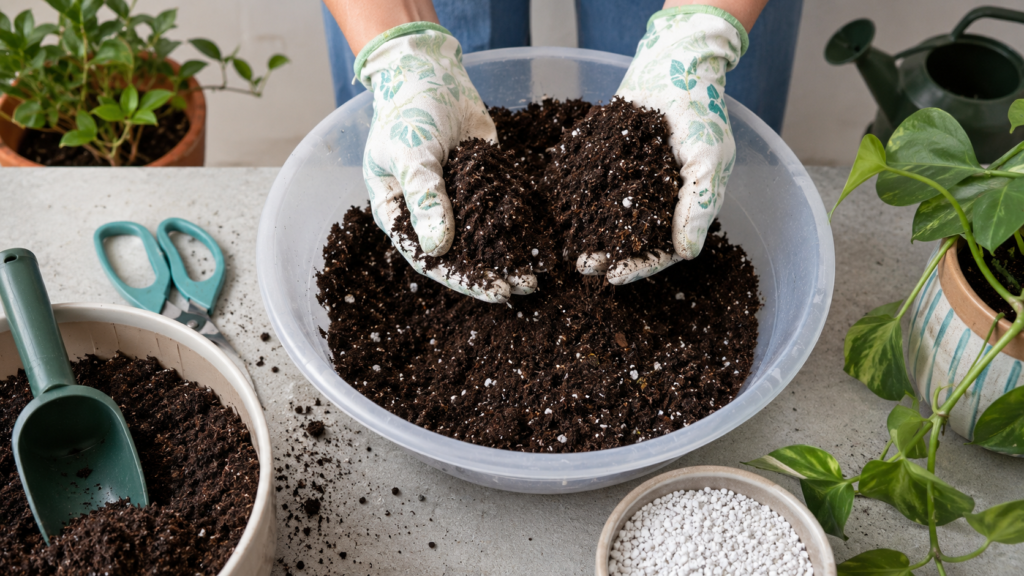
Making your own mix is easier than it sounds.
Step 1: Choose Base Material
Start with potting soil or coco coir. This forms the foundation of your mix.
Step 2: Add Drainage Components
Mix in perlite or bark. This prevents water from sitting around roots.
Step 3: Mix Properly
Use your hands or a container to mix everything evenly. Avoid clumps.
Step 4: Test Before Use
Water the mix lightly:
- If water drains quickly, it’s good
- If it stays soggy, add more perlite
- If it dries too fast, add more coir
This quick test helps you fine-tune your mix before planting.
Store-Bought vs DIY Soil Mix
Both options work. The best choice depends on your needs.
Store-Bought Soil
Pros:
- Ready to use
- Convenient
- Good for beginners
Cons:
- May be too dense
- Often needs extra perlite
DIY Soil Mix
Pros:
- Customizable
- Better drainage control
- Often healthier for roots
Cons:
- Requires effort
- Needs basic understanding
A practical approach: start with store-bought soil and improve it. That alone can give you the best potting soil mix for indoor plants without starting from scratch.
Common Soil Mistakes to Avoid
Using Garden Soil Indoors
Garden soil is too dense and can carry pests. It also drains poorly in pots.
Poor Drainage
Skipping perlite or bark leads to soggy soil and root rot.
Over-Compacting Soil
Pressing soil too tightly removes air pockets, suffocating roots.
Using One-Type Soil for All Plants
Different plants have different needs. Succulents and tropical plants shouldn’t share the same mix.
Avoiding these mistakes will prevent most indoor plant problems before they start.
How to Choose the Right Soil for Different Plants
You don’t need complex rules. Just match soil to plant type.
Leafy Plants
Use a balanced mix with moderate moisture retention. Example: pothos, spider plant.
Succulents
Use fast-draining, gritty soil. Add extra perlite or sand.
Flowering Plants
Use a nutrient-rich but well-draining mix. Avoid overly dry soil.
When in doubt, slightly more drainage is safer than too much moisture.
Frequently Asked Questions
What is the best soil mix for indoor plants?
For most indoor plants, a simple mix of potting soil, perlite, and coco coir works well. It creates a balance between drainage, airflow, and moisture retention without making the soil too heavy or compact.
Can I reuse old soil?
Yes, but it helps to refresh it before using it again. Remove old roots and mix in some fresh potting soil and perlite to improve drainage and structure. Avoid reusing soil from diseased plants.
Is potting soil enough on its own?
Usually not. Many bagged potting soils hold too much moisture indoors. Adding ingredients like perlite or coco coir helps keep the mix lighter and improves airflow around the roots.
How often should I change soil?
Most indoor plants benefit from fresh soil every 12 to 18 months. Over time, soil becomes compact and drains less effectively, even if the plant still looks healthy.
What is better, coco coir or peat moss?
Coco coir is usually easier to work with indoors because it stays light and resists compacting. It also holds moisture well without becoming overly dense around the roots.
How do I know if my soil is bad?
Bad soil often stays wet for too long or becomes hard and compact. Signs include water pooling on the surface, slow growth, yellow leaves, or soil pulling away from the edges of the pot.
Conclusion
The best soil mix for indoor plants does more than just hold a plant in place. It controls water, airflow, and root health. Most indoor plant problems come back to poor soil.
You don’t need complicated formulas. Start simple, observe your plant, and adjust when needed. A balanced mix with good drainage and airflow will work for most situations.
Focus on consistency, not perfection. Once your soil is right, everything else becomes much easier.