Repotting is one of those plant care tasks that feels easy to delay. If your plant still has green leaves, it may seem fine. But many houseplants show warning signs long before they fully outgrow their pot. When the roots run out of space, the soil starts to break down, and water can no longer move through the pot the way it should.
This houseplant repotting guide will help you tell the difference between a plant that just looks a little tired and one that truly needs a new pot. You will learn the most common signs, what each one means, how to confirm it, and what to do next without rushing into unnecessary repotting.
The Short Answer
Your plant may need repotting if you notice roots coming out of the drainage holes, water running through the pot too fast, soil drying unusually quickly, slowed growth, roots circling the pot, the plant becoming top-heavy, or soil that has turned compacted and tired.
In simple terms, repot when the roots have filled the container or when the soil no longer supports healthy watering and root growth.
Why Repotting Matters
Houseplant repotting is not just about giving a plant a bigger pot. It supports the roots, which do most of the work below the surface.
Healthy roots need space, oxygen, moisture, and nutrients. Over time, a small pot can become crowded. The roots may wrap around themselves, the soil may lose structure, and water may stop soaking in properly. When that happens, the plant can struggle even if you are watering it correctly.
Repotting helps with:
- Root health: Roots need room to spread and breathe.
- Water absorption: Fresh soil holds and releases water more evenly.
- Nutrient availability: New potting mix gives the plant access to fresh nutrients.
- Growth and stability: A plant with a strong root system can grow more steadily and stay upright better.
Understanding these benefits makes it easier to see why houseplant repotting is an important part of long-term indoor plant care.
If you are also adjusting your watering habits, it may help to review your watering routine first. A plant that seems thirsty is not always root-bound. Sometimes the issue is care, not container size. See also: [How Often Should You Water Indoor Plants?] and [Best Soil Mix for Indoor Plants].
7 Signs Your Houseplant Needs Repotting Soon
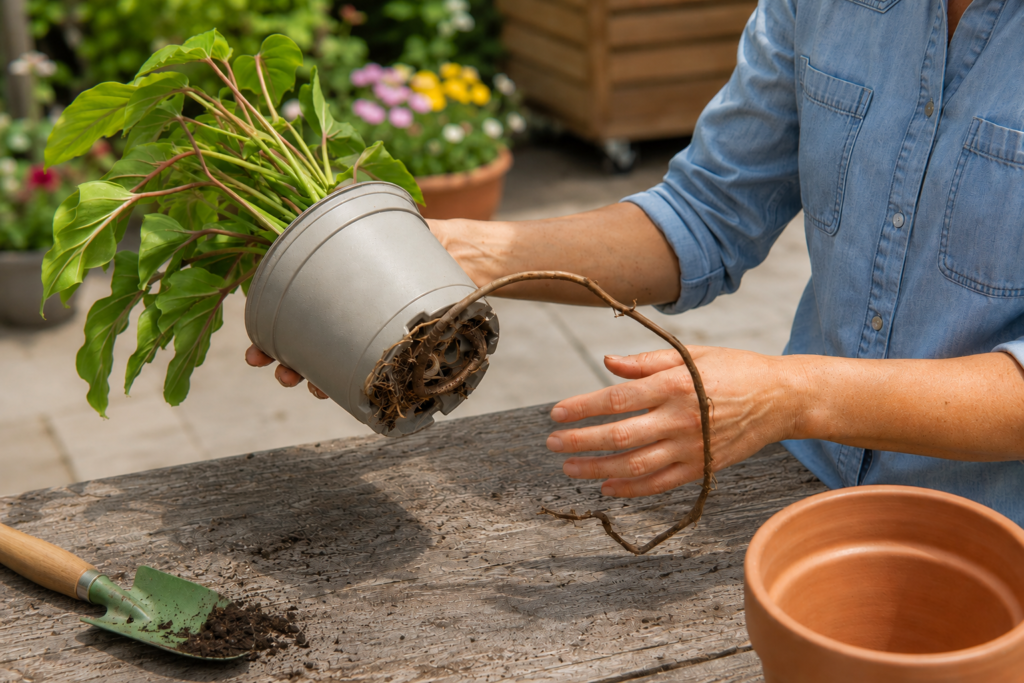
Sign #1: Roots Are Growing Out of the Drainage Holes
What it means
This is one of the clearest signs that the plant has outgrown its pot. The roots are actively searching for more room.
How to confirm it
Lift the pot and check the bottom. If you see roots poking through the drainage holes or curling tightly around the base, the plant is likely root-bound.
What to do next
Plan to repot into a container that is only one size larger. Do not jump to a very large pot. A pot that is too big can hold excess moisture and increase the risk of root problems.
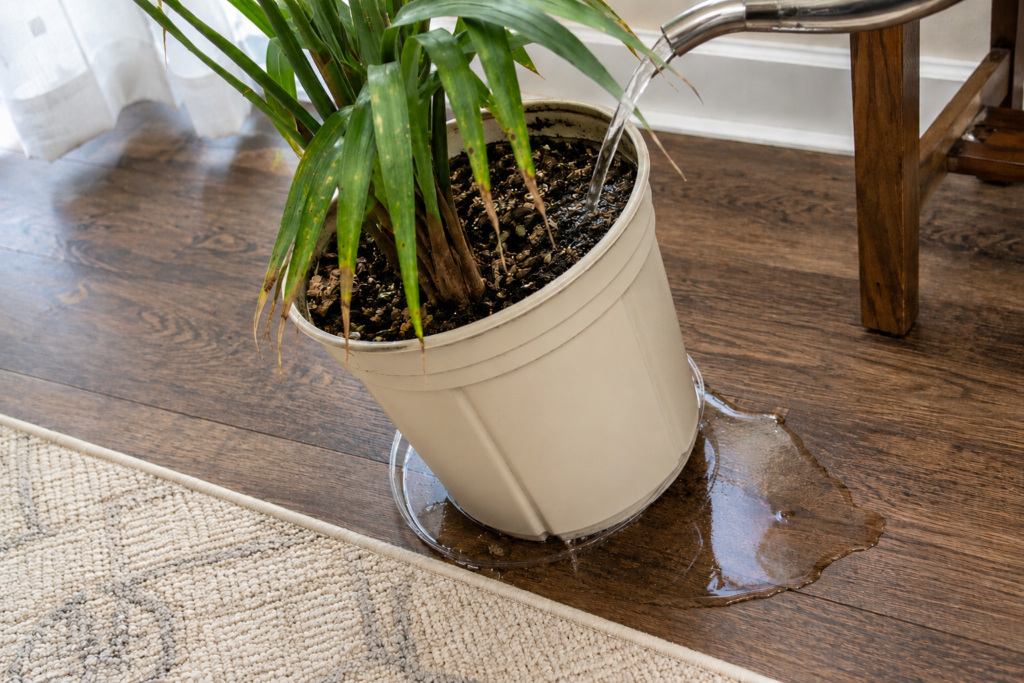
Sign #2: Water Runs Through the Pot Too Quickly
What it means
When soil becomes crowded with roots, there is less space left to hold moisture. Water may rush through before the roots can absorb it.
How to confirm it
Water the plant slowly and watch what happens. If water drains out almost immediately and the soil still feels dry soon after, the pot may be too full of roots or the soil may have broken down.
What to do next
Check the root ball. If the roots fill most of the pot, repotting is probably needed. If the roots are not crowded but the mix has become dry, dusty, or water-repelling, the problem may be old potting mix rather than pot size. This is one of the most common indicators that houseplant repotting may be necessary.
Sign #3: Soil Dries Unusually Fast
What it means
Fast-drying soil often means the roots have taken over most of the container. With very little soil left, there is less moisture storage.
How to confirm it
Notice how soon the pot dries after watering. If a plant that used to stay moist for several days now dries out in a day or two, that is a useful clue. Check whether the plant is also getting smaller leaves, slower growth, or a wilted look between waterings.
What to do next
If the root system is crowded, repotting will help. If not, the mix may simply be too old or too light for that plant. Some plants, especially fast growers, may also need a fresher houseplant repotting mix rather than just a larger pot.
Sign #4: Growth Has Slowed Down or Stopped
What it means
A healthy plant usually puts out new leaves, stems, or visible growth during its active season. If growth has stalled for no clear reason, the roots may not have enough room to keep expanding.
How to confirm it
Look at the plant’s recent history. Has it stopped producing new leaves even though light, watering, and feeding are normal? Compare it with how it looked a few months ago. A plant that has become stagnant for no obvious reason may be stuck in a tight pot.
What to do next
Do a root check. If the roots are crowded, repot. If the root system is still loose but growth has slowed, look at light levels, temperature, and feeding first.
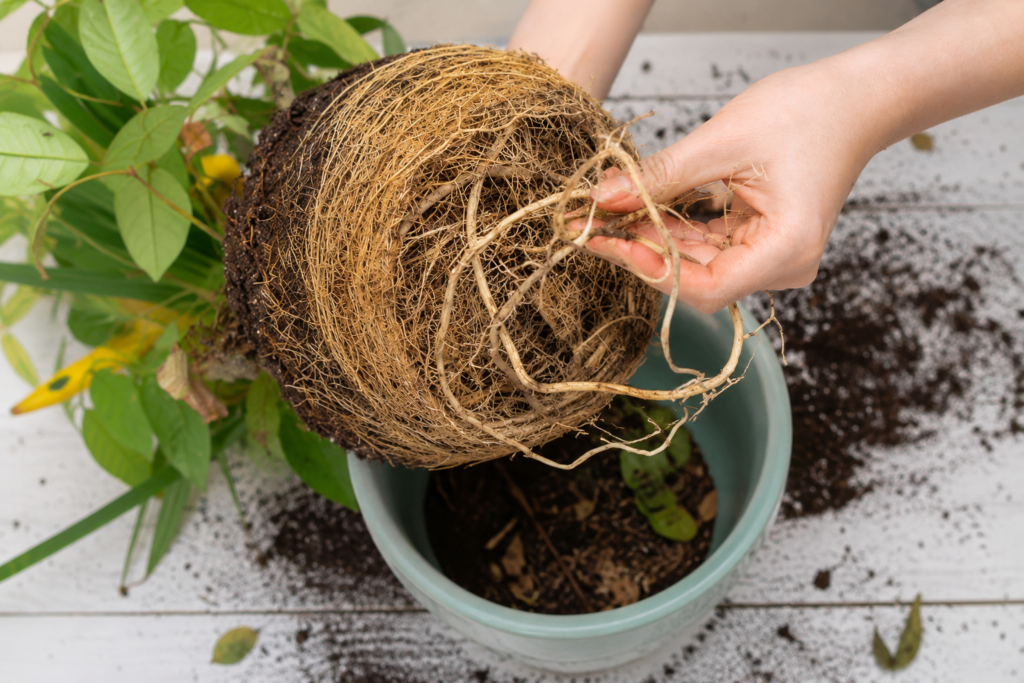
Sign #5: Roots Are Circling the Root Ball
What it means
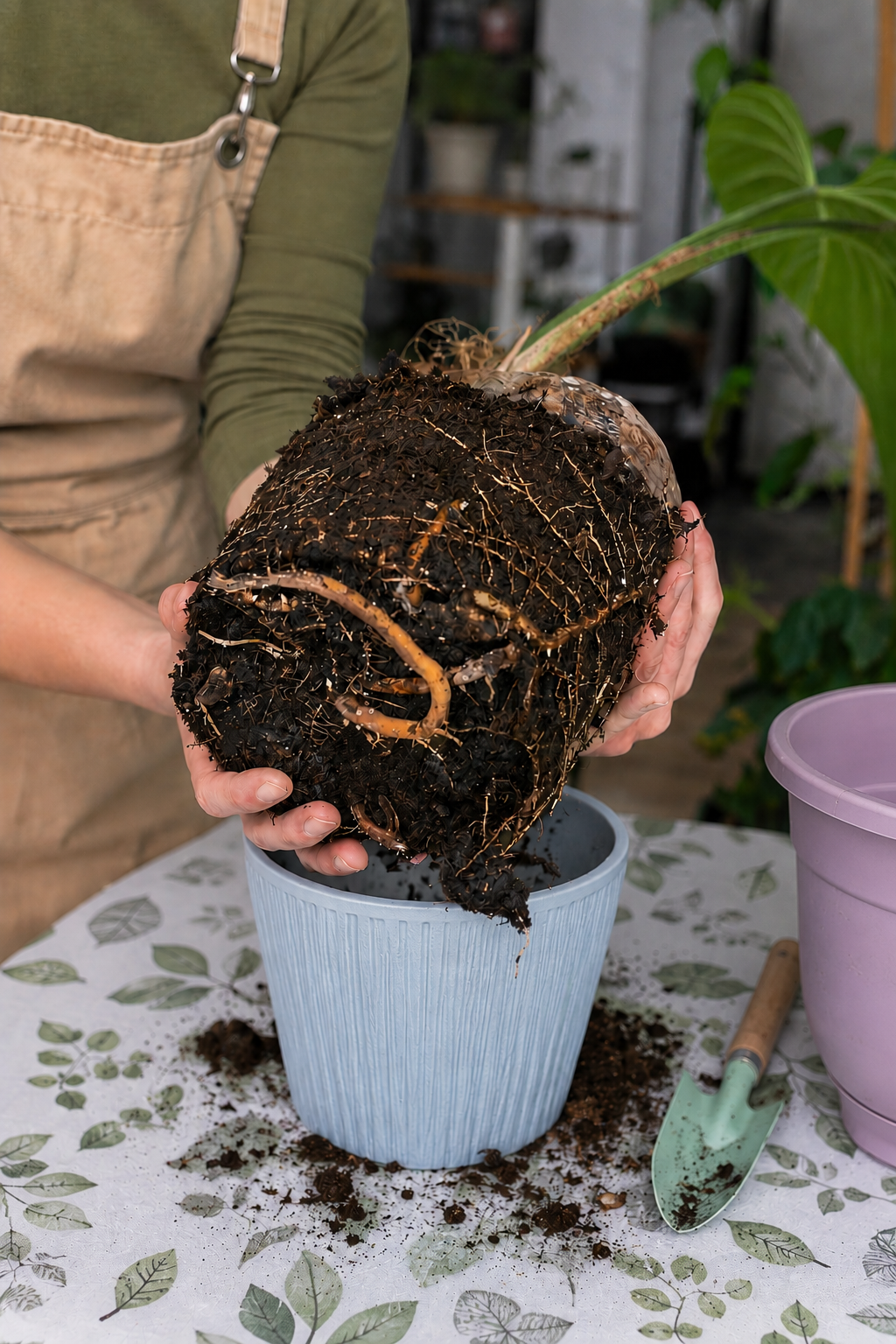
Roots naturally spread outward, but in a too-small pot they begin to circle the inside edge instead. This can eventually lead to a dense, tangled root ball.
How to confirm it
Gently slide the plant out of its pot. If you see roots wrapping around the outside in a tight ring, it is a strong sign the plant needs repotting.
What to do next
Loosen the outer roots carefully before placing the plant in fresh mix. If the roots are heavily tangled, tease them apart gently with your fingers. Do not break them aggressively. The goal is to encourage outward growth in the new pot.
Sign #6: The Plant Becomes Top-Heavy or Tips Over Easily
What it means
A plant can become unstable when the pot is too small for the top growth or when the root system is too cramped to anchor it properly.
How to confirm it
See whether the plant leans to one side, topples when bumped, or feels awkwardly heavy compared with the pot size. This is especially common with fast-growing plants that have long stems or large leaves.
What to do next
Repot into a slightly wider or heavier container if needed. Sometimes the fix is not only more space but also better balance. For plants like snake plants, a plant that keeps falling over can be a sign that the pot is too light or the root space is too restricted. Related reading: [Snake Plant Leaves Falling Over (Causes and Fixes)] and [Snake Plant Care Guide].
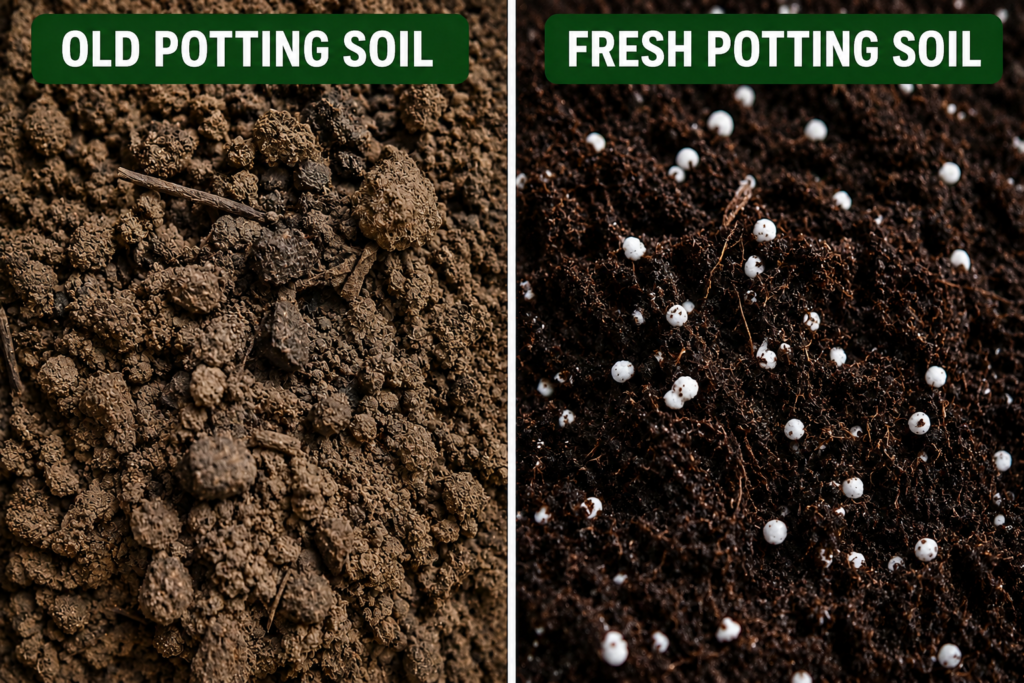
Sign #7: The Soil Breaks Down, Compacts, or Looks Old
What it means
Potting mix does not last forever. Over time, it breaks down, becomes dense, and loses the airy structure roots need. This can happen even if the pot is not extremely root-bound yet.
How to confirm it
Look closely at the surface. If the soil is crusty, compacted, muddy after watering, or pulls away from the sides of the pot, it may be too worn out. If it smells sour or stays soggy for too long, that is another sign the mix has aged.
What to do next
Refresh the plant with new soil during repotting. A fresh, well-draining houseplant repotting soil helps the roots breathe and gives the plant a healthier growing base. If you need help choosing the right mix, see [Best Soil Mix for Indoor Plants].
How to Check If Your Plant Really Needs Repotting
Before starting houseplant repotting, it helps to inspect the plant as a whole. One sign alone does not always mean the pot is too small.
Start with a visual check. Look for roots at the drainage holes, soil that dries too fast, and a plant that has become unstable. Then gently slide the plant out of its pot if possible. You do not need to fully unravel the root ball unless you are already planning to repot.
A plant may not need repotting if:
- It is growing slowly because of low light.
- It looks thirsty because the room is hot or dry.
- It droops because of underwatering, overwatering, or poor drainage.
- It has been recently repotted.
- It is a plant that naturally prefers being a little snug, such as some snake plants or peace lilies.
This is where careful observation matters. A warning sign can sometimes point to another problem. For example, yellow leaves may mean watering stress, poor drainage, or age, not only root crowding.
When Is the Best Time to Repot Indoor Plants?
The best time for houseplant repotting is usually during active growth, typically in spring or early summer. At that time, roots recover faster and the plant adjusts more easily.
Repotting is less ideal in late fall or winter, when many houseplants grow more slowly. That said, some situations cannot wait. If a plant is badly root-bound, tipping over, or suffering from broken-down soil, repotting may still be the right move.
Newly purchased plants can also be tricky. Some are fine in their nursery pot for a while, while others are already crowded or planted in poor-quality mix. Give a new plant a little time to adjust unless the roots are clearly bursting out of the pot.
How to Repot Without Stressing Your Plant
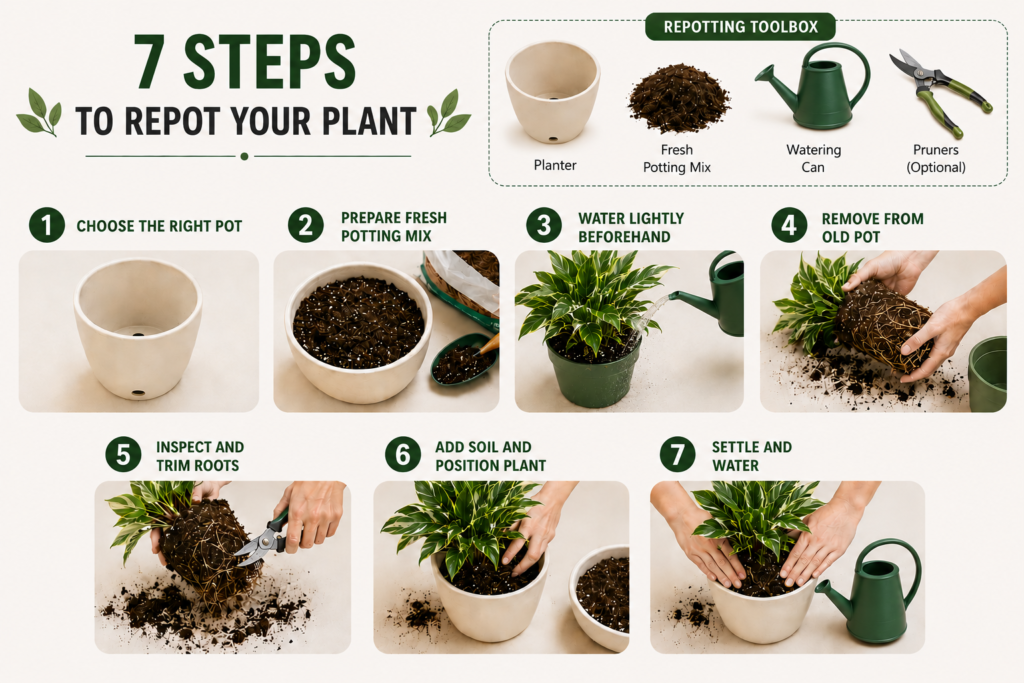
Here is a simple houseplant repotting step by step process for beginners. Proper houseplant repotting reduces stress and helps roots establish quickly in their new container.
- Choose a pot with drainage holes and only one size larger than the current pot. Too much extra space can hold too much water.
- Prepare fresh potting mix. Use a blend that suits the plant’s needs. A standard indoor mix works for many plants, but some need extra perlite, bark, or other additions for drainage.
- Water the plant lightly a few hours before repotting if the soil is very dry. This makes the root ball easier to handle.
- Gently remove the plant from its old pot. If it resists, tap the sides or squeeze the pot slightly. Do not yank hard.
- Inspect the roots. Trim away only dead, mushy, or badly damaged roots. Healthy roots are usually firm and light-colored.
- Place a layer of fresh mix in the new pot, position the plant at the same depth it was growing before, and fill in around the sides with more soil.
- Press lightly to remove air pockets, then water thoroughly so the soil settles around the roots.
After repotting, keep the plant in steady light and avoid direct harsh sun for a few days if it seems stressed.
Common Repotting Mistakes to Avoid
One of the biggest mistakes is choosing a pot that is too large. A huge pot can stay wet for too long and make root care harder, especially for beginners. Successful houseplant repotting depends on choosing the correct pot size and soil mix.
Another mistake is reusing tired old soil. Fresh mix gives the roots the structure and drainage they need. Old soil may already be compacted or depleted.
Repotting at the wrong time can also slow recovery. If the plant is already stressed from low light, pests, or watering issues, fix those problems too.
Finally, avoid damaging the roots too much. Some root disturbance is normal, but rough handling can set the plant back.
If your plant is already struggling with other signs, such as yellowing leaves or drooping, check those symptoms first so you do not repot unnecessarily.
Frequently Asked Questions
How often should indoor plants be repotted?
Many indoor plants need repotting every one to two years, but it depends on the species and how quickly it grows. Fast-growing plants may need it sooner, while slower growers can stay in the same pot longer.
Can a plant recover without repotting?
Sometimes, yes. If the issue is actually light, watering, or temperature, correcting that problem may help. But if the roots are crowded or the soil has broken down, the plant will usually keep struggling until it gets a better container and fresh mix.
Should I water immediately after repotting?
Yes, in most cases. Watering helps settle the soil and reduce air pockets around the roots. Just make sure the pot drains well so excess water does not sit at the bottom.
How do I know if my plant is root-bound?
Look for roots coming from the drainage holes, a root ball that holds the exact shape of the pot, water running through too quickly, and growth slowing down. When you remove the plant, dense circling roots are another clear sign.
Is repotting the same as changing soil?
Not exactly. Repotting usually includes moving the plant into a new container and replacing old mix with fresh soil. Sometimes you may refresh the top layer of soil, but that is not the same as a full repot.
What size pot should I use?
Choose a pot that is just one size larger than the current one. The new pot should give the roots a little more room without creating a moisture problem.
Can I repot a plant that is flowering?
It is usually better to wait unless the plant is in real trouble. Flowering plants may drop buds or flowers if repotted at the wrong time. If you can wait until after blooming, that is often easier on the plant.
Conclusion
The signs of a plant that needs repotting are usually easy to spot once you know what to look for. Roots showing at the drainage holes, water moving through too fast, soil drying quickly, slowed growth, circling roots, top-heavy stems, and tired compacted mix are all common clues.
The key is to look at the full picture before acting. Not every droopy or slow plant needs a bigger pot right away. In many cases, timely houseplant repotting can prevent watering problems, root crowding, and stalled growth. Careful checking can save you from repotting too soon and help you fix the real problem with confidence.
When the signs do point to crowded roots or worn-out soil, a careful repotting can give your plant a fresh start.