Snake plants are one of the easiest and most reliable houseplants you can grow. They handle neglect well, tolerate low light, and still look clean and architectural in almost any room. That’s why they’re often recommended for beginners, busy plant owners, and apartment dwellers.
This snake plant care guide walks you through everything you need to know, from light and watering to propagation and problem-solving. If you follow these basics, your plant should stay healthy for years with minimal effort.
About Snake Plant
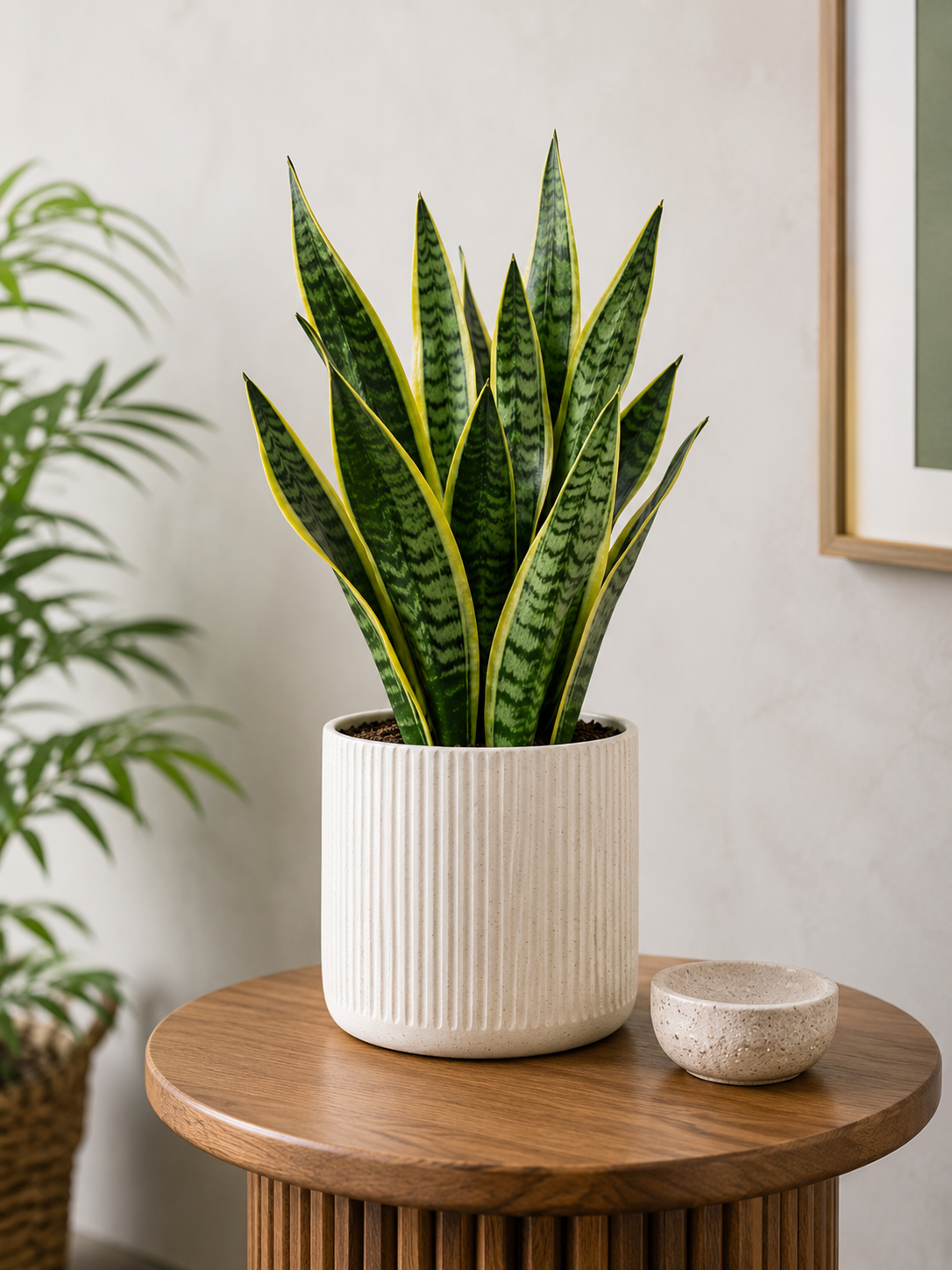
Scientific name: Sansevieria trifasciata (now classified under Dracaena)
Common names: Snake plant, Mother-in-law’s tongue, Sansevieria
Origin and habitat:
Snake plants come from West Africa, where they grow in dry, rocky conditions. This explains why they prefer less water and can tolerate neglect.
Growth style:
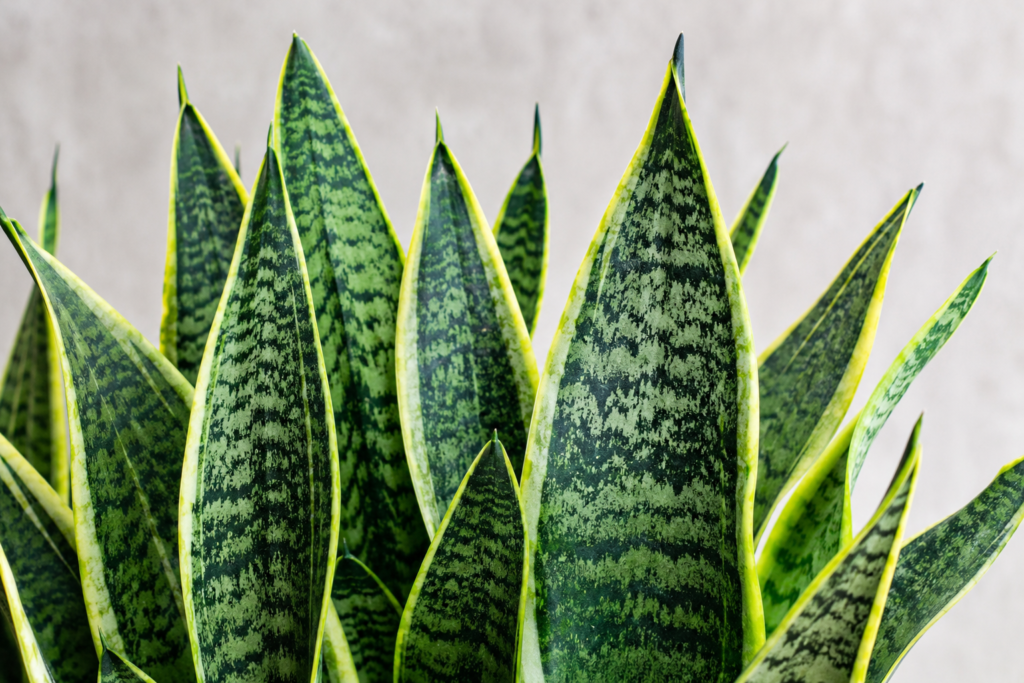
They grow upright with stiff, sword-like leaves. No trailing or spreading habit, which makes them great for tight indoor spaces.
Key characteristics:
- Thick, water-storing leaves
- Slow to moderate growth
- Extremely drought-tolerant
- Airy, minimal look that suits modern interiors
Understanding where this plant comes from will make the rest of this snake plant care guide much easier to follow.
Light Requirements
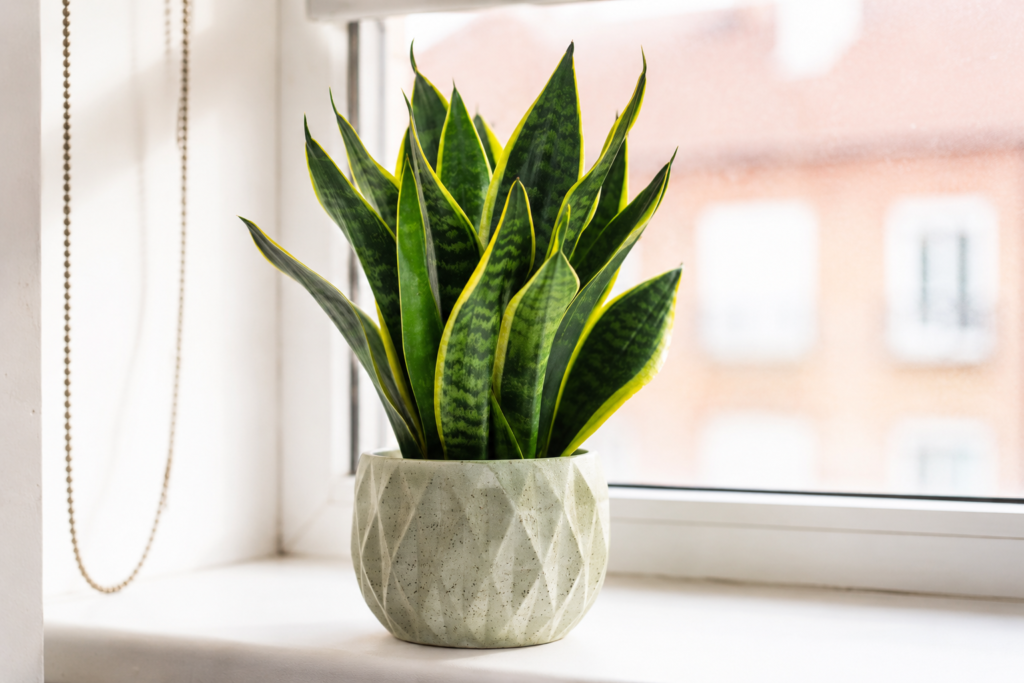
One of the most important parts of any snake plant care guide is understanding how much light your plant actually needs.
Ideal indoor lighting:
Bright indirect light is best. A spot near a window with filtered light works perfectly.
Tolerance levels:
- Low light: Survives, but grows slowly
- Bright indirect light: Ideal growth
- Direct harsh sun: Can scorch leaves
Signs of lighting issues:
- Too much light: Leaves look bleached or scorched
- Too little light: Slow growth, dull color
If unsure, aim for moderate light. Snake plants adapt better to lower light than excess sun.
Watering Guide
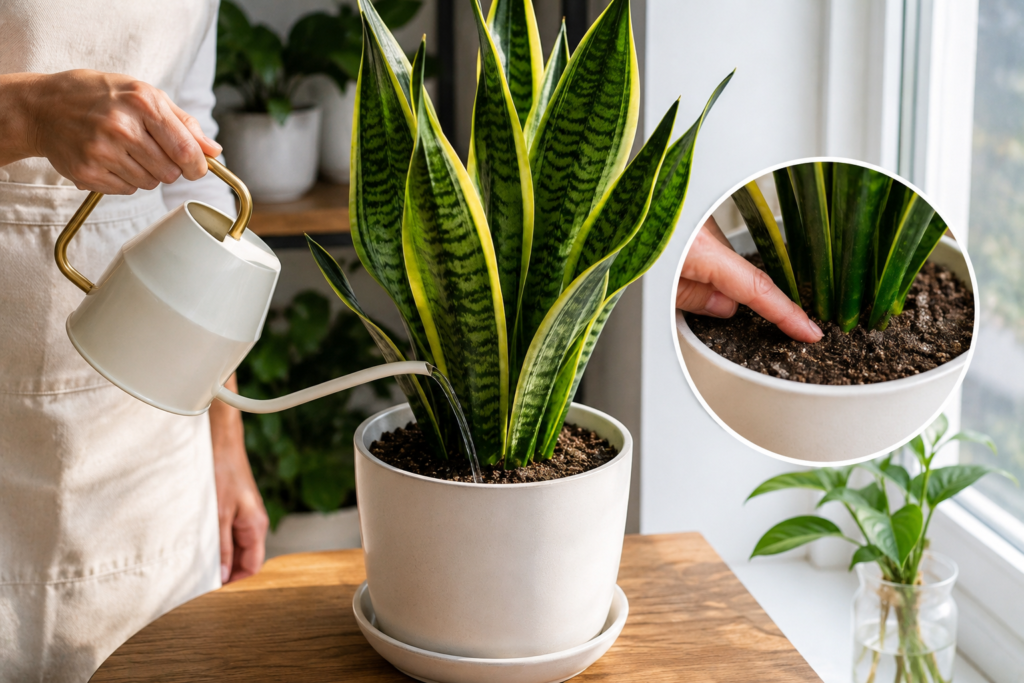
How often to water:
Water every 2–3 weeks, depending on temperature and light. In winter, even less.
How to check soil moisture:
Stick your finger 2–3 inches into the soil. If it feels dry, water. If not, wait.
Signs of overwatering:
- Soft, mushy leaves
- Yellowing
- Root rot smell
Signs of underwatering:
- Wrinkled or curling leaves
- Dry, brittle texture
If there is one rule to remember from this snake plant care guide, it is to avoid overwatering. When in doubt, wait a few more days.
Soil and Potting
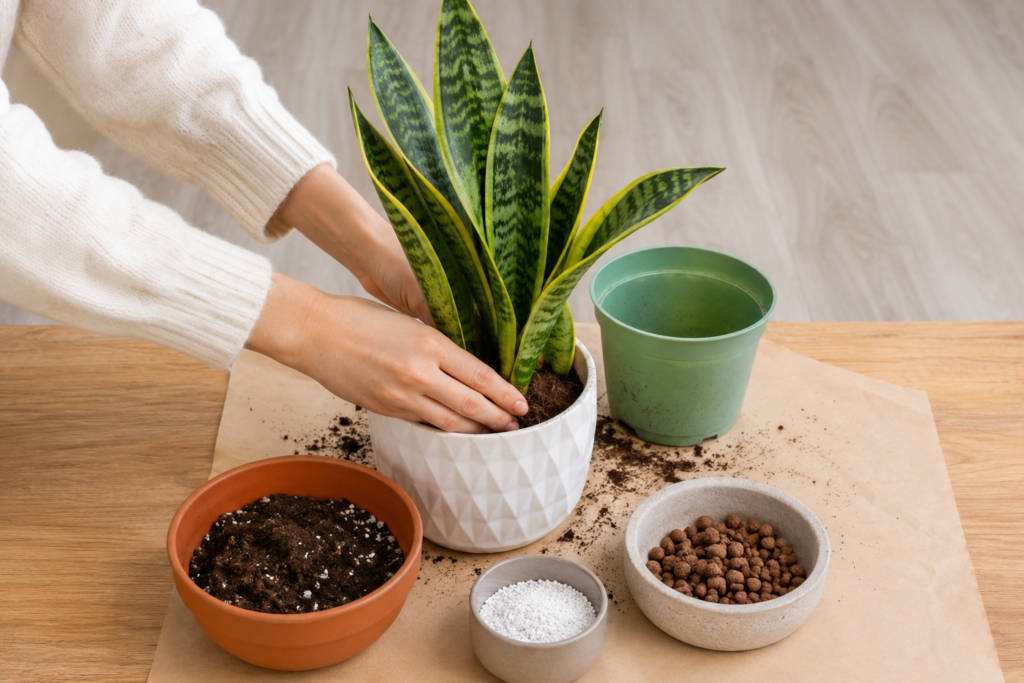
Best soil type:
Use a well-draining mix like cactus or succulent soil. You can also add perlite to improve drainage.
Why drainage matters:
Snake plants hate sitting in wet soil. Poor drainage leads to root rot quickly.
Repotting tips:
- Repot every 2–3 years
- Choose a pot with drainage holes
- Don’t oversize the pot
Temperature and Humidity
Ideal temperature:
60–85°F (15–29°C)
Humidity preference:
Average indoor humidity is fine. No special care needed.
Indoor challenges:
- Avoid cold drafts
- Keep away from AC vents blasting cold air
- Don’t expose to freezing temperatures
Fertilizing
When to fertilize:
Spring and summer only, about once a month.
Beginner-friendly approach:
Use a diluted balanced liquid fertilizer at half strength.
Signs of overfertilizing:
- Leaf burn (brown edges)
- Salt build-up on soil
- Weak growth
Snake plants don’t need much feeding. It’s easy to overdo it.
Pruning and Maintenance
How to prune:
Cut damaged or old leaves at the base using clean scissors.
Encouraging fuller growth:
Snake plants naturally grow upright, so pruning is mostly for maintenance, not shaping.
Cleaning:
Wipe leaves with a damp cloth to remove dust. This helps with photosynthesis and keeps the plant looking fresh.
How to Propagate Snake Plant
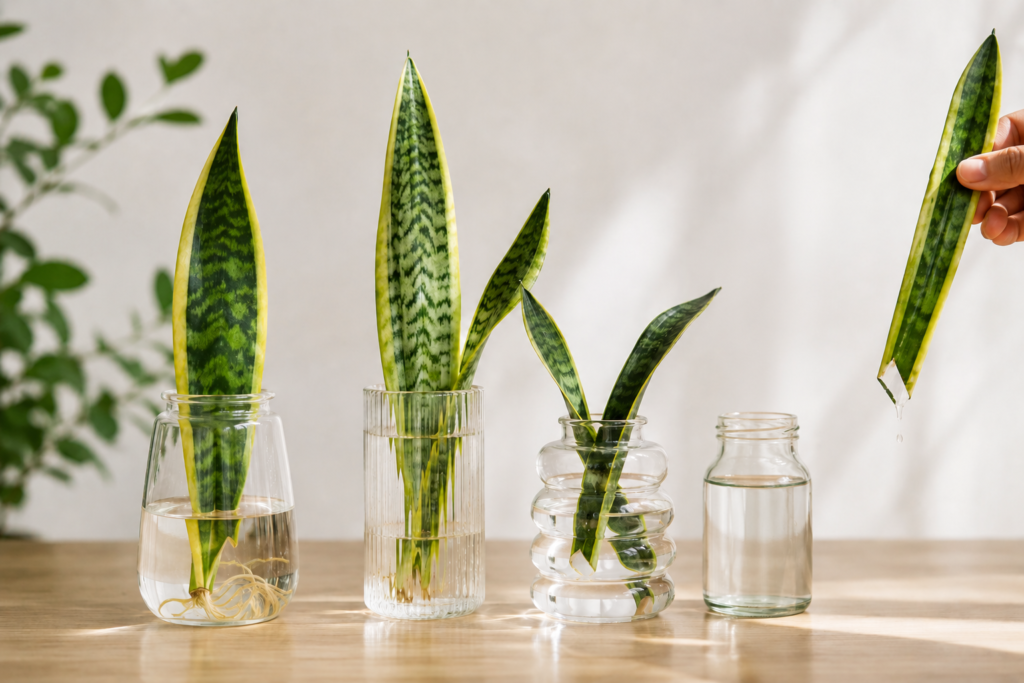
Propagation methods:
- Water propagation
- Soil propagation
- Division (fastest method)
Step-by-step (water method):
- Cut a healthy leaf near the base using clean scissors.
- Let the cut end dry for 24 hours.
- Place the cut end in a container of clean water.
- Keep the container in bright indirect light.
- Change the water every week.
- Once roots develop, transfer the cutting to well-draining soil.
Step-by-step (soil method):
- Cut a healthy leaf near the base.
- Allow the cut end to dry for 24 hours.
- Plant the cutting upright in a small pot filled with well-draining soil.
- Lightly water the soil after planting.
- Place the pot in bright indirect light.
- Keep the soil slightly moist until roots develop, then return to a normal watering schedule.
Step-by-step (division method):
- Remove the plant from its pot.
- Gently shake away excess soil to expose the roots and rhizomes.
- Identify natural sections with their own roots and leaves.
- Use a clean knife or pruners to separate the sections.
- Plant each division in its own pot with fresh, well-draining soil.
- Water lightly and place in bright indirect light while the divisions settle in.
Tips for Success
- Use clean tools to reduce the risk of disease.
- Choose healthy, mature leaves for propagation.
- Be patient, as snake plants often take several weeks to produce roots and new growth.
Snake Plant Care Guide: Common Problems and Solutions
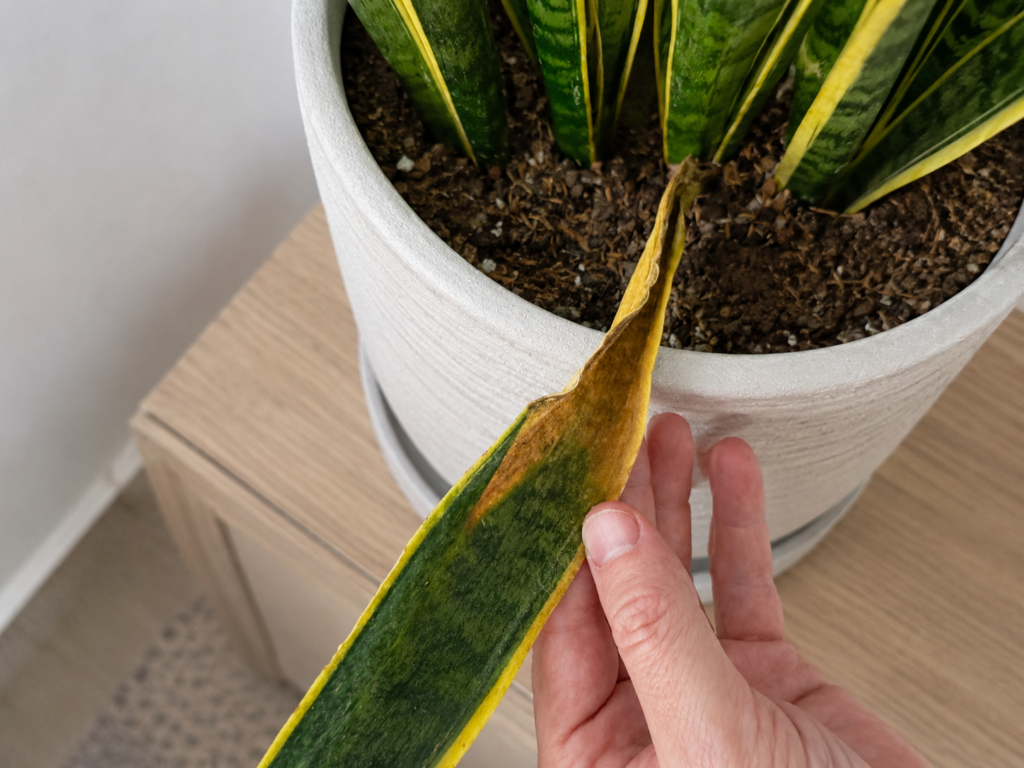
Even with proper care, issues can occasionally arise, which is why every snake plant care guide should include basic troubleshooting tips.
Yellow leaves
- Cause: Overwatering
- Fix: Let soil dry completely and reduce watering frequency
Brown tips
- Cause: Dry air, fertilizer burn, or inconsistent watering
- Fix: Trim tips and adjust care
Pests (rare but possible)
- Mealybugs
- Spider mites
- Fix: Wipe leaves and use neem oil if needed
Slow growth
- Cause: Low light or no feeding
- Fix: Move to brighter spot and fertilize lightly in growing season
Is Snake Plant Safe for Pets and Children?
Snake plants are toxic if ingested. They can cause mild nausea or irritation in pets and humans.
Precautions:
- Keep out of reach of pets
- Avoid placing in areas where children may chew leaves
Indoor Growing Tips for Best Results
- Place near a window but avoid harsh sun
- Rotate the plant every few weeks for even growth
- Water less in winter
- Use pots with drainage holes only
- Keep it slightly root-bound for better stability
If you’re also exploring beginner-friendly options, you might find it helpful to check guides like Best Indoor Plants for Beginners in Low Light or 10 Easiest Indoor Plants for First-Time Plant Owners.
Frequently Asked Questions
How often should I water a snake plant indoors?
Snake plants prefer to dry out between waterings. In most homes, watering every 2–3 weeks is enough, though this can vary depending on light, temperature, and the season. Always check the soil first and only water when the top few inches feel dry.
Can snake plants grow in low light?
Yes, snake plants can tolerate low-light conditions better than many houseplants. However, they usually grow more slowly and may produce fewer new leaves. For the best growth, place them in bright indirect light whenever possible.
Why are my snake plant leaves falling over?
Falling leaves are often caused by overwatering, which can weaken the roots and soften the leaves. In some cases, physical damage or extremely low light may also contribute. Check the soil moisture and inspect the base of the plant for signs of rot.
Do snake plants need fertilizer?
Snake plants are not heavy feeders and can grow well with very little fertilizer. A diluted houseplant fertilizer applied once a month during spring and summer is usually enough. Avoid fertilizing in winter when growth naturally slows down.
Can I keep a snake plant in my bedroom?
Yes, snake plants grow well in bedrooms because they tolerate typical indoor conditions and do not require frequent attention. Just make sure the plant receives some natural or artificial light and is not overwatered.
How long do snake plants live?
With proper care, snake plants can live for many years and are often passed from one owner to another. Their slow growth and tough nature make them one of the longest-lasting houseplants you can grow indoors.
Conclusion
By following the simple advice in this snake plant care guide, you can keep your snake plant healthy and attractive for many years. Good drainage, minimal watering, and the right amount of light are the keys to success.
If you keep things simple and avoid overwatering, your plant will stay healthy with very little effort. Once you understand its rhythm, caring for it becomes almost automatic.