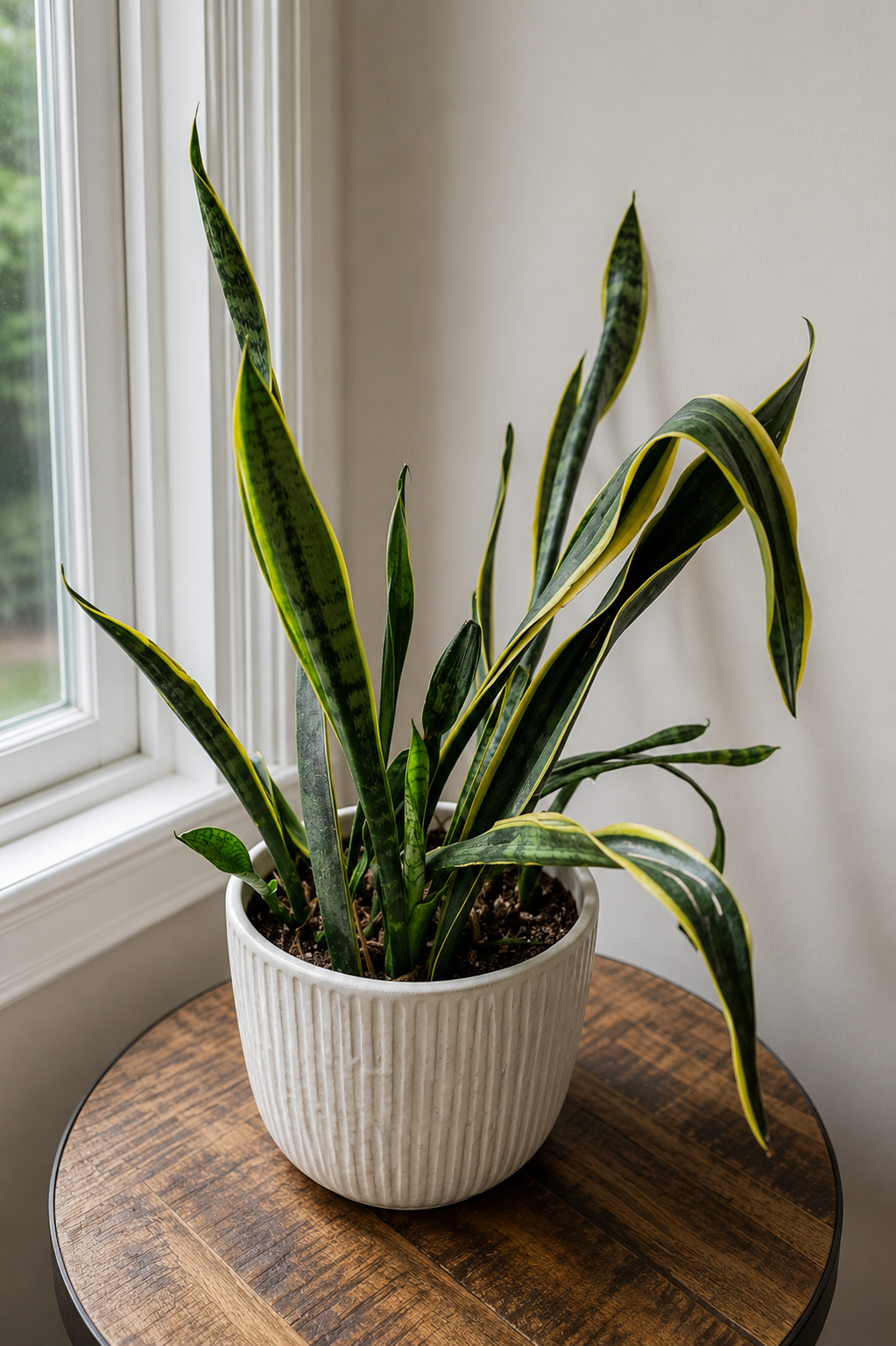
If your snake plant leaves falling over suddenly, it can feel like something is seriously wrong. One day it looks upright and strong, and the next, the leaves are bending, leaning, or collapsing.
The good news is this is a very common issue. Snake plants are tough, but when something in their care is off, they show it through their leaves.
There isn’t just one reason behind this problem. Several different issues can cause snake plants leaves falling over, and each one needs a slightly different fix.
In this guide, you’ll learn how to figure out why your snake plant leaves are falling over, how to fix it step by step, and how to prevent it from happening again.
What Falling Leaves Mean in Snake Plant
When a snake plant’s leaves fall over, it’s a signal that something is affecting its structure.
Unlike soft plants, snake plants store water in their thick leaves. When those leaves lose strength, it usually means:
- The roots are stressed or damaged
- The plant is not getting the right balance of water or light
- The leaves have become too heavy or weak to support themselves
Think of it as the plant losing its internal support system. The key is figuring out what caused that weakness.
Most Common Reasons for Snake Plant Leaves Falling Over
Overwatering
Why it happens
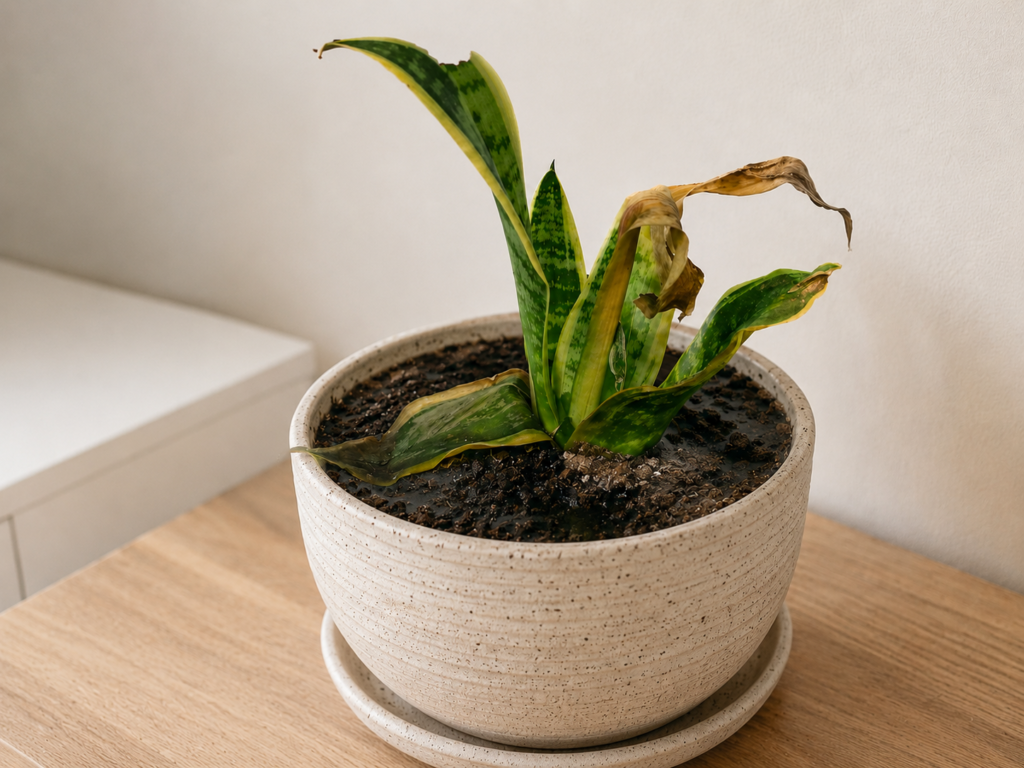
Overwatering is the most common reason snake plant leaves falling over happens indoors. Snake plants store water in their leaves. When watered too often, the roots sit in moisture for too long and start to rot. Once roots weaken, they can’t support the leaves anymore.
How to identify it
- Soil feels wet even days after watering
- Leaves are soft, mushy, or yellowing
- Base of leaves may feel squishy
- Possible foul smell from soil
How to fix it
- Remove the plant from the pot
- Check roots and cut off any black or mushy parts
- Let roots dry for a few hours
- Repot in fresh, well-draining soil
- Use a pot with drainage holes
How to prevent it
- Water only when soil is completely dry
- Reduce watering in winter
- Avoid letting water sit in the saucer
Not sure how often indoor plants actually need water? Check our guide on how often should you water indoor plants for a beginner-friendly watering routine.
Underwatering
Why it happens
Although drought-tolerant, snake plants still need occasional watering. If the plant goes too long without water, it loses internal moisture. Leaves start to wrinkle and eventually lose their ability to stand upright.
How to identify it
- Soil is very dry and pulling away from the pot edges
- Leaves look thin, wrinkled, or shriveled
- Leaves bend instead of standing firm
How to fix it
- Water thoroughly until excess drains out
- Let the soil absorb moisture evenly
- Resume a balanced watering routine
How to prevent it
- Check soil every 1–2 weeks
- Don’t let it stay dry for too long repeatedly
- Water deeply, not lightly
Poor Drainage
Why it happens
Even if you water correctly, poor drainage traps water in the soil. This leads to root rot and weak leaf support.
How to identify it
- Soil stays soggy for many days
- Pot has no drainage hole
- Leaves fall over despite moderate watering
How to fix it
- Repot into a container with drainage holes
- Use a well-draining mix (add sand or perlite)
- Avoid compacted or garden soil indoors
How to prevent it
- Always use well-draining soil
- Never plant snake plants in sealed containers
Using the right potting mix makes a huge difference. See our guide on the best soil mix for indoor plants to improve drainage and root health.
Low Light
Why it happens
Low light can also explain why are my snake plant leaves falling over near one side. Snake plants tolerate low light, but they don’t thrive in it. Without enough light, growth becomes weak and stretched, making leaves more likely to fall over.
How to identify it
- Leaves lean toward a light source
- Growth is slow and stretched
- Leaves become thin and floppy
How to fix it
- Move the plant closer to a window
- Provide bright, indirect light
- Rotate the pot weekly for even growth
How to prevent it
- Keep in medium to bright indirect light
- Avoid dark corners for long periods
- Use artificial grow lights if needed
If your home does not get much sunlight, check this post on the best indoor plants for beginners in low light.
Root Bound Plant
Why it happens
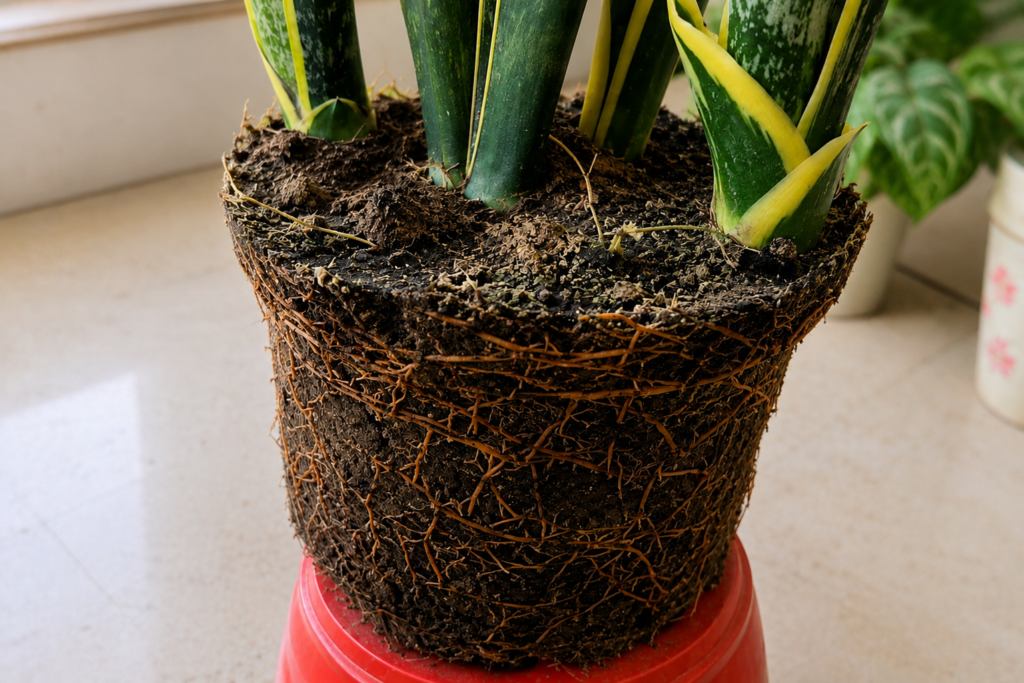
When roots outgrow the pot, they become tightly packed. This limits water absorption and stability.
How to identify it
- Roots visible at the bottom of the pot
- Soil dries out very quickly
- Plant looks crowded
How to fix it
- Repot into a slightly larger container
- Loosen roots gently
- Add fresh soil
How to prevent it
- Repot every 2–3 years
- Watch for overcrowding signs
Natural Aging
Why it happens
Older leaves eventually weaken and fall as part of the plant’s life cycle.
How to identify it
- Only one or two outer leaves affected
- Rest of the plant looks healthy
- No signs of rot or stress
How to fix it
- Simply trim the falling leaves at the base with clean scissors
How to prevent it
- This is natural and cannot be prevented
Nutrient Deficiency
Why it happens
Over time, soil loses nutrients, especially in potted plants.
How to identify it
- Slow growth
- Pale or weak leaves
- Leaves lack firmness
How to fix it
- Feed with a balanced liquid fertilizer (diluted)
- Apply during growing season (spring/summer)
How to prevent it
- Fertilize lightly once a month in growing season
- Repot every 2–3 years
Temperature Stress
Why it happens
Snake plants prefer stable indoor temperatures. Sudden changes in temperature stress the plant.
How to identify it
- Leaves droop after exposure to cold drafts or heat
- Placement near AC vents or heaters
- Sudden changes in environment
How to fix it
- Move plant to a stable indoor location
- Keep away from drafts and direct heat
How to prevent it
- Maintain consistent indoor conditions
- Avoid extreme temperature swings
How to Tell Which Problem You Actually Have
This is where most people get stuck. Here’s a simple way to diagnose your plant:
- Soil wet + leaves soft → Overwatering
- Soil bone dry + leaves wrinkled → Underwatering
- Soil wet but pot has no drainage → Poor drainage
- Leaning toward light → Low light
- Roots crowded → Root bound
- Only older leaves falling → Natural aging
- Slow growth + pale leaves → Nutrient issue
- Sudden drooping after temperature change → Temperature stress
Start with the soil. It usually gives you the clearest answer.
How to Fix Snake Plant Leaves Falling Over (Step-by-Step)
If your snake plant leaves are falling over and you’re unsure what to do, follow this:
Step 1: Check the soil
Stick your finger 2–3 inches deep to feel moisture. Is it wet, dry, or compact?
Step 2: Inspect the roots (if needed)
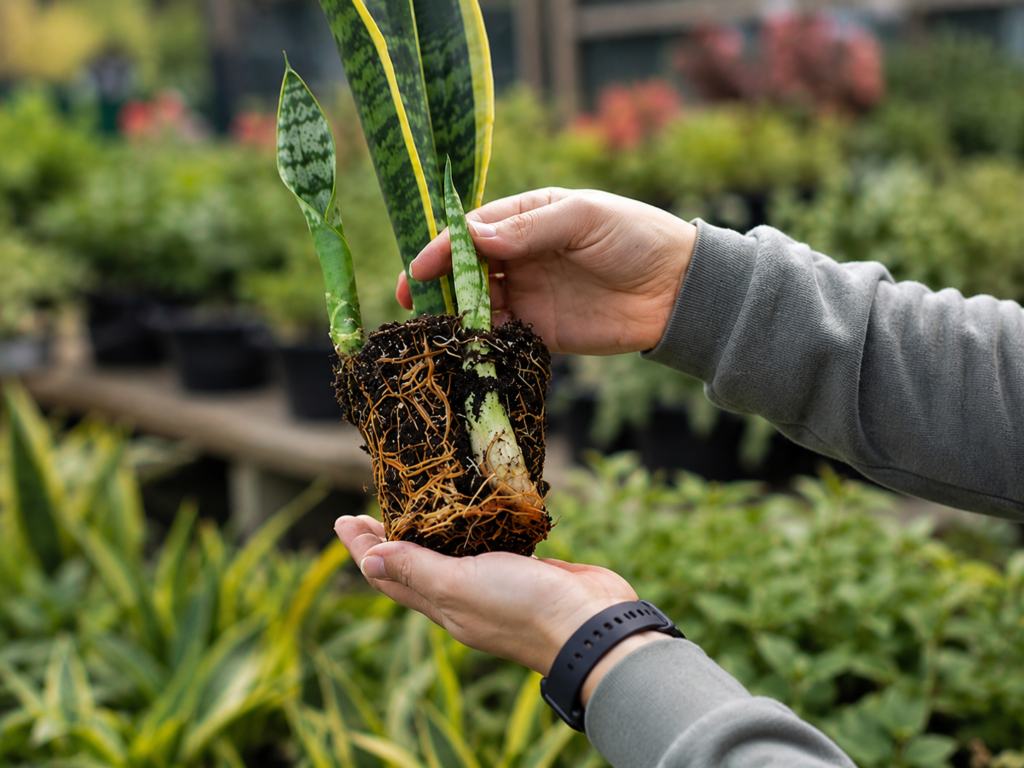
If things look serious, gently remove the plant and check root health.
Step 3: Adjust watering
Correct overwatering or underwatering immediately. Water only when soil is dry.
Step 4: Improve light conditions
Move the plant to a brighter spot.
Step 5: Fix drainage
Repot if water is not draining properly.
Step 6: Remove damaged leaves
This helps the plant focus on healthy growth.
Step 7: Observe for 2–3 weeks
Give the plant time to recover. Watch how the plant responds before making more changes.
When Falling Leaves Are Normal
Not every falling leaf means trouble.
It’s normal when:
- Just one or two older leaves falling
- No signs of rot or discoloration
- The plant is still producing healthy new growth
Then it’s likely just natural aging. Plants shed older leaves to focus on new growth. In these cases, simple trimming is enough.
How to Prevent Snake Plant Leaves Falling Over in the Future
A few simple habits go a long way:
- Water only when soil is fully dry
- Use well-draining soil and pots with holes
- Keep in bright, indirect light
- Avoid frequent movement or temperature changes
- Rotate the plant occasionally
- Don’t over-fertilize
Consistency matters more than perfection. For complete long-term care tips, see our full snake plant care guide for beginners.
Frequently Asked Questions
Should I cut falling snake plant leaves off?
Yes. If a leaf is fully bent, soft, or damaged, trim them to keep the plant healthy.
Can falling leaves stand back up?
Usually no. Once a leaf bends significantly, it won’t fully recover. Focus on new growth.
Why are my snake plant leaves falling over after repotting?
This can be transplant shock. Give it time and avoid overwatering.
How often should I water my snake plant?
Typically every 2–3 weeks, depending on light, temperature and soil dryness.
Do snake plants need sunlight?
Yes. They tolerate low light but grow stronger in bright, indirect light.
Is fertilizer necessary?
Only occasionally. Too much fertilizer can do more harm than good.
Is it okay to stake a fallen leaf?
You can temporarily support it, but it won’t fix the root issue.
Conclusion
Snake plant leaves falling over can look alarming, but it’s usually a manageable problem.
The key is to slow down and observe. Check the soil, look at the leaves, and make small adjustments. Most issues come down to watering, light, or drainage.
Once you correct the cause, your plant can recover and continue growing strong.
And remember, every plant owner deals with this at some point. It’s part of learning how your plant behaves in your space.