Pothos is one of the easiest and most forgiving houseplants you can grow indoors. If you’re just starting out or you’ve struggled with plants before, this is often the one that changes things. It tolerates a range of conditions, grows quickly, and still looks great with minimal effort.
This pothos plant care guide is designed to help you grow a healthy plant step by step. You’ll learn how to handle light, watering, soil, pruning, and propagation, along with practical tips to avoid common mistakes. Whether you’re a beginner or have some experience, this guide will give you everything you need to grow pothos successfully in a home or apartment.
About Pothos
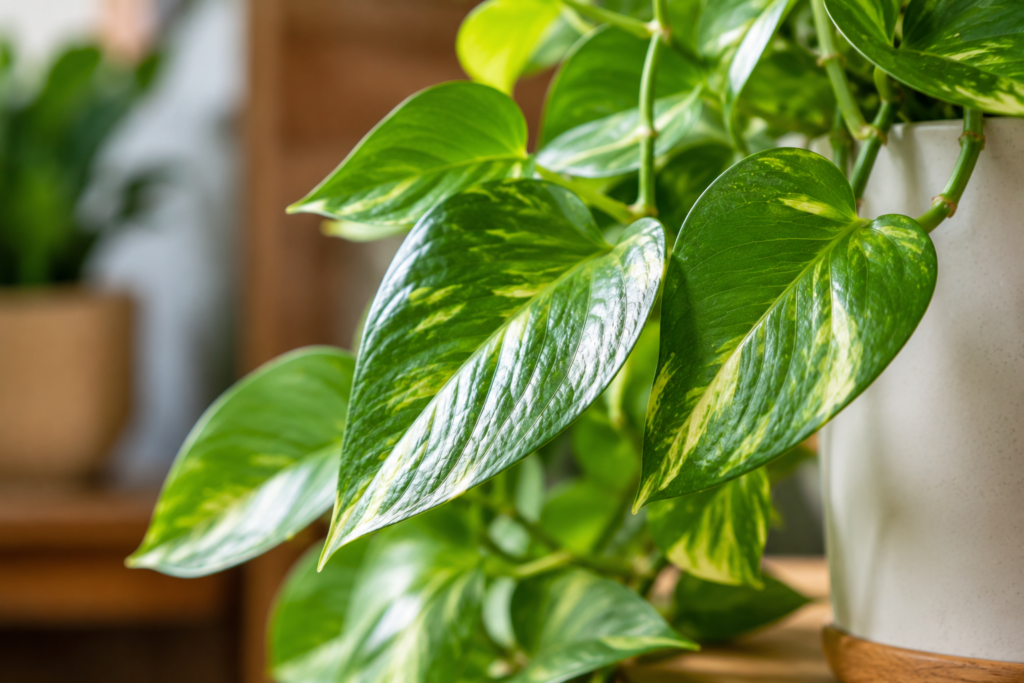
Scientific name: Epipremnum aureum
Common names: Golden pothos, Devil’s ivy, Money plant (in some regions)
Pothos is native to tropical regions of Southeast Asia and the Pacific Islands. In the wild, it grows as a climbing vine, attaching itself to trees and spreading across forest floors.
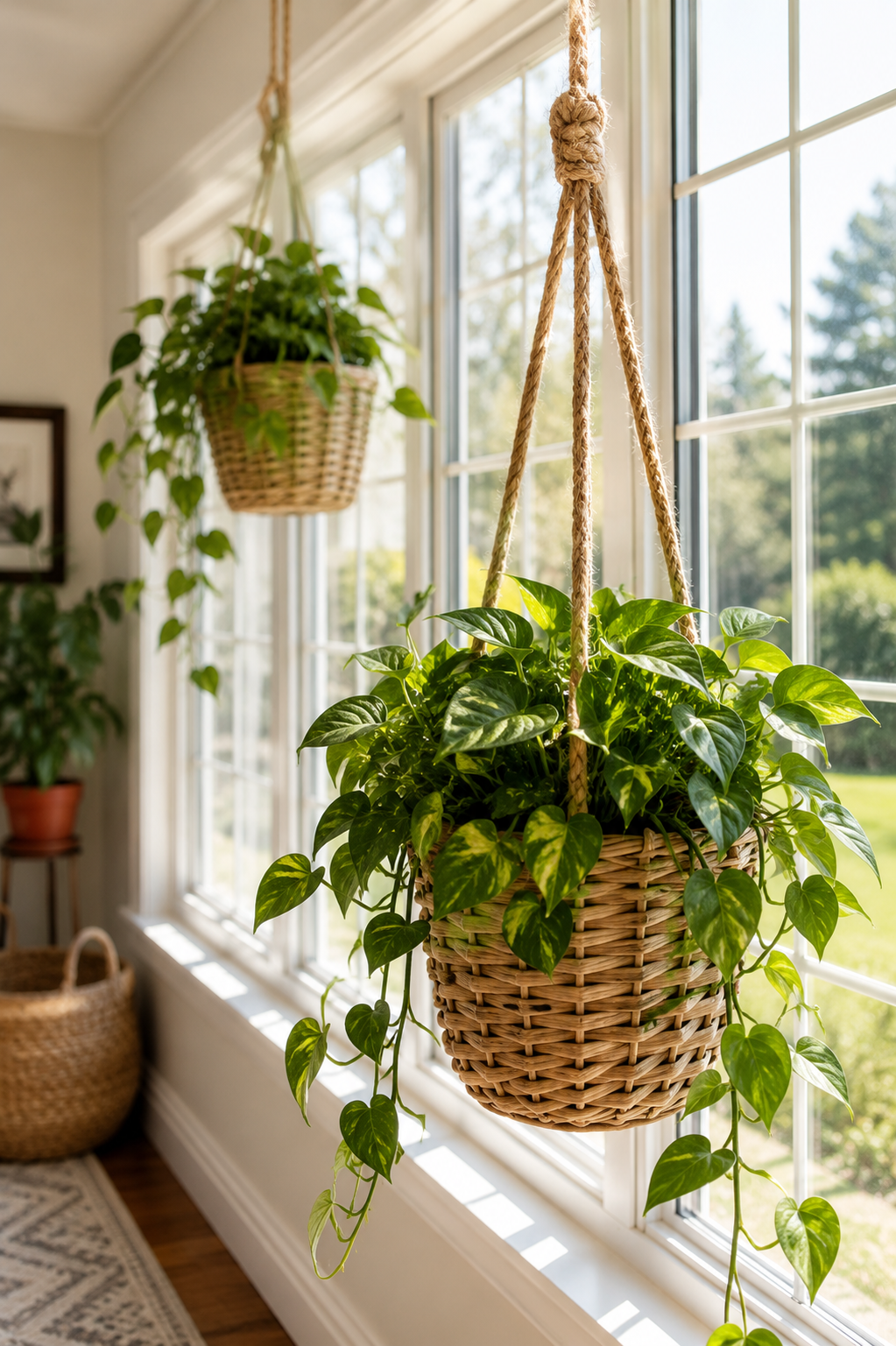
Indoors, it’s usually grown as a trailing or hanging plant. It can also be trained to climb a moss pole if you want larger leaves.
Key characteristics:
- Fast-growing vine
- Heart-shaped leaves
- Tolerates low light
- Easy to propagate
- Adapts well to indoor conditions
If you’re looking for a low-maintenance plant that still looks lush, pothos is one of the best choices.
Light Requirements
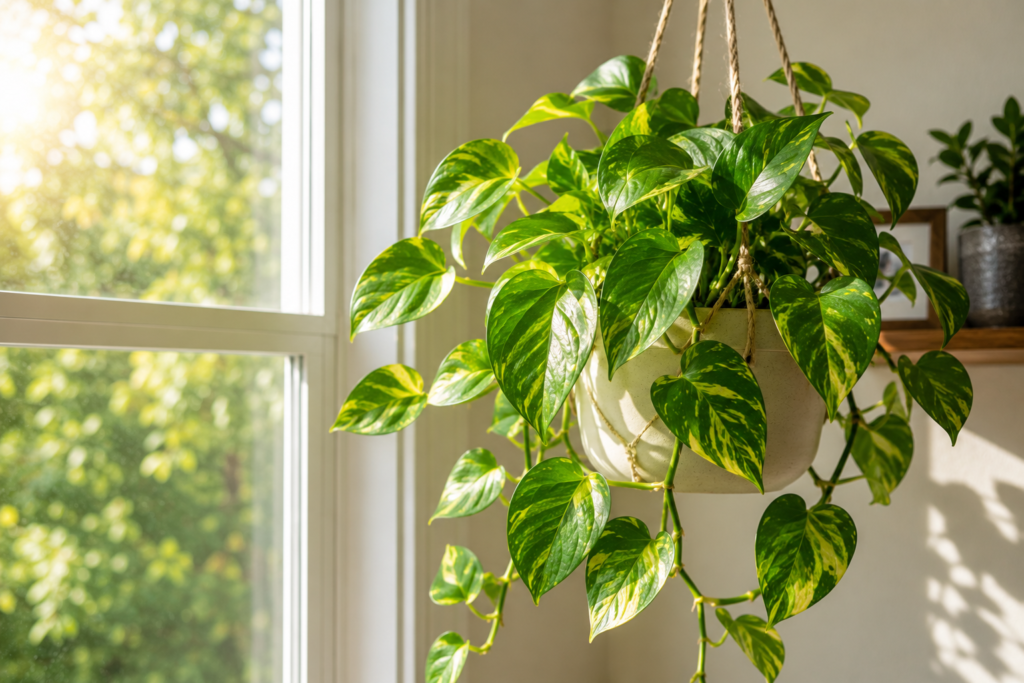
Pothos is flexible with lighting, which is one reason it’s so popular. This pothos plant care guide helps you maintain the right balance of light for healthy indoor growth.
Ideal light:
Bright, indirect light is best. A spot near a window with filtered sunlight works well.
Low light tolerance:
Pothos can survive in low light, but growth slows and variegation (patterns on leaves) may fade.
Too much light:
Direct sunlight can scorch the leaves, causing brown patches.
Signs to watch:
- Too little light: small leaves, slow growth, loss of variegation
- Too much light: crispy edges, faded or burnt spots
If unsure, place your plant slightly away from a window rather than directly in front of it.
Watering Guide
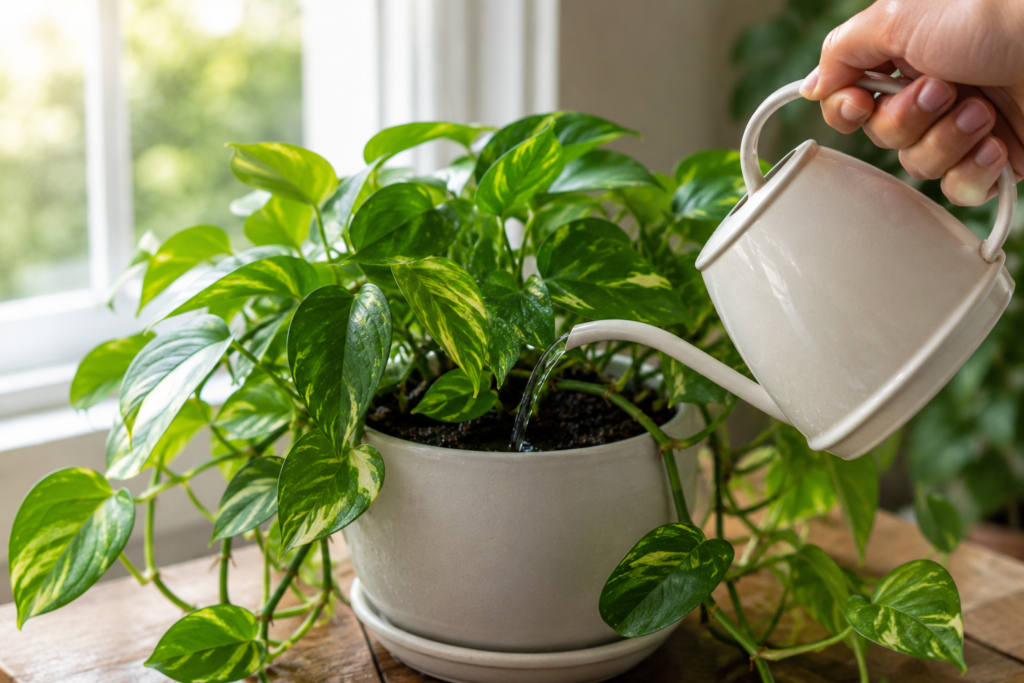
Watering is where most people go wrong.
How often to water:
Water when the top 1–2 inches of soil feel dry. For most homes, this means:
- Every 7–10 days in warmer months
- Every 10–14 days in cooler months
How to check soil:
Stick your finger into the soil. If it feels dry, water. If still moist, wait.
Signs of overwatering:
- Yellow leaves
- Soft stems
- Mushy roots
Signs of underwatering:
- Drooping leaves
- Dry, curling edges
- Soil pulling away from pot
A simple rule: it’s safer to underwater slightly than to overwater. See our guide on how often to water indoor plants for more watering tips.
Soil and Potting
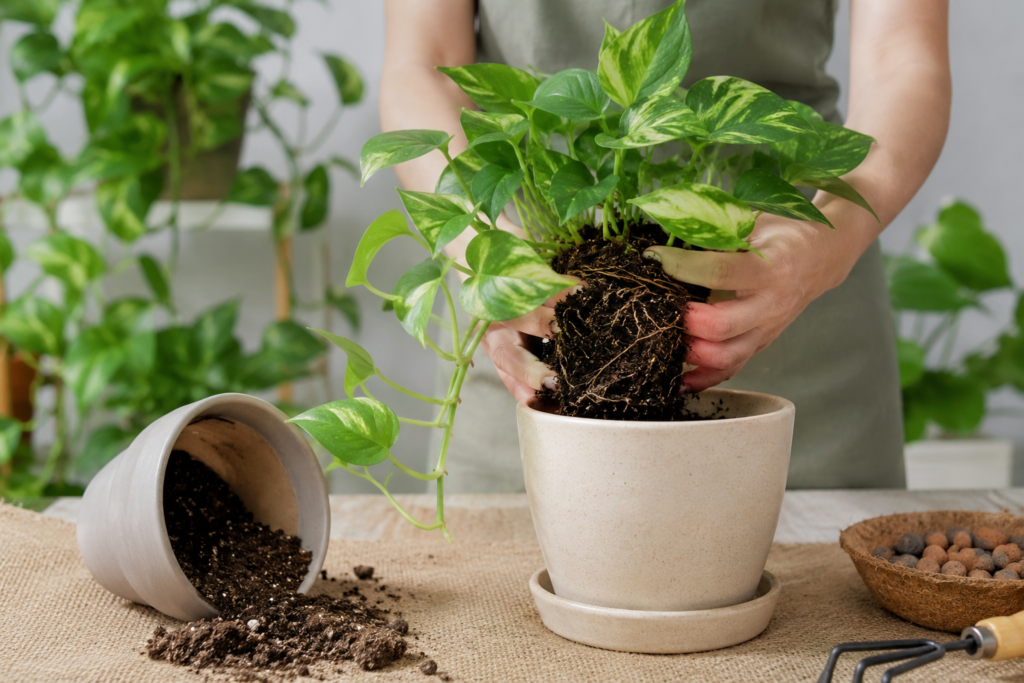
Pothos doesn’t need complicated soil, but drainage is essential.
Best soil type:
- Standard indoor potting mix
- Add perlite or sand for better drainage if needed
Why drainage matters:
Poor drainage leads to root rot, which is one of the few things that can kill pothos.
Pot choice:
- Always use a pot with drainage holes
- Avoid decorative pots without inner drainage
Repotting tips:
- Repot every 1–2 years
- Move up one pot size only
- Best done in spring or early summer
If roots are circling tightly at the bottom, it’s time to repot.
Temperature and Humidity
Pothos adapts well to indoor environments.
Ideal temperature:
- 65–85°F (18–29°C)
Humidity:
- Prefers moderate humidity
- Can tolerate normal indoor air
Things to avoid:
- Cold drafts
- AC vents blowing directly on the plant
- Sudden temperature drops
If your home is very dry, occasional misting or grouping plants together can help, but it’s not required.
Fertilizing
Pothos doesn’t need heavy feeding.
When to fertilize:
- Once a month during spring and summer
- Skip or reduce in winter
What to use:
- Balanced liquid fertilizer (diluted to half strength)
Signs of overfertilizing:
- Brown leaf tips
- Salt build-up on soil
- Slow or stressed growth
If unsure, fertilize less rather than more.
Pruning and Maintenance
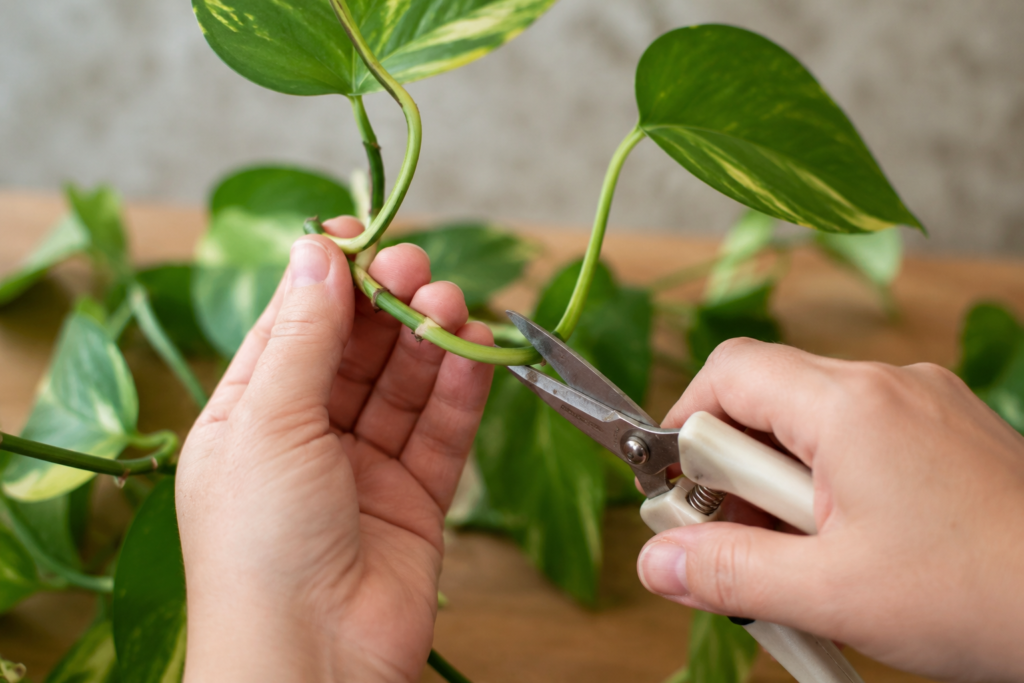
Regular pruning helps pothos look fuller and healthier.
How to prune:
- Cut just above a node (where leaves grow)
- Use clean scissors
Why prune:
- Encourages bushier growth
- Prevents leggy vines
Extra care:
- Wipe leaves occasionally to remove dust
- Rotate the plant every few weeks for even growth
How to Propagate Pothos
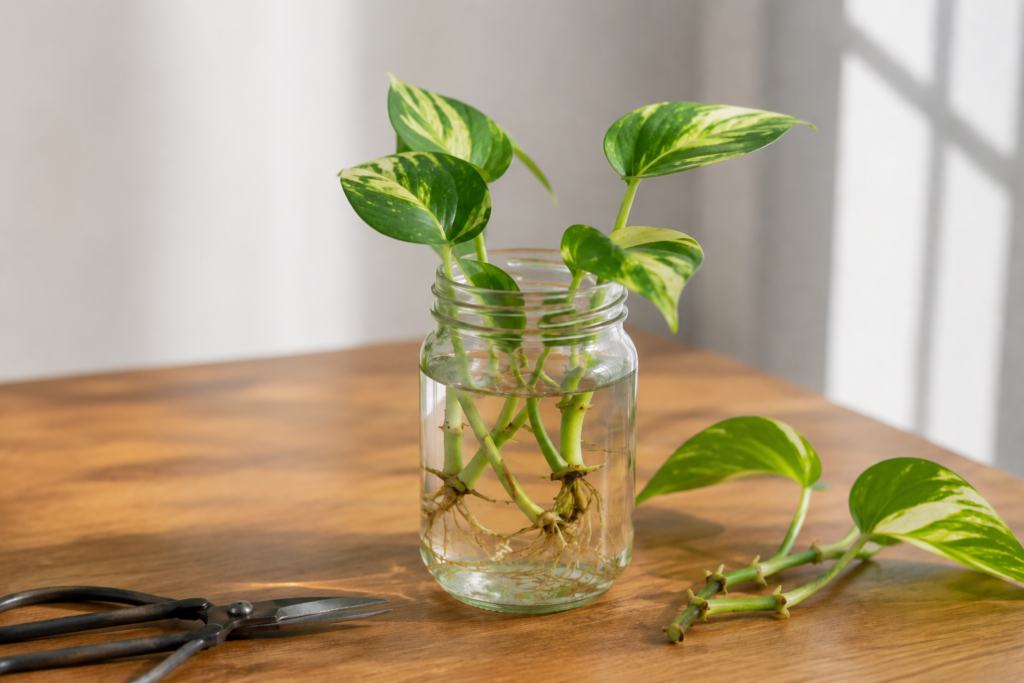
Propagation is one of the most rewarding parts of pothos plant care.
Water propagation (most popular)
- Cut a healthy vine below a node
- Remove lower leaves
- Place the cutting in water
- Keep in bright, indirect light
- Roots appear in 1–3 weeks
Soil propagation
- Take a cutting with a node
- Plant directly in moist soil
- Keep soil slightly damp
- Place in indirect light
Tips:
- Always include at least one node
- Change water regularly
- Don’t rush transplanting
Common Problems and Solutions
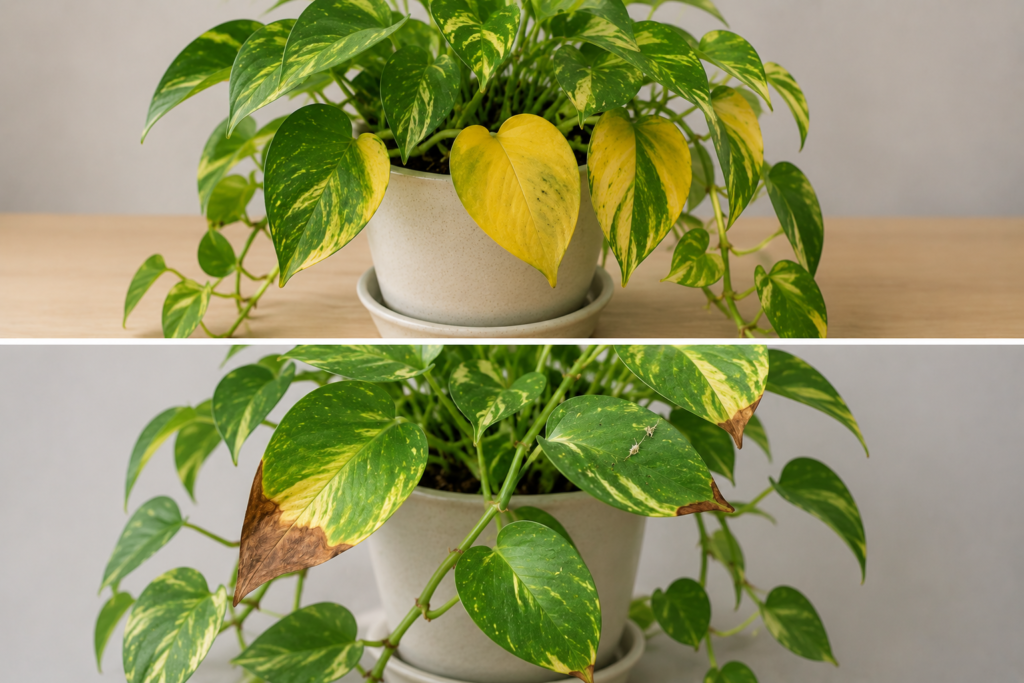
Yellow leaves
- Cause: overwatering or poor drainage
- Fix: reduce watering, check roots
Read our guide on why your pothos is turning yellow for more help.
Brown tips
- Cause: dry air or inconsistent watering
- Fix: water evenly, avoid extremes
Pests (rare but possible)
- Common: spider mites, mealybugs
- Fix: wipe leaves, use mild insecticidal soap
Slow growth
- Cause: low light or lack of nutrients
- Fix: move to brighter spot, fertilize lightly
Is Pothos Safe for Pets and Children?
Pothos is toxic if ingested.
It contains compounds that can irritate the mouth and stomach in pets and humans.
Precautions:
- Keep out of reach of pets and small children
- Wash hands after handling if sensitive
Pothos Plant Care Guide: Tips for Best Results
- Place near a bright window but avoid direct sun
- Rotate the plant for even growth
- Use hanging pots or shelves for trailing vines
- Adjust watering in winter (less frequent)
- Don’t move the plant too often
If you keep things consistent, pothos will adapt and thrive.
Frequently Asked Questions
1. How fast does pothos grow?
In good conditions, it grows quickly, often several inches per month.
2. Can pothos grow in water permanently?
Yes, but it may grow slower compared to soil.
3. Why are my pothos leaves small?
Usually due to low light or lack of nutrients.
4. Should I mist pothos?
Not necessary, but it can help in very dry environments.
5. How do I make pothos bushier?
Prune regularly and replant cuttings into the same pot.
6. Can pothos survive in low light?
Yes, but growth slows and leaves may lose variegation.
Conclusion
Pothos is one of the easiest plants to grow indoors, but good care still makes a big difference. Focus on a few basics: proper light, careful watering, and well-draining soil.
You don’t need perfect conditions. You just need consistency.
Once you understand how your plant responds, pothos becomes simple to manage and even easier to enjoy.