If your pothos was lush and green yesterday but now has yellow leaves, it’s hard not to worry. Many indoor plant owners assume they’ve done something wrong or that the plant is dying. At this point, most people start asking, “why is my pothos turning yellow?”
The good news is this: yellow leaves on pothos are very common, especially for beginners. In most cases, the problem is fixable once you understand what’s causing it.
The tricky part is that yellowing doesn’t point to just one issue. It’s a signal. Your plant is telling you something is off, but you need to figure out what.
In this guide, you’ll learn exactly why your pothos is turning yellow, how to identify the real cause, and what steps to take to fix it.
What Yellow Leaves Mean in Pothos
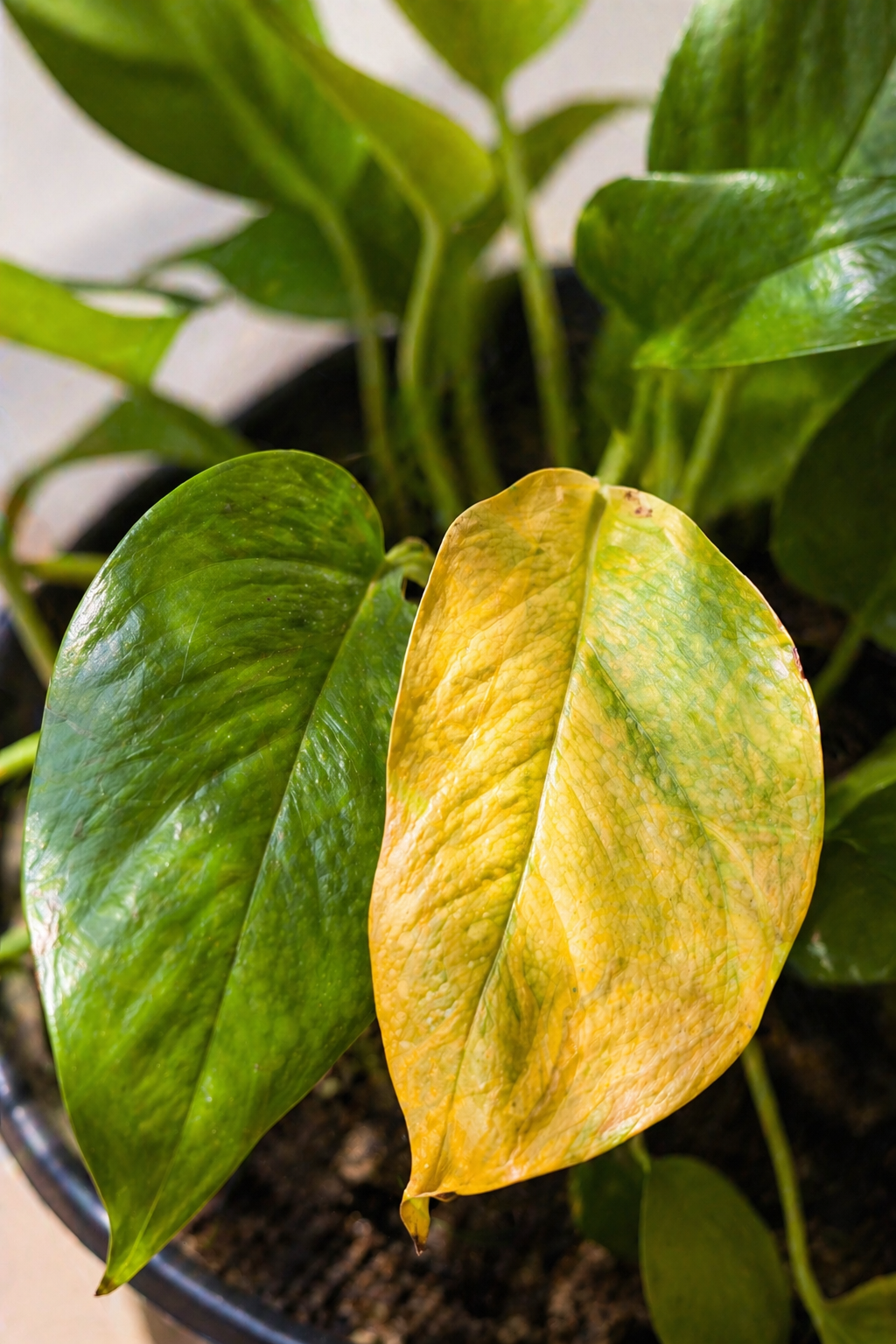
Yellow leaves are a general stress signal.
Your pothos is reacting to something in its environment that isn’t quite right. This could be watering, light, soil, or even natural aging.
Think of it like this:
Yellowing is not the problem itself. It’s the symptom.
That’s why simply cutting off yellow leaves won’t solve anything unless you fix the root cause.
Most Common Reasons Your Pothos Is Turning Yellow
Let’s go through the most common causes one by one so you can match them with what you’re seeing at home.
Overwatering
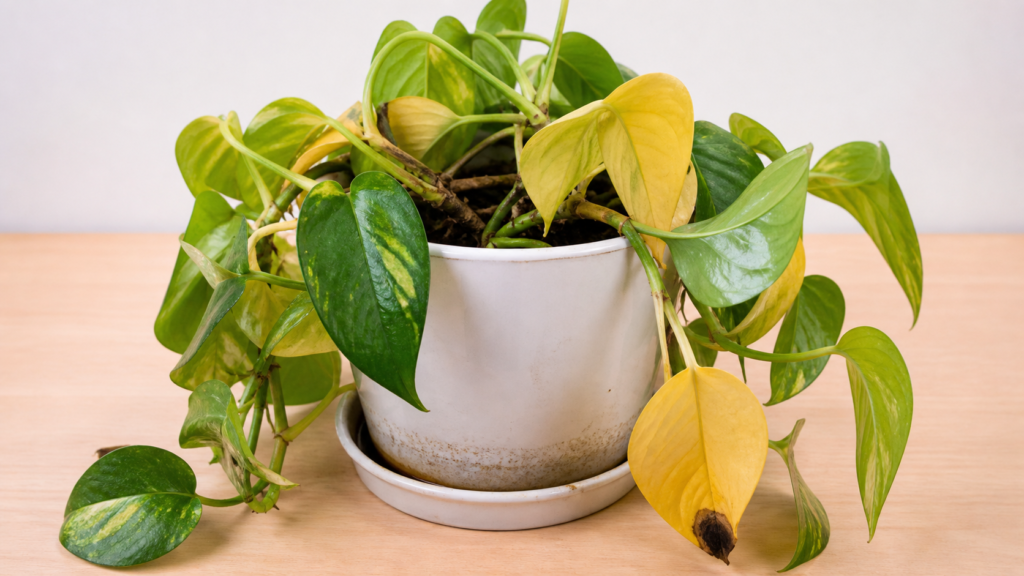
Why it happens
This is the number one reason why pothos leaves turn yellow. When the soil stays too wet, roots can’t breathe. Over time, they begin to rot.
How to identify it
- Soil feels wet or soggy even days after watering
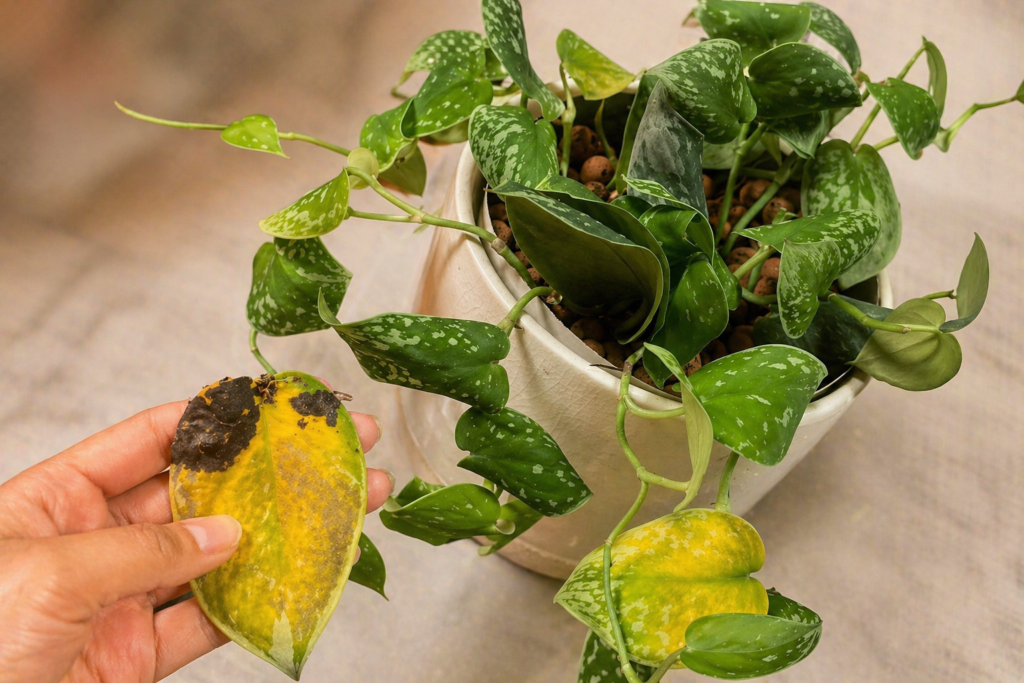
- Leaves turn soft, yellow, and sometimes mushy
- Pot may smell slightly unpleasant
- Multiple leaves yellowing at once
How to fix it
- Stop watering immediately
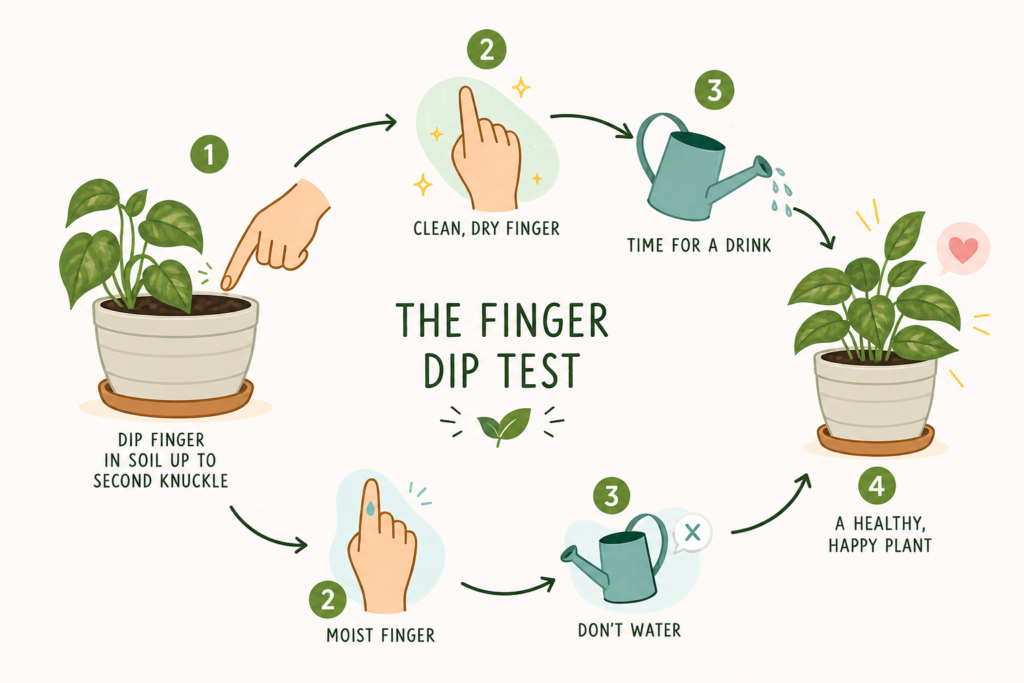
- Check the soil moisture with your finger
- If very wet, let the soil dry out before watering again
- If roots are rotting, remove the plant and trim damaged roots
- Repot in fresh, well-draining soil if needed
How to prevent it
- Only water when the top 1–2 inches of soil are dry
- Avoid watering on a fixed schedule
- Always use pots with drainage holes
Underwatering
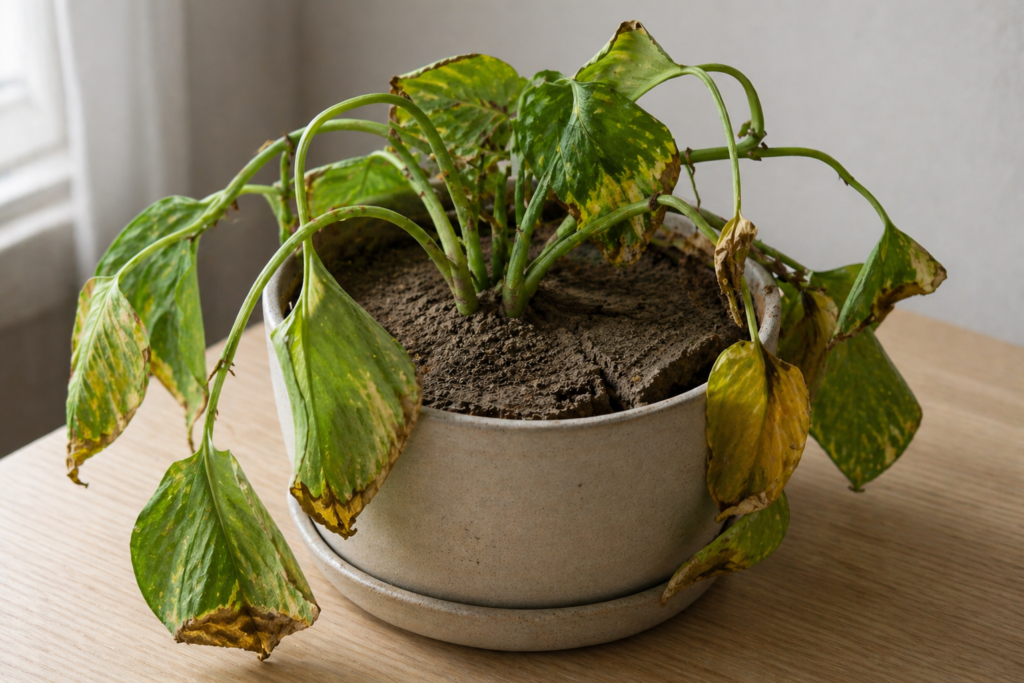
Why it happens
If your pothos goes too long without water, it starts conserving energy, and older leaves may turn yellow.
How to identify it
- Soil feels completely dry
- Leaves look thin, dry, or slightly crispy
- Yellow leaves may drop quickly
- Plant may look droopy
How to fix it
- Water the plant thoroughly until water drains out
- Let excess water drain completely
- Resume a consistent watering routine
How to prevent it
- Check soil weekly
- Don’t wait until the plant looks wilted
- Keep a simple watering habit instead of guessing
Poor Drainage
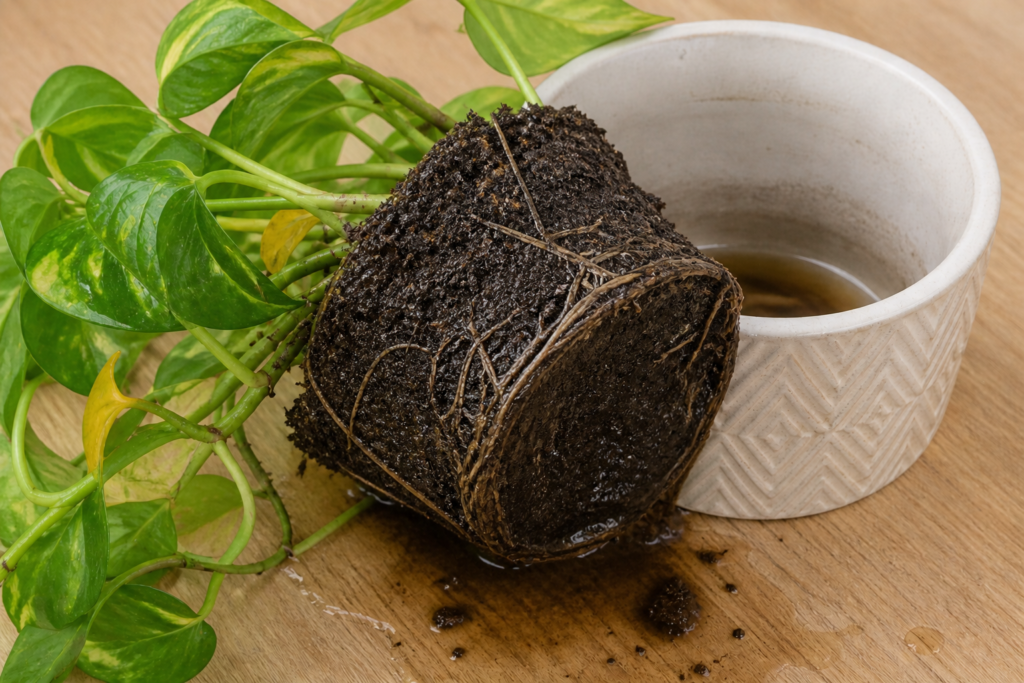
Why it happens
Even if you water correctly, poor drainage can trap excess moisture in the soil.
How to identify it
- Water sits on top of the soil for too long
- Pot has no drainage hole
- Soil feels compacted and heavy
- Yellowing similar to overwatering
How to fix it
- Move the plant to a pot with drainage holes
- Use a well-draining potting mix
- Add perlite or sand to improve airflow
How to prevent it
- Always choose pots with drainage
- Avoid dense, clay-heavy soils
- Refresh soil every 1–2 years
Low Light
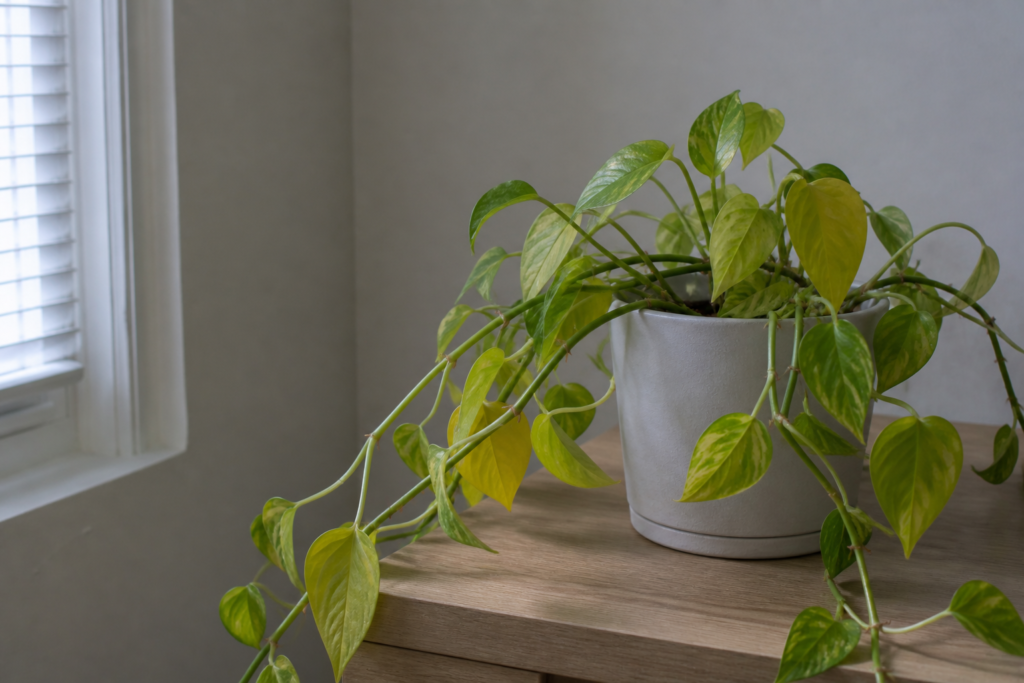
Why it happens
Pothos can tolerate low light, but they still need some light to stay healthy. In very dim conditions, leaves may turn yellow.
How to identify it
- Slow or no new growth
- Leaves are smaller than usual
- Long, stretched stems
- Yellowing combined with weak growth
How to fix it
- Move your pothos closer to a bright window
- Avoid direct harsh sunlight
- Rotate the plant occasionally
How to prevent it
- Place in bright, indirect light
- Avoid dark corners or windowless rooms
If you’re unsure about lighting, you may find this helpful: Best Indoor Plants for Beginners in Low Light.
Natural Aging
Why it happens
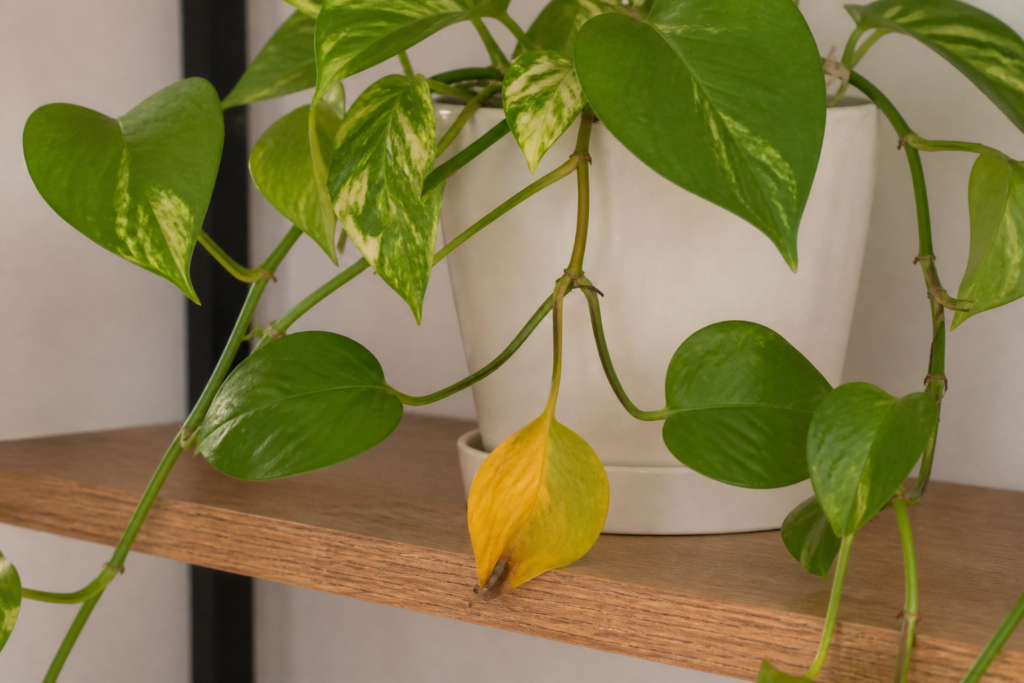
Older leaves naturally turn yellow and fall off as the plant grows.
How to identify it
- Only one or two older leaves turning yellow
- New growth looks healthy
- No other signs of stress
How to fix it
- Simply remove the yellow leaf
How to prevent it
- You can’t completely prevent it, and you don’t need to
This is normal and nothing to worry about.
Nutrient Issues
Why it happens
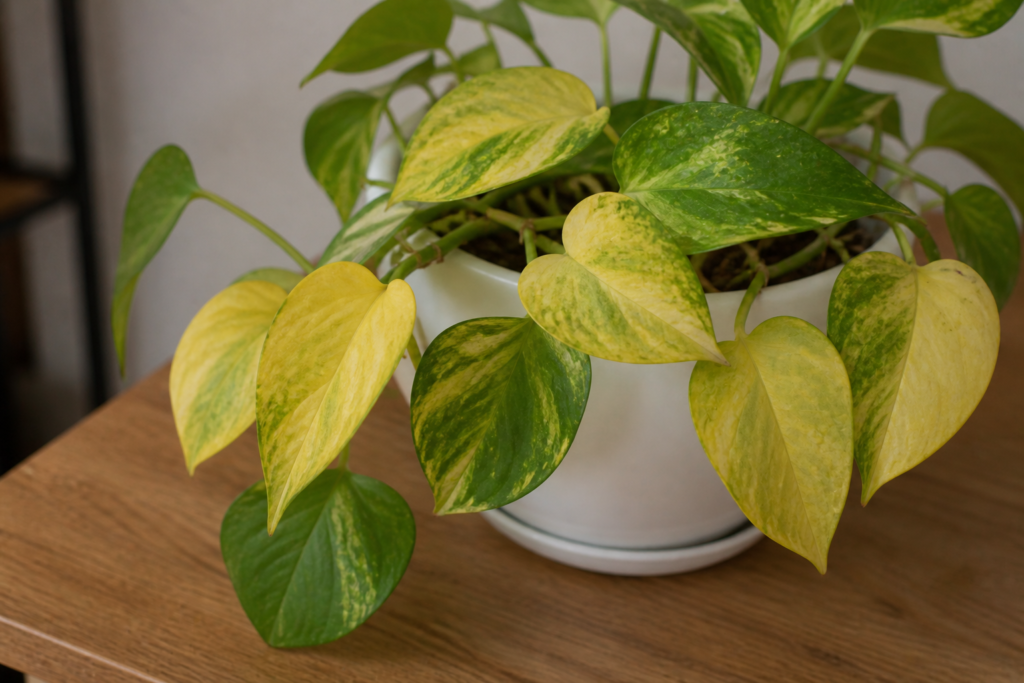
If the soil lacks nutrients, the plant may struggle to maintain healthy leaves.
How to identify it
- Pale yellow leaves
- Slow growth
- Leaves may look dull rather than vibrant
How to fix it
- Use a balanced liquid fertilizer
- Feed once a month during growing season
- Avoid over-fertilizing
How to prevent it
- Refresh soil occasionally
- Feed lightly during spring and summer
Temperature Stress
Why it happens
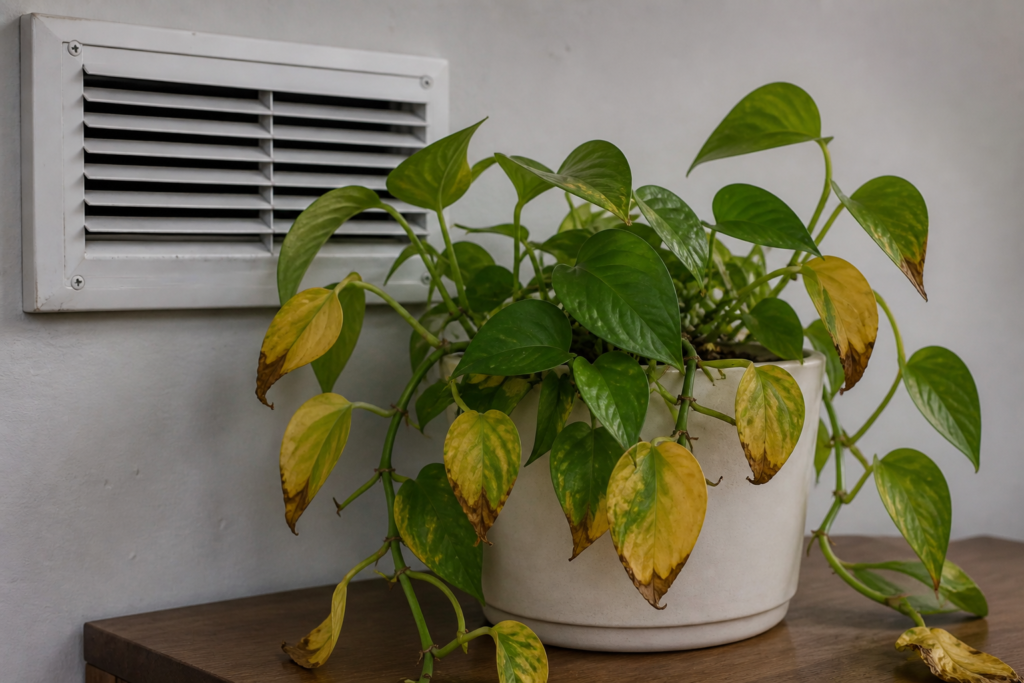
Pothos prefers stable indoor temperatures. Sudden changes can cause stress.
How to identify it
- Yellowing after moving the plant
- Leaves near AC vents or heaters affected
- Edges may curl slightly
How to fix it
- Move the plant away from drafts
- Keep it in a stable environment
How to prevent it
- Avoid placing near windows with cold drafts
- Keep away from heaters or direct airflow
How to Tell Which Problem You Actually Have
If you are still unsure why is my pothos turning yellow, compare the soil, light, and leaf symptoms side by side.
Here’s a simple way to diagnose your plant quickly:
- Soil wet and heavy? → Likely overwatering
- Soil bone dry? → Underwatering
- No drainage hole? → Poor drainage
- Plant in dark corner? → Low light
- Only older leaves yellowing? → Natural aging
- Slow growth + pale leaves? → Nutrient issue
If you’re also dealing with other symptoms like drooping, this guide may help: Peace Lily Drooping Even After Watering (similar care principles apply).
Step-by-Step Recovery Plan
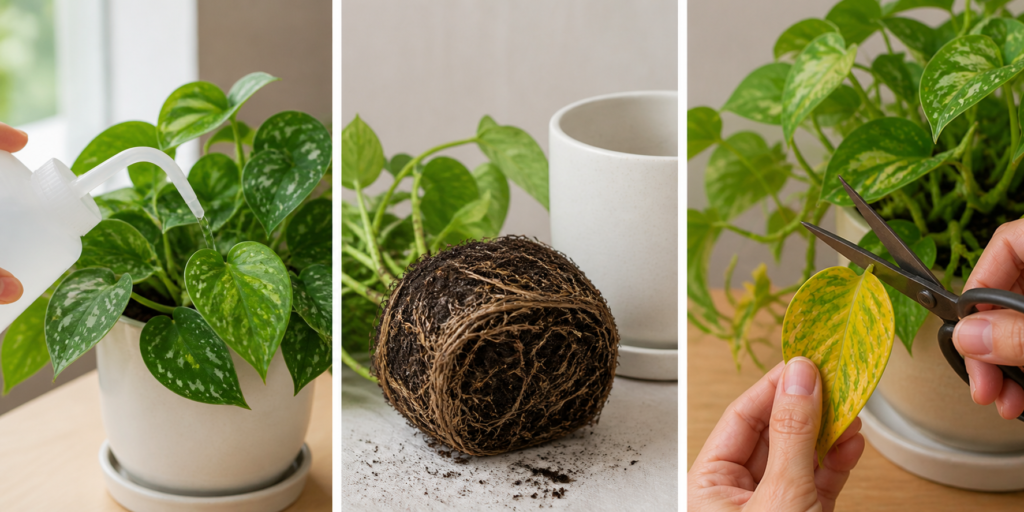
Once you know why is my pothos turning yellow, you can start fixing it with a simple recovery plan:
Step 1: Check the soil
Stick your finger into the soil and feel the moisture level.
Step 2: Adjust watering
- Wet soil → stop watering
- Dry soil → water thoroughly
Step 3: Check the pot
Make sure it has proper drainage.
Step 4: Evaluate light
Move the plant to bright, indirect light if needed.
Step 5: Remove yellow leaves
Trim them off so the plant can focus on new growth.
Step 6: Observe for 1–2 weeks
Avoid making too many changes at once.
When Yellow Leaves Are Normal
Not every yellow leaf means something is wrong.
If your pothos is growing well and only a few older leaves are turning yellow, it’s just part of the plant’s natural cycle.
New growth matters more than old leaves.
How to Prevent Yellow Leaves in the Future
Keeping your pothos healthy comes down to a few simple habits:
- Water only when the soil is slightly dry
- Use pots with proper drainage
- Keep in bright, indirect light
- Avoid sudden environmental changes
- Feed lightly during growing season
- Check your plant regularly instead of guessing
If you’re building a strong care routine, you may also find this helpful: Pothos Plant Care Guide for Beginners.
Frequently Asked Questions
Should I cut yellow leaves off?
Yes. They won’t turn green again and removing them helps the plant focus on healthy growth.
How often should I water pothos?
Usually every 1–2 weeks, but always check the soil instead of following a strict schedule.
Why is my golden pothos turning yellow?
Most often due to overwatering or low light. The care is the same as regular pothos.
Is yellowing always a bad sign?
Not always. If it’s just older leaves, it’s completely normal.
Why is my pothos turning yellow after repotting?
This is usually transplant shock. The roots take time to adjust to new soil. Keep the plant in stable light and avoid overwatering while it recovers.
Can too much sunlight cause pothos leaves to turn yellow?
Yes. Direct, harsh sunlight can scorch leaves, causing yellowing or faded patches. Pothos prefers bright, indirect light.
Conclusion
If you’ve been asking, “why is my pothos turning yellow,” the answer is usually simple once you break it down.
Your plant is not dying. It’s responding.
Take a moment to observe the soil, light, and environment. Make small adjustments, not drastic changes. Most pothos recover quickly when given the right conditions.
Plant care is a learning process. The more you observe, the easier it becomes to understand what your plant needs.