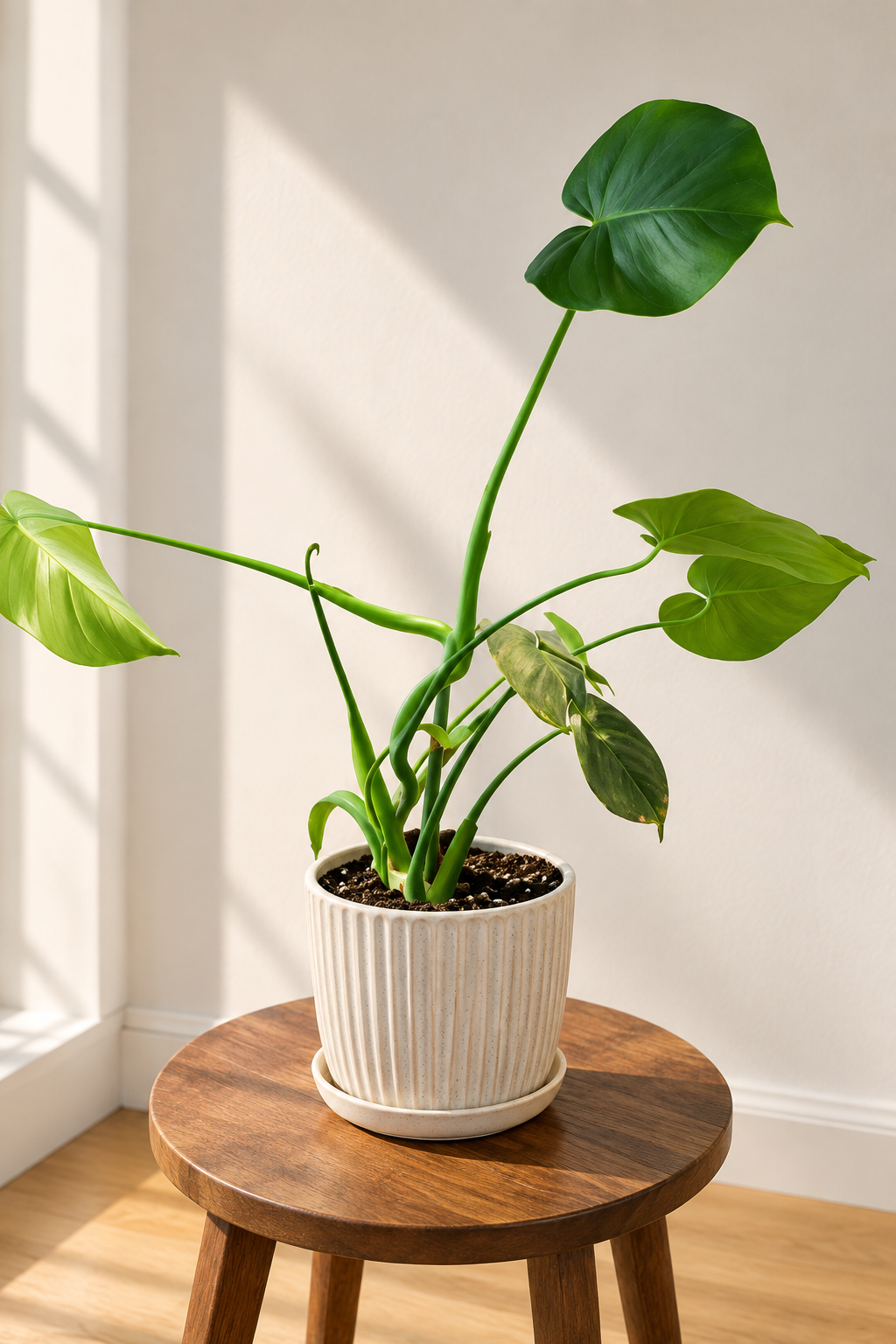
Has your Monstera looked exactly the same for weeks or even months? Maybe the leaves are still green, but your plant is not producing new leaves, getting taller, or showing any obvious signs of growth.
You are not alone. Slow or stalled growth is a common problem with indoor Monsteras, especially when growing conditions are not quite right. The frustrating part is that there is usually more than one possible cause.
A Monstera may stop growing because it is not getting enough light, its roots are staying too wet, the soil has become depleted, temperatures are too low, or the plant simply needs more time. The key is figuring out which problem you actually have before changing everything at once.
In this guide, you will learn why is my monstera not growing, how to identify the most likely cause at home, and what to do step by step to encourage healthy new growth.
What Does It Mean When a Monstera Stops Growing?
When a Monstera stops producing new leaves, it usually means the plant is not getting enough of what it needs for active growth.
Plants need light, water, nutrients, suitable temperatures, healthy roots, and enough space to support new growth. When one of these is missing, the plant may slow down or temporarily stop producing leaves.
This does not always mean your Monstera is dying.
A healthy-looking Monstera can remain unchanged for quite a while, particularly during a darker season or when it is still young. However, if the plant has shown no new growth for a long time and also has yellowing leaves, weak stems, damaged roots, or very dry soil, there may be an underlying problem.
The goal is not to make the plant grow as quickly as possible. The goal is to give it the conditions it needs to resume steady, healthy growth.
Most Common Reasons Your Monstera Is Not Growing
1. Your Monstera Is Not Getting Enough Light
Why it happens
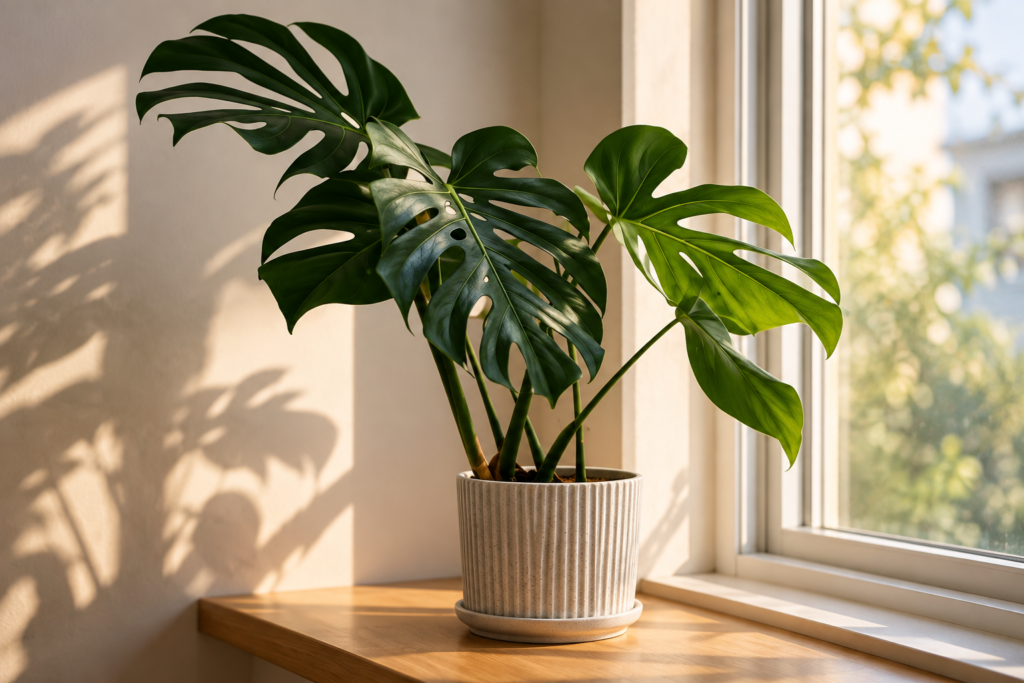
Light provides the energy a Monstera needs to make food and grow. Indoor plants often receive much less light than they would naturally receive near a bright forest opening. If you’re dealing with a darker room, you can also see our guide to Best Indoor Plants for Beginners in Low Light for other plants that handle lower-light conditions better.
A Monstera can survive in lower light for some time, but survival and active growth are not the same thing. If the plant is sitting far from a window or in a very dark room, new leaves may become infrequent or stop altogether.
How to identify it
Look at where your Monstera is placed.
Signs that light may be limiting growth include:
- Very long gaps between leaves
- Small new leaves
- Slow or no new growth
- Stems leaning strongly toward a window
- Leaves that remain mostly solid green with little development of mature features
- The plant is several feet away from its brightest window
If the soil and roots look healthy but the plant simply refuses to produce new leaves, light is one of the first things to check.
How to fix it
Move your Monstera to a brighter location with plenty of indirect light.
A spot near an east-facing window is often a good starting point. A bright south or west-facing window can also work if the plant is protected from harsh direct afternoon sun.
Increase light gradually if the plant has been in a dim location. Watch the leaves for signs of excessive direct sun, such as pale or crispy brown patches.
How to prevent it
Keep your Monstera in one of the brighter areas of your home rather than relying on a dark corner simply because it looks good there. Turn the pot occasionally so growth stays more balanced.
2. You Are Watering Too Often or Too Little
Why it happens
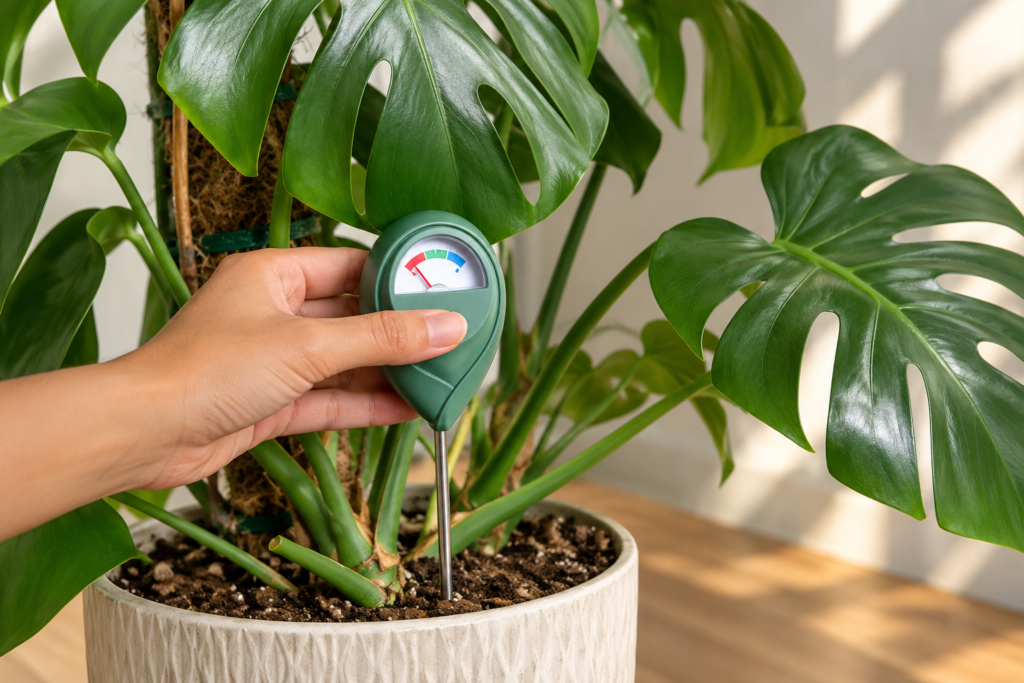
Watering problems can interfere with growth even when the leaves still look relatively healthy.
Too much water can leave the roots sitting in constantly wet soil. This reduces the amount of air around the roots and can eventually lead to root damage.
Too little water can also slow growth because the plant does not have enough moisture to maintain normal functions and develop new leaves.
How to identify it
Check for these signs:
- Soil stays wet for several days: You may be watering too often.
- Pot feels heavy long after watering: Excess moisture may be staying in the soil.
- Soil feels dry several inches down: Your Monstera may not be getting enough water.
- Soil pulls away from the sides of the pot: The plant may have become severely dry.
This is especially useful when asking, why is my monstera not growing new leaves? The watering pattern may be the problem even when there are no dramatic leaf symptoms yet.
How to fix it
For overly wet soil, allow the upper part of the soil to dry before watering again. Make sure excess water can drain freely from the bottom of the pot.
For very dry soil, water thoroughly until some water drains from the drainage holes. Then allow excess water to drain away rather than leaving the pot sitting in water.
Do not compensate for a previous mistake by repeatedly adding small amounts of water every day. Adjust the watering routine based on the soil.
How to prevent it
Check the soil before watering. Your Monstera’s watering needs will change with the season, temperature, pot size, soil mix, and amount of light it receives.
3. Poor Drainage Is Keeping the Roots Unhealthy
Why it happens
Sometimes the problem is not how often you water. It is what happens to the water after you water.
A container without proper drainage, compacted soil, or a pot that is too large can keep the root zone wet for too long. Damaged roots cannot support strong new growth.
A Monstera may therefore appear to have a watering problem when the real issue is poor drainage.
How to identify it
Check the following:
- Does the pot have drainage holes?
- Does water run out of the bottom when you water?
- Does the soil remain soggy for many days?
- Does the pot smell musty or unpleasant?
- Is the plant showing yellowing leaves along with very wet soil?
- Does the soil look dense and compacted rather than loose?
If the soil stays wet for an unusually long time despite normal watering, investigate drainage before simply changing your watering schedule.
How to fix it
First, make sure the container has drainage holes.
If the soil has become heavily compacted, repotting may be necessary. Use a loose, well-draining indoor potting mix that allows both water and air to move through the root zone. Our guide to Best Soil Mix for Indoor Plants explains what to look for when choosing a suitable mix.
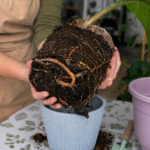
When repotting, inspect the roots. Healthy roots are generally firm rather than soft and mushy. Remove clearly damaged roots with clean scissors and place the plant into fresh, appropriate soil.
How to prevent it
Use a container with drainage holes and avoid choosing a pot that is dramatically larger than the root system. Check that water is actually able to leave the pot after every thorough watering.
4. Your Monstera Needs More Nutrients
Why it happens
A Monstera uses nutrients from its growing medium to produce stems, leaves, and roots. Over time, nutrients in the soil can become depleted, especially when a plant has remained in the same pot for a long period.
A nutrient shortage is more likely to limit growth when light and watering are already reasonably good.
How to identify it
Possible signs include:
- Little or no new growth despite suitable light
- Older leaves becoming unusually pale
- Overall weak or slow growth
- A plant that has been in the same soil for a long time without feeding or repotting
Nutrient problems can overlap with other issues, so do not assume every slow-growing Monstera needs more fertilizer.
How to fix it
During the active growing season, use a balanced houseplant fertilizer according to the product instructions.
Start conservatively rather than applying extra fertilizer in an attempt to force growth. Too much fertilizer can damage roots and create another problem.
If the plant has been in the same soil for a very long time, repotting into fresh potting mix may also help.
How to prevent it
Feed during periods of active growth according to the fertilizer label and reduce or stop feeding when the plant’s growth naturally slows.
5. The Temperature Is Too Low
Why it happens
Monsteras are tropical plants and generally grow best in warm indoor conditions. If your plant is exposed to cold temperatures, especially near a drafty window or air-conditioning vent, growth can slow considerably.
This can happen even when light and watering seem correct.
How to identify it
Think about where the plant is positioned.
Your Monstera may be experiencing temperature stress if it is:
- Directly beside a cold window
- Near an air-conditioner vent
- Exposed to frequent cold drafts
- In a room that becomes significantly colder at night
A plant that grows during warmer months but slows dramatically during cooler periods may simply be responding to seasonal conditions.
How to fix it
Move the plant away from cold drafts and strong sources of indoor temperature fluctuation.
Keep conditions reasonably stable rather than moving the plant repeatedly from one extreme environment to another.
How to prevent it
Choose a comfortable indoor location away from direct blasts of heating or cooling. Stable conditions are usually better than constantly changing the plant’s position.
6. The Plant Is Still Young or Growing Slowly Naturally
Why it happens
Not every Monstera grows at the same speed.
A small young plant may take time to establish its root system before producing larger or more frequent leaves. A recently repotted plant may also spend some time adjusting instead of immediately producing visible new growth.
Seasonal changes matter too. Indoor Monsteras often grow more actively when light levels and temperatures are favorable and may slow down when conditions become less suitable.
How to identify it
Consider the bigger picture.
Your Monstera may simply be growing slowly if:
- The leaves are green and generally healthy
- The roots appear healthy
- The soil is not constantly wet or bone dry
- The plant receives adequate light
- There are no obvious pests
- The plant was recently repotted or moved
If everything else looks healthy, a lack of rapid growth does not automatically mean something is wrong.
How to fix it
Do not make several major changes at once. Give the plant stable conditions and observe it over time.
A healthy plant may produce a new leaf slowly, especially indoors.
How to prevent it
Focus on consistent care rather than trying to force fast growth. Healthy growth is more important than constant growth.
7. Your Monstera Has a Root, Pest, or Other Hidden Problem
Why it happens
Sometimes the leaves do not reveal the problem immediately.
Root damage, pests, or physical stress can quietly reduce the plant’s ability to produce new growth. A Monstera that has stopped growing completely despite good light, appropriate watering, and suitable temperatures deserves a closer inspection.
How to identify it
Look closely at both sides of the leaves, stems, and soil surface.
Check for:
- Fine webbing
- Tiny insects
- Sticky residue
- Cottony white clusters
- Brown or damaged roots
- A sudden decline after repotting
- Stems that appear weak or damaged
Pests can be easy to miss, especially when they are still present in small numbers.
How to fix it
If you find pests, isolate the plant from other houseplants and identify the pest before choosing a treatment.
If root damage is suspected, remove the plant from its pot and inspect the root system. Correct the cause, such as persistent wet soil or poor drainage, before returning the plant to a suitable growing medium.
Avoid repeatedly adding fertilizer or water when the actual problem is root damage or pests.
How to prevent it
Inspect new plants before bringing them near your existing collection. Check leaves regularly and avoid allowing soil to remain constantly saturated.
How to Tell Which Problem You Actually Have
When you are wondering why is my monstera plant not growing, start with the easiest clues instead of changing everything at once.
If the soil is constantly wet: Check drainage and watering first.
If the soil is very dry: Review how deeply and how often you water.
If the plant is in a dark location: Increase bright indirect light.
If the plant is healthy but young: Give it more time and keep conditions stable.
If the plant has pale older leaves: Consider nutrient availability, but also review light and watering.
If the plant is near an AC vent or cold draft: Temperature may be slowing growth.
If you see insects, webbing, sticky residue, or damaged roots: Investigate pests or root problems before making other changes.
One useful rule is to change one major factor at a time whenever possible. This makes it much easier to see what actually helped.
Step-by-Step Recovery Plan
You do not need to repot, fertilize, move, and water your Monstera all on the same day. Start with the basics.
Step 1: Check the Soil
Push your finger into the soil and check whether the root zone is staying wet or becoming very dry.
Do not judge watering needs only by the surface. The top layer can look dry while the soil underneath remains wet.
Step 2: Check the Pot and Drainage
Make sure the container has drainage holes and that excess water can leave freely.
If the soil remains soggy for a long time, address the drainage problem before increasing or decreasing watering.
Step 3: Check the Light
Look at how much bright, indirect light the plant actually receives during the day.
If it is sitting in a dim corner, move it closer to a suitable window gradually.
Step 4: Check the Temperature and Location
Move the plant away from cold drafts, air-conditioning vents, and other places with major temperature changes.
Step 5: Inspect the Leaves, Stems, and Roots
Look for pests, damaged leaves, unusual spots, or signs of root trouble.
If everything looks healthy, resist the urge to keep changing things.
Step 6: Review Feeding
If the plant has been growing actively but has stayed in the same soil for a long time, consider feeding during its active growing period with a suitable houseplant fertilizer.
Step 7: Monitor the Plant
Give the plant stable conditions and watch for signs of new growth.
Do not expect a new leaf immediately after making a change. Depending on the plant and growing conditions, recovery and new growth can take time.
When Slow Monstera Growth Is Normal
Sometimes the right answer is simply that your Monstera is not ready to produce a new leaf yet.
A healthy Monstera can slow down because of seasonal changes, lower indoor light, recent repotting, or natural differences in growth speed.
Do not panic just because there is no new leaf every week.
Instead, look at the entire plant. If the existing leaves are reasonably healthy, the stems are firm, the roots are not showing obvious problems, and the soil and light are appropriate, there may be no urgent issue to fix.
A plant that is growing slowly is very different from a plant that is actively declining.
How to Prevent Slow Growth in the Future
The best way to prevent stalled growth is to give your Monstera a stable environment and pay attention to what it is telling you.
Keep it in a bright indoor location, water according to soil conditions instead of a fixed calendar, and make sure the pot drains well. Feed during active growth when appropriate, keep the plant away from strong drafts, and inspect the leaves and soil regularly.
Most importantly, avoid reacting to one symptom with several changes at once.
For example, if your Monstera stops growing, do not immediately add fertilizer, water more often, and move it into direct sun. First identify the most likely problem, make one sensible adjustment, and observe what happens.
Good Monstera care is mostly about consistency and observation.
Frequently Asked Questions
Why is my Monstera not growing leaves?
The most common reasons include insufficient light, watering problems, poor drainage, depleted nutrients, temperature stress, or simply slow natural growth. Start by checking light, soil moisture, and drainage before changing anything else.
Why is my Monstera not growing new leaves?
If the plant is healthy but has not produced a new leaf, it may need brighter indirect light or better growing conditions. Young Monsteras and recently repotted plants can also take time to resume active growth.
Why is my Monstera growing very slowly indoors?
Indoor light is often much weaker than outdoor light, which can naturally slow growth. Cooler temperatures, inconsistent watering, poor drainage, and limited nutrients can also contribute.
How can I encourage my Monstera to grow faster?
Provide bright indirect light, appropriate watering, good drainage, suitable temperatures, and adequate nutrients during active growth. Avoid trying to force rapid growth with excessive fertilizer or watering.
Should I repot my Monstera if it is not growing?
Not always. Repotting can help when the soil has poor drainage, has become compacted, or the roots are unhealthy. If the plant is otherwise healthy, unnecessary repotting can create additional stress.
Does a Monstera need a moss pole to grow?
A support such as a moss pole, trellis, or similar structure can help a climbing Monstera grow upward and develop a more natural structure. However, lack of a moss pole is not usually the main reason a healthy Monstera completely stops producing leaves.
How long does it take for a Monstera to grow a new leaf?
There is no single schedule that applies to every Monstera. Growth depends on the plant’s age, light, temperature, season, root health, and overall care. A healthy plant may simply need more time between new leaves.
Conclusion
When you ask, why is my monstera not growing, there is rarely one universal answer.
Start with the basics: check the soil, drainage, light, temperature, and overall health of the plant. Then look for signs that point toward a specific problem rather than changing several things at once.
In many cases, a Monstera that seems stuck simply needs brighter light, better watering habits, healthier roots, or more stable conditions. And sometimes, especially with a young plant or during a slower season, patience is part of the solution.
Watch the plant, make gradual changes, and give it time to respond. Healthy Monstera growth is usually the result of consistent conditions rather than a single quick fix.