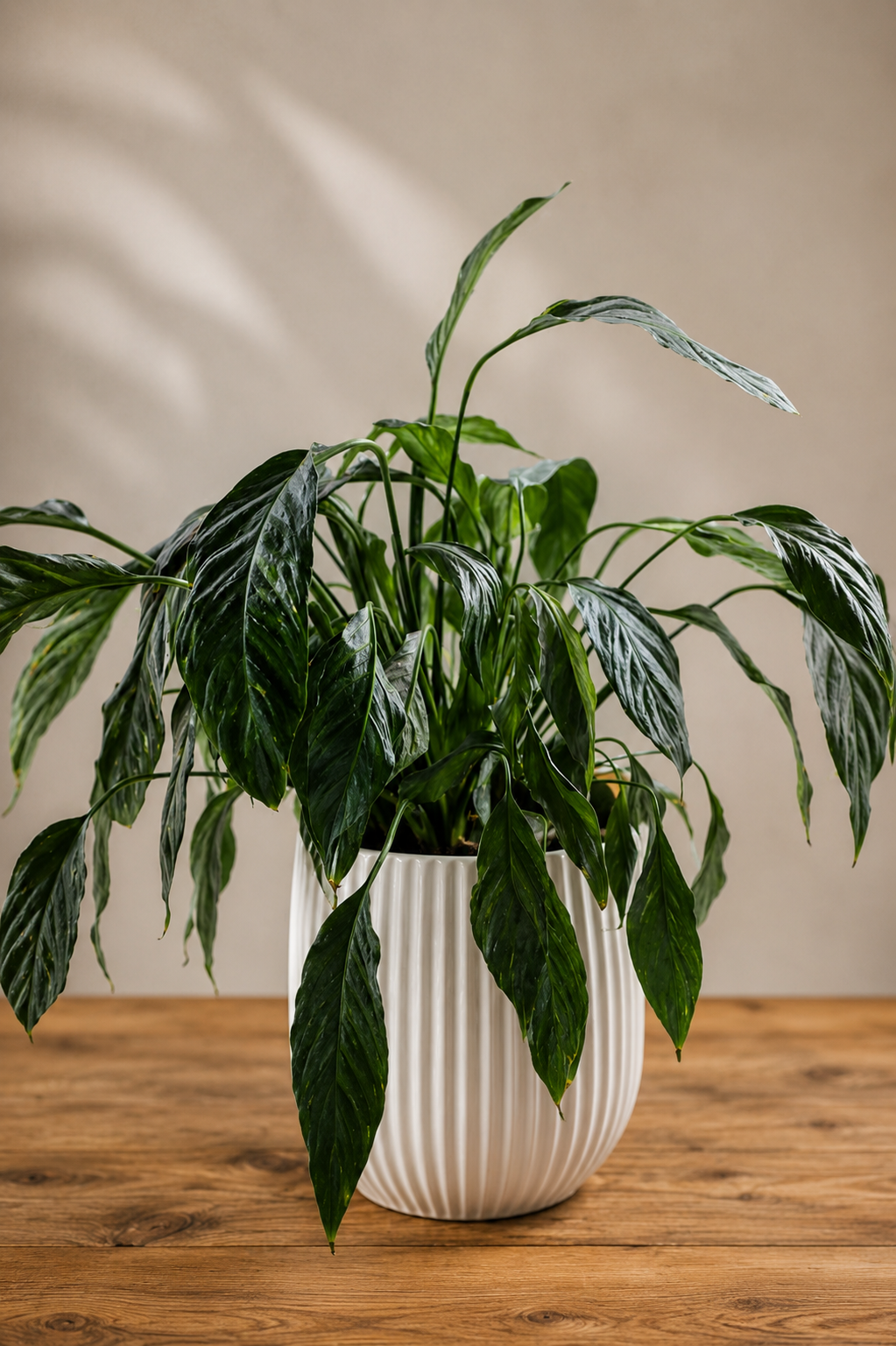
You water your peace lily, expecting it to perk up within hours… but instead, it still looks limp and lifeless. It’s frustrating, especially when you’re trying to do the right thing.
The truth is, peace lily drooping even after watering is a very common issue. And it doesn’t always mean your plant needs more water. In fact, watering again can sometimes make things worse.
Peace lilies are expressive plants. When something is off, they show it quickly. But drooping is just a signal, not the actual problem.
In this guide, you’ll learn:
- Why your peace lily is drooping even after watering
- How to identify the exact cause
- Simple, step-by-step fixes that actually work
What Peace Lily Drooping Even After Watering Usually Means
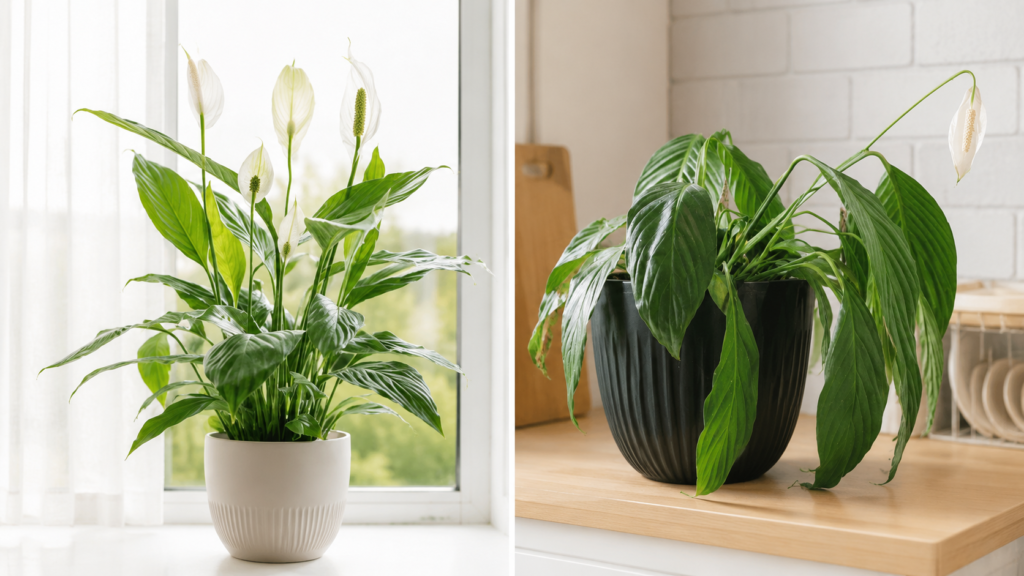
Peace lily leaves drooping usually mean one thing:
The plant is struggling to maintain water balance.
But here’s the important part:
That doesn’t always mean the soil is dry.
Drooping can happen when:
- Roots can’t absorb water properly
- Soil is too wet or too compact
- Environmental stress is affecting the plant
Think of drooping as your plant saying:
“Something isn’t right with how I’m getting or using water.”
Most Common Reasons Your Peace Lily Is Drooping Even After Watering
Overwatering
Why it happens
When you water too often, the soil stays soggy. Roots stop getting oxygen and begin to rot. Damaged roots can’t absorb water properly, which is why many people notice their peace lily drooping after watering.
How to identify it
- Soil feels wet for days
- Leaves look limp and slightly yellow
- Musty or sour smell from soil
- Pot feels heavy
How to fix it
- Stop watering immediately
- Check roots if possible
- Trim any black or mushy roots
- Repot into fresh, well-draining soil
- Let soil dry slightly before watering again
How to prevent it
- Only water when the top 1–2 inches of soil are dry
- Use pots with drainage holes
- Avoid watering on a fixed schedule
You can also read your guide on How Often Should You Water Indoor Plants? to avoid common watering mistakes.
Underwatering (Delayed Recovery)
Why it happens
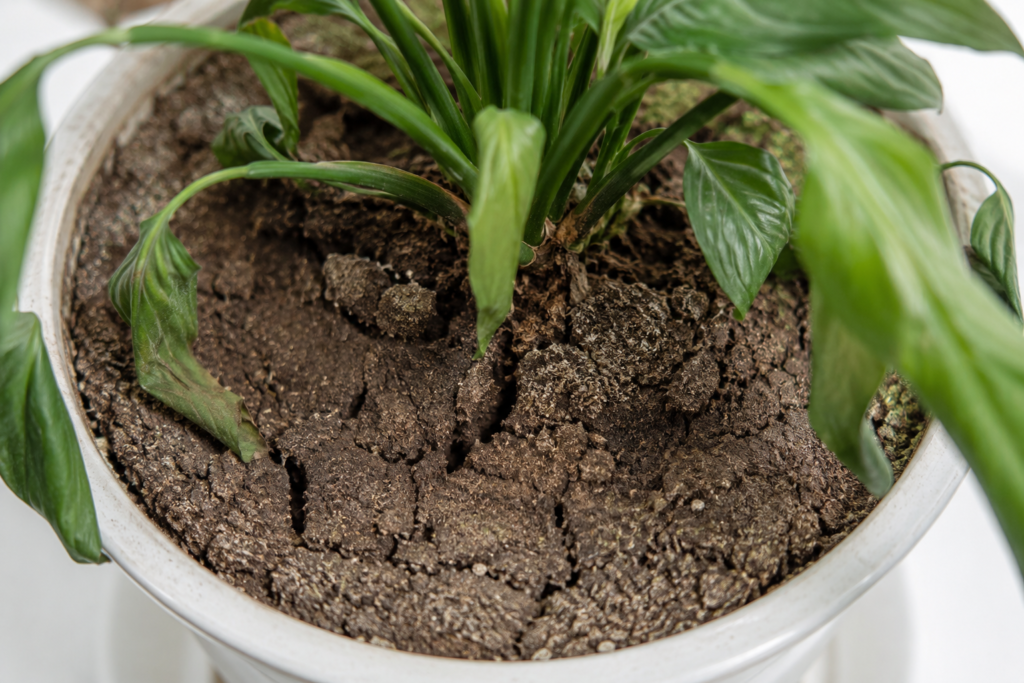
If the plant was very dry before watering, it may take time to recover. Sometimes the soil becomes so dry it repels water.
How to identify it
- Soil feels dry even after watering
- Water runs straight through the pot
- Leaves are thin, wrinkled, and droopy
How to fix it
- Place the pot in a bowl of water
- Let it soak for 15–20 minutes
- Allow excess water to drain completely
How to prevent it
- Water consistently before soil becomes bone dry
- Check soil regularly, not just leaves
Poor Drainage
Why it happens
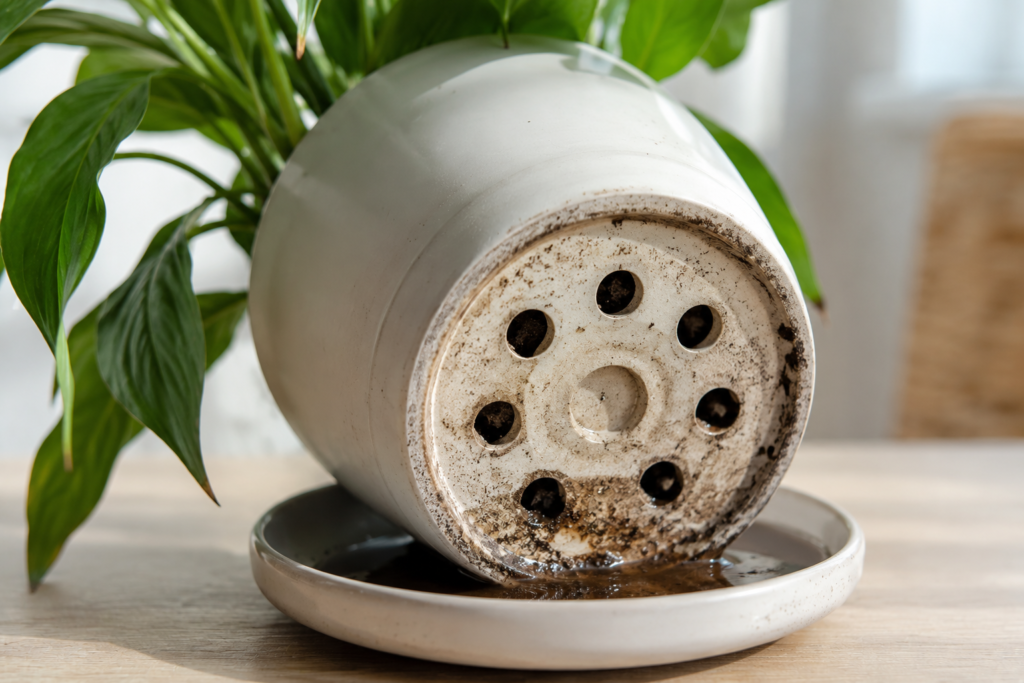
Without proper drainage, water collects at the bottom, suffocating roots.
How to identify it
- Water sits on top of soil
- Pot has no drainage holes
- Soil feels dense and compact
How to fix it
- Repot into a container with drainage holes
- Use airy potting mix (add perlite or sand)
How to prevent it
- Always use well-draining soil
- Never let the plant sit in standing water
Root Rot
Why it happens
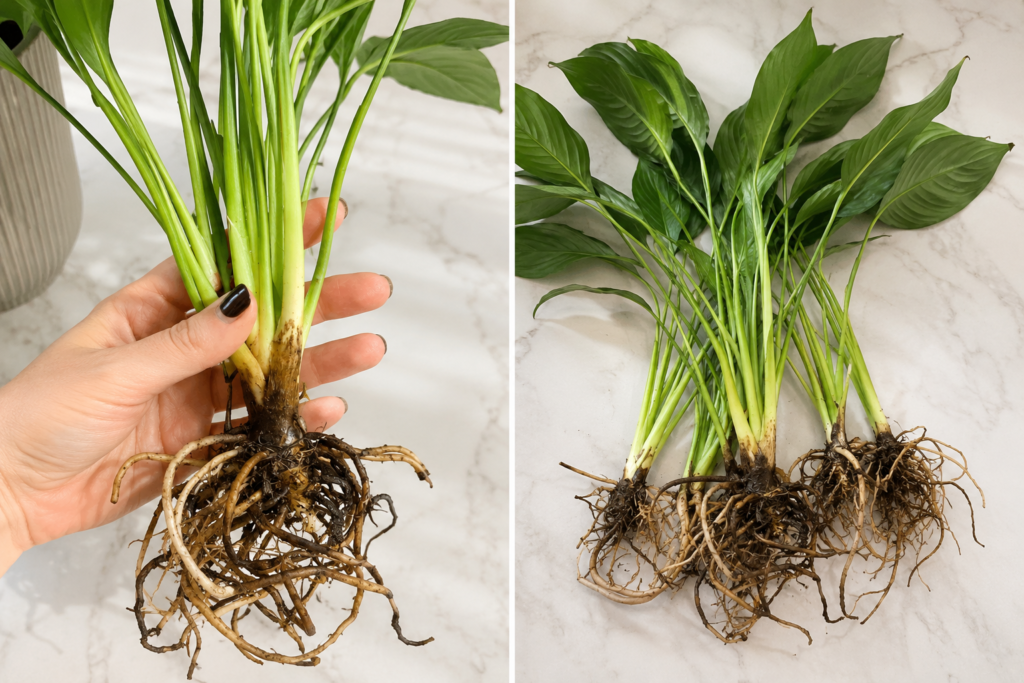
Prolonged overwatering leads to fungal infection in roots.
How to identify it
- Roots are black, mushy, or smell bad
- Leaves droop even in wet soil
- Plant stays weak and peace lily droopy after watering
How to fix it
- Remove the plant from the pot
- Cut off affected roots
- Rinse remaining roots gently
- Repot in fresh soil
How to prevent it
- Avoid waterlogged soil
- Let soil dry slightly between watering
Low Light Conditions
Why it happens
In low light, the plant slows down. It uses less water, so soil stays wet longer, leading to stress.
How to identify it
- Slow growth
- Pale or smaller leaves
- Soil stays wet for too long
This often leads people to think their peace lily needs more water, even when the real issue is low light.
How to fix it
- Move the plant to bright, indirect light
- Avoid direct harsh sunlight
How to prevent it
- Keep near a window with filtered light
- Rotate plant occasionally
If your room doesn’t get much sunlight, Best Indoor Plants for Beginners in Low Light guide may help you choose easier plants for darker spaces.
Temperature or Humidity Stress
Why it happens
Peace lilies prefer stable, warm, humid environments.
How to identify it
- Drooping despite correct watering
- Brown leaf edges
- Exposure to AC, heaters, or drafts
How to fix it
- Move away from vents or drafts
- Increase humidity (mist or pebble tray)
How to prevent it
- Keep temperature between 18–27°C
- Maintain moderate humidity
Nutrient Imbalance
Why it happens
Too much or too little fertilizer affects root health.
How to identify it
- Weak, droopy growth
- Leaf discoloration
- White crust on soil (salt buildup)
How to fix it
- Flush soil with clean water
- Resume light feeding after recovery
How to prevent it
- Fertilize sparingly (once a month in growing season)
How to Tell Which Problem You Actually Have
This is where most people get stuck. Use this quick guide:
- Soil is wet + drooping → Likely overwatering or root rot
- Soil is dry + drooping → Underwatering
- Water drains too fast → Soil is too dry or compact
- Soil stays wet for days → Poor drainage or low light
- Peace lily drooping even after watering → Root damage, overwatering, or environmental stress
Start with the soil. It gives the clearest clue.
How to Fix Peace Lily Drooping Even After Watering
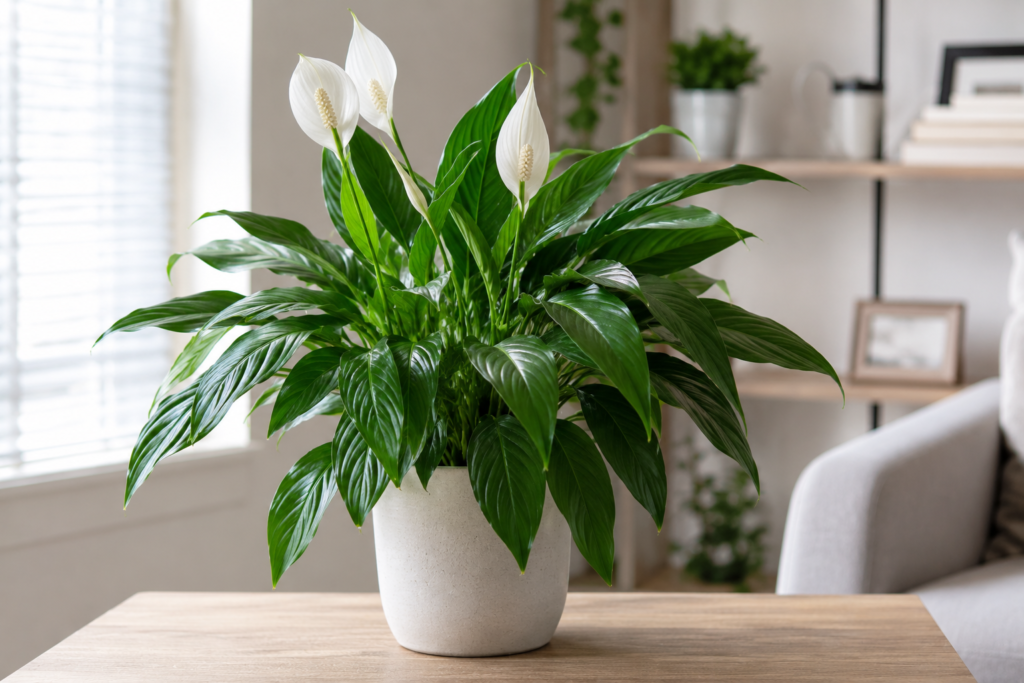
If your peace lily is drooping after watering, follow this:
Step 1: Check the soil
Stick your finger 1–2 inches deep
- Wet → stop watering
- Dry → water properly
Step 2: Inspect drainage
Make sure water flows out easily
Step 3: Adjust watering routine
Water only when needed, not on schedule
Step 4: Improve light conditions
Move to bright, indirect sunlight
Step 5: Check roots (if problem continues)
Look for rot or damage
Step 6: Monitor for 5–7 days
Peace lilies usually respond quickly once the issue is fixed
When Drooping Leaves Are Normal
Peace lilies are known for dramatic drooping when thirsty.
If your plant:
- Droops slightly
- Recovers within hours after watering
That’s completely normal.
It’s actually a built-in signal telling you it’s time to water.
How to Prevent Drooping in the Future
- Check soil, not just leaves
- Water only when top layer is dry
- Use pots with drainage holes
- Keep in bright, indirect light
- Avoid extreme temperature changes
- Maintain consistent care routine
Consistency matters more than perfection.
Frequently Asked Questions
Why is my peace lily drooping even after watering?
In many cases, the problem is not lack of water but how the roots are handling it. Overwatering, poor drainage, root rot, or low light can all stop the plant from absorbing water properly. Checking the soil is usually the fastest way to identify the real issue.
How do I fix a drooping peace lily quickly?
Start by checking whether the soil is wet or dry. If it is dry, water the plant thoroughly and let excess water drain out. If the soil is already wet, avoid watering again and focus on improving drainage, light, or airflow. Peace lilies often recover within a few days once the cause is corrected.
Can a droopy peace lily recover?
Yes, peace lilies are usually very resilient. Even badly drooping plants can recover if the underlying problem is fixed early. Healthy leaves may perk back up, while severely damaged leaves may need to be trimmed later.
Should I water again if it’s still drooping?
Not immediately. A peace lily can stay droopy even when the soil is already too wet. Watering again without checking the soil may worsen root problems. Always feel the soil first before adding more water.
How often should I water a peace lily?
Most indoor peace lilies need water about once a week, but this can vary depending on light, temperature, and humidity. Instead of following a strict schedule, check whether the top 1–2 inches of soil feel dry before watering.
Can drooping leaves become healthy again?
Mildly drooping leaves often recover once the plant is watered properly or moved into better conditions. However, leaves that turn yellow, brown, or mushy usually will not fully recover and can be removed once new growth appears.
Should I cut drooping leaves?
If the leaves are still green, it is usually best to leave them alone while the plant recovers. Remove leaves only if they become yellow, brown, soft, or clearly dead. Clean pruning scissors help prevent extra stress on the plant.
Conclusion
Seeing your peace lily drooping even after watering can feel confusing, but it’s rarely a mystery once you look closely.
In most cases, the issue isn’t about giving more water. It’s about understanding how your plant is using it.
Start with the soil, observe carefully, and make small adjustments. Peace lilies are forgiving plants. Once you correct the problem, they usually bounce back quickly.
With a bit of attention and consistency, you’ll not only fix the issue but also prevent it from happening again.