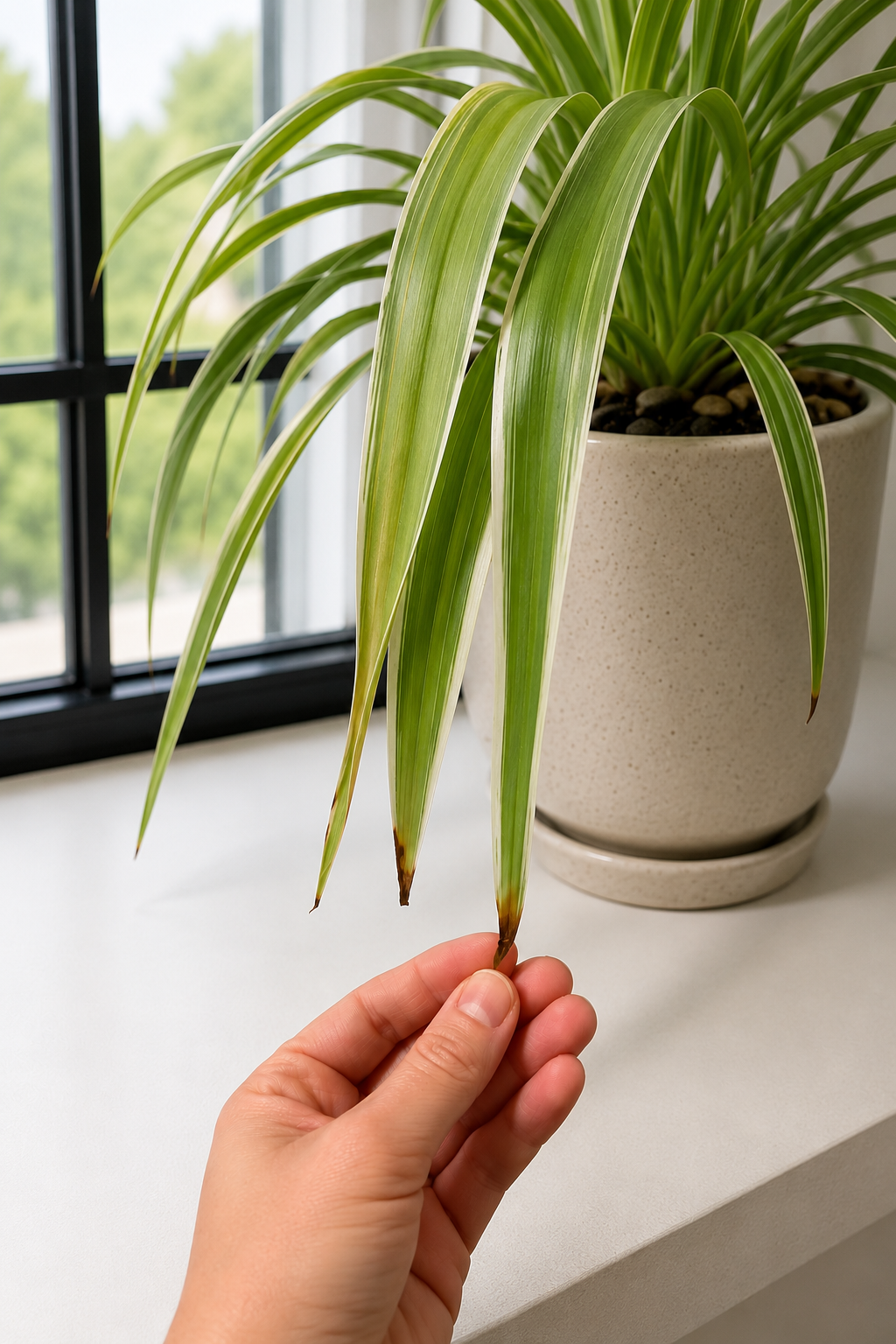
Noticing spider plant brown tips can be frustrating, especially when the rest of the plant looks healthy. Those dry, crispy ends often make plant owners worry they’re doing something wrong.
The good news is this is a very common issue with spider plants. It usually doesn’t mean your plant is dying.
Brown tips are a signal, not a single problem. Several factors can cause brown tips on spider plant leaves, and the key is figuring out which one applies to your situation.
In this guide, you’ll learn how to identify the exact cause, fix it step by step, and prevent it from happening again.
What Spider Plant Brown Tips Mean
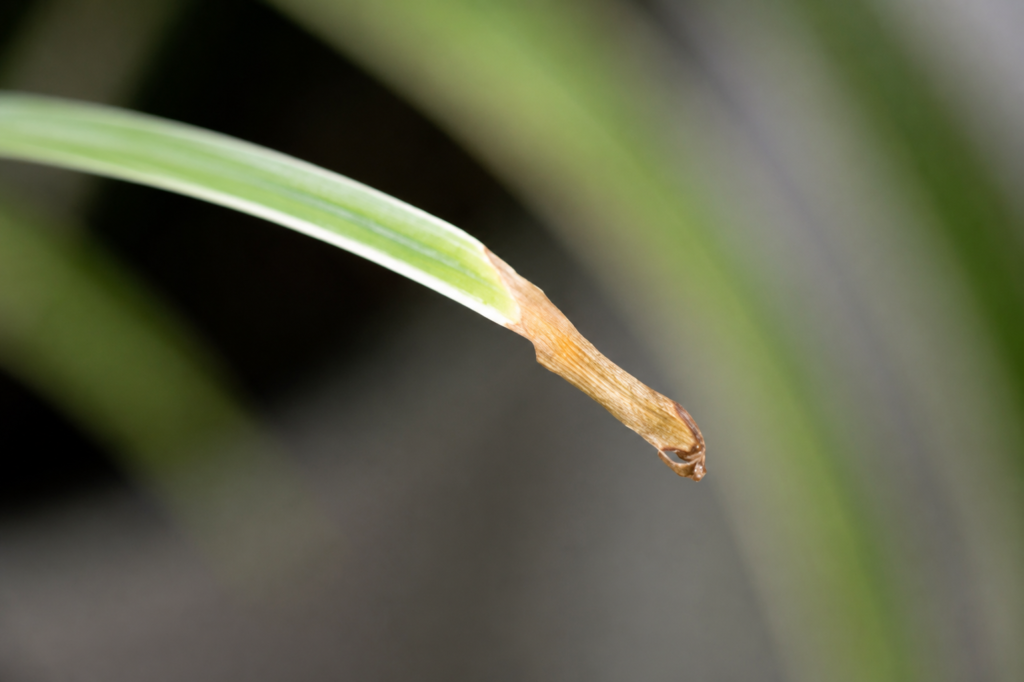
When your spider plant tips turn brown, it usually means the plant is under minor stress.
This stress often affects the leaf tips first, because they are the most sensitive parts of the plant.
Important to remember:
- Brown tips are not a disease
- They are usually cosmetic, not fatal
- The rest of the plant can still be perfectly healthy
So instead of panicking, think of it as your plant trying to tell you something needs adjusting. In most cases, spider plant brown tips are a sign that something in the plant’s environment or care routine needs a small adjustment.
Most Common Reasons for Spider Plant Brown Tips
Understanding the most common causes of spider plant brown tips makes it much easier to choose the right solution.
Overwatering
Why it happens
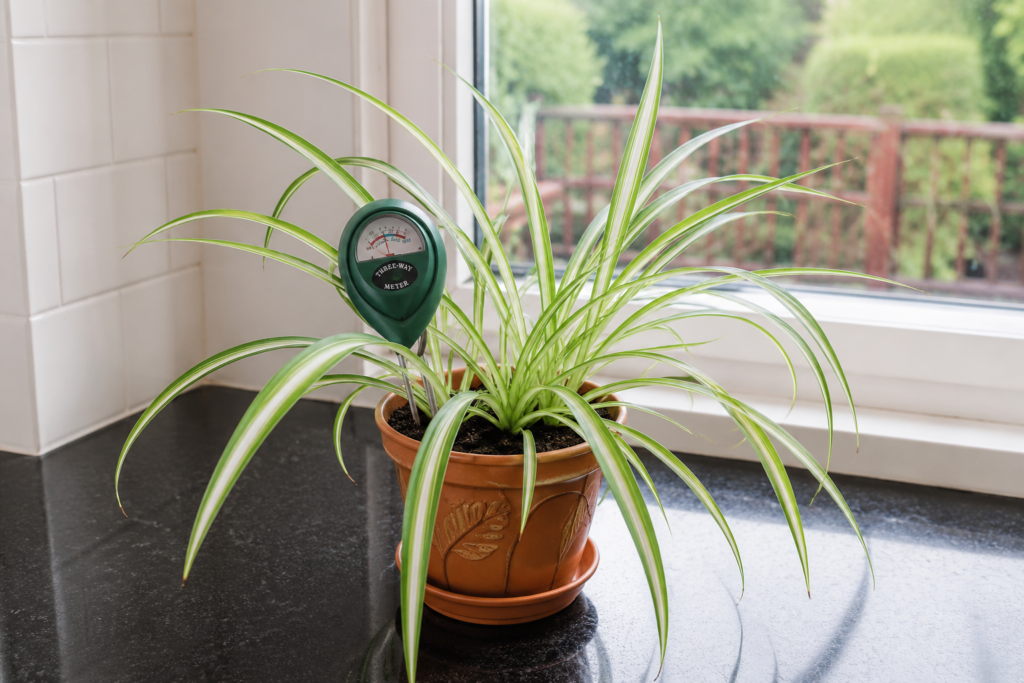
Too much water suffocates the roots, reducing oxygen and causing stress that shows up as brown tips.
How to identify it
- Soil stays wet for days
- Leaves may look soft or slightly yellow
- Pot feels heavy
How to fix it
- Let the soil dry out completely before watering again
- Ensure the pot has drainage holes
- Reduce watering frequency
How to prevent it
- Water only when the top 2–3 cm of soil is dry
- Use a well-draining soil mix
Underwatering
Why it happens
When the plant doesn’t get enough water, the leaf tips dry out first.
How to identify it
- Soil feels dry and pulls away from the pot
- Leaves look thin or slightly curled
- Tips are crispy and dry
How to fix it
- Water thoroughly until excess drains out
- Maintain a consistent watering routine
How to prevent it
- Check soil moisture regularly
- Avoid letting the soil go bone dry repeatedly
Not sure when to water? Check our guide on How Often Should You Water Indoor Plants? for beginner-friendly watering tips.
Tap Water Chemicals (Fluoride & Chlorine)
Why it happens
Spider plants are sensitive to chemicals in tap water, especially fluoride. This is one of the most common reasons spider plant leaf tips turn brown.
How to identify it
- Brown tips appear even with proper watering
- Damage is mostly limited to tips, not entire leaves
How to fix it
- Switch to filtered, distilled, or rainwater
- Let tap water sit overnight before use
How to prevent it
- Use low-mineral or filtered water regularly
Low Humidity
Why it happens
Dry indoor air, especially in apartments, causes moisture loss from leaf tips.
How to identify it
- Tips turn brown and dry quickly
- Common in AC rooms or winter months
How to fix it
- Place a humidity tray (water + pebbles) under the pot
- Group plants together
- Light misting (optional)
How to prevent it
- Keep humidity moderate
- Avoid placing plants near AC vents
Fertilizer Buildup (Salt Accumulation)
Why it happens
Excess fertilizer leaves salts in the soil, which burn the roots and tips.
How to identify it
- White crust on soil surface
- Brown tips despite good care
- Slow growth
How to fix it
- Flush the soil with clean water (let water run through the pot)
- Reduce fertilizer use
How to prevent it
- Fertilize lightly during growing season
- Skip feeding in winter
Poor Drainage
Why it happens
Water gets trapped in the soil, leading to root stress.
How to identify it
- Soil stays soggy
- Pot has no drainage holes
- Roots may start rotting
How to fix it
- Repot into a container with drainage holes
- Use airy, well-draining soil
How to prevent it
- Always use proper pots and soil mix
Choosing the right soil makes a big difference. See our Best Soil Mix for Indoor Plants guide for more details.
Temperature Stress
Why it happens
Extreme heat, cold drafts, or sudden temperature changes stress the plant.
How to identify it
- Brown tips appear suddenly
- Plant is near a window, heater, or AC
How to fix it
- Move plant to a stable indoor spot
- Avoid extreme temperature exposure
How to prevent it
- Keep plant in a consistent environment
How to Tell Which Problem You Actually Have
Use this quick guide to diagnose why your spider plant has brown tips:
- Soil wet for days → Overwatering
- Soil very dry → Underwatering
- Using tap water → Chemical sensitivity
- Dry indoor air → Low humidity
- White crust on soil → Fertilizer build-up
- No drainage holes → Poor drainage
- Near AC/heater/window drafts → Temperature stress
Start with the soil condition, then check watering and environment. That usually reveals the cause quickly.
Step-by-Step Recovery Plan
Step 1: Check the soil
Touch the soil to see if it’s too wet or too dry
Step 2: Adjust watering
Water only when needed, not on a fixed schedule
Step 3: Improve water quality
Switch to filtered or rested water if needed
Step 4: Inspect the pot
Ensure proper drainage
Step 5: Trim brown tips (optional)
Cut only the dead part for appearance
Step 6: Monitor for 2–3 weeks
New growth should come out healthy
When Brown Tips Are Normal
Sometimes, a few brown tips are completely normal.
- Older leaves may naturally age
- Minor tip burn can happen occasionally
- Small imperfections don’t mean poor care
If most of the plant looks healthy, there’s usually no serious problem.
How to Prevent Spider Plant Brown Tips in the Future
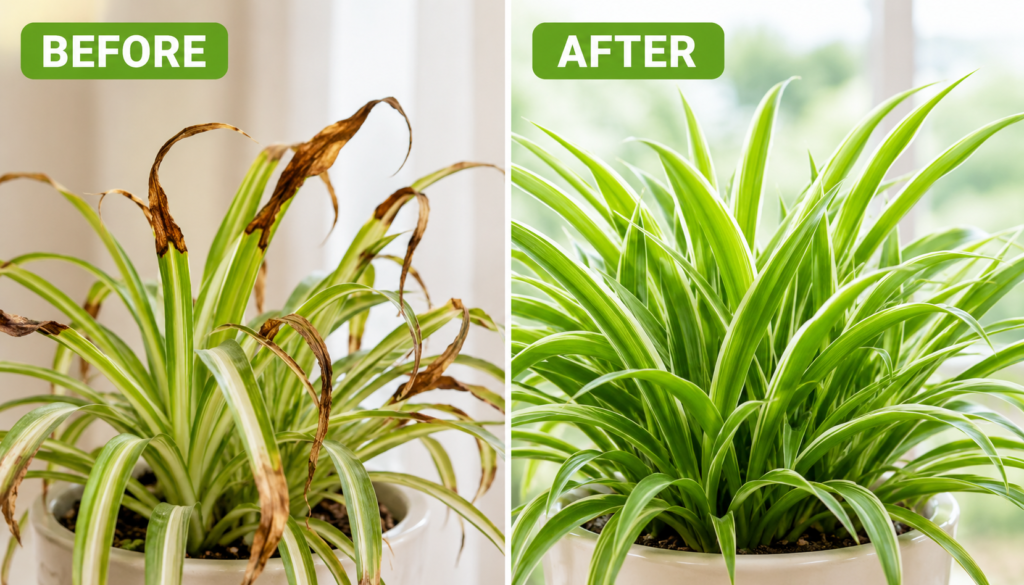
Preventing spider plant brown tips is usually easier than fixing them once the damage appears.
- Water consistently, not too much or too little
- Use filtered or low-chemical water
- Keep moderate humidity
- Avoid over-fertilizing
- Ensure good drainage
- Keep plant in stable indoor conditions
Simple, consistent care is the best way to avoid spider plant tips turning brown. For complete growing instructions beyond brown tip prevention, see our Spider Plant Care Guide.
Frequently Asked Questions
Should I cut brown tips off my spider plant?
Yes, you can trim brown tips if they bother you. Use clean scissors and cut only the brown portion while following the natural shape of the leaf. This improves appearance, but remember that trimming does not solve the underlying cause.
Can brown tips turn green again?
No, once a leaf tip has turned brown, that damaged tissue will not become green again. The goal is to fix the cause so that new growth emerges healthy and free from browning.
Why are only the tips of my spider plant turning brown?
The leaf tips are often the first part of the plant to show stress from watering issues, low humidity, mineral build-up, or poor water quality. If the rest of the plant looks healthy, the problem is usually minor and can often be corrected with small care adjustments.
How often should I water my spider plant?
There is no perfect schedule because watering needs change with temperature, light, and season. A good rule is to water when the top inch of soil feels dry to the touch. Checking the soil is usually more reliable than watering on specific days.
Is tap water bad for spider plants?
Spider plants can be sensitive to fluoride, chlorine, and other minerals found in some tap water supplies. If you notice persistent brown tips despite proper care, switching to filtered, distilled, or rainwater may help reduce the problem.
Do spider plants need high humidity?
Spider plants prefer moderate humidity, but they can adapt well to typical indoor environments. If your home has very dry air, especially during winter or when air conditioning runs frequently, increasing humidity may help prevent brown tips.
Is fertilizer necessary for spider plants?
Spider plants benefit from occasional feeding during the growing season, but they do not need large amounts of fertilizer. In fact, too much fertilizer can lead to salt buildup in the soil, which is a common cause of brown leaf tips.
Conclusion
Seeing brown tips on spider plant can be concerning, but the good news is that most cases of spider plant brown tips are easy to fix once you identify the underlying cause.
The key is to observe your plant carefully, make small adjustments, and give it time to recover.
Plant care isn’t about being perfect. It’s about learning how your plant responds and adjusting along the way.