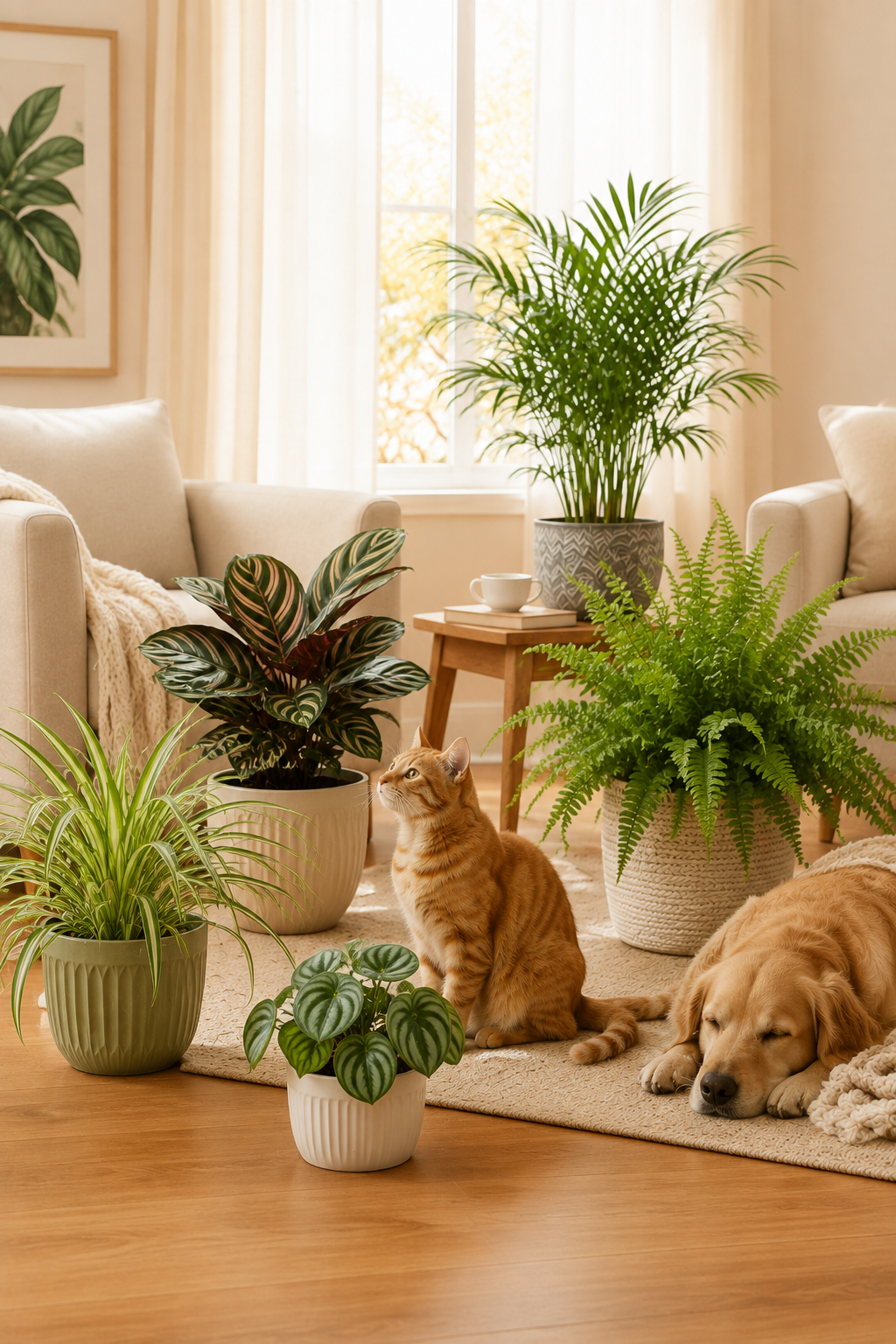
If you share your home with a cat or dog, choosing a houseplant takes a little more thought than simply picking one that looks good on a shelf. Many popular indoor plants can be harmful if pets chew or swallow them, so it is worth checking a plant’s safety before bringing it home.
The good news is that you do not have to give up your indoor garden. There are plenty of attractive plants that are listed as non-toxic to cats and dogs, including several that work well in apartments and beginner-friendly plant collections. The ASPCA’s current plant database lists plants such as spider plant, parlor palm, Boston fern, African violet, calathea, peperomia, and cast iron plant as non-toxic to dogs and cats.
In this guide, you will find the best pet friendly indoor plants for homes with cats and dogs, along with their light needs, watering requirements, beginner-friendliness, and potential drawbacks. This makes it easier to choose a plant that is both suitable for your pet and realistic for your home.
Important: “Non-toxic” does not mean a plant should be considered food for pets. ASPCA notes that eating any plant material can potentially cause vomiting or gastrointestinal upset. Always check the exact plant name before purchasing, since common names can be confusing.
What Makes a Plant Pet Friendly?
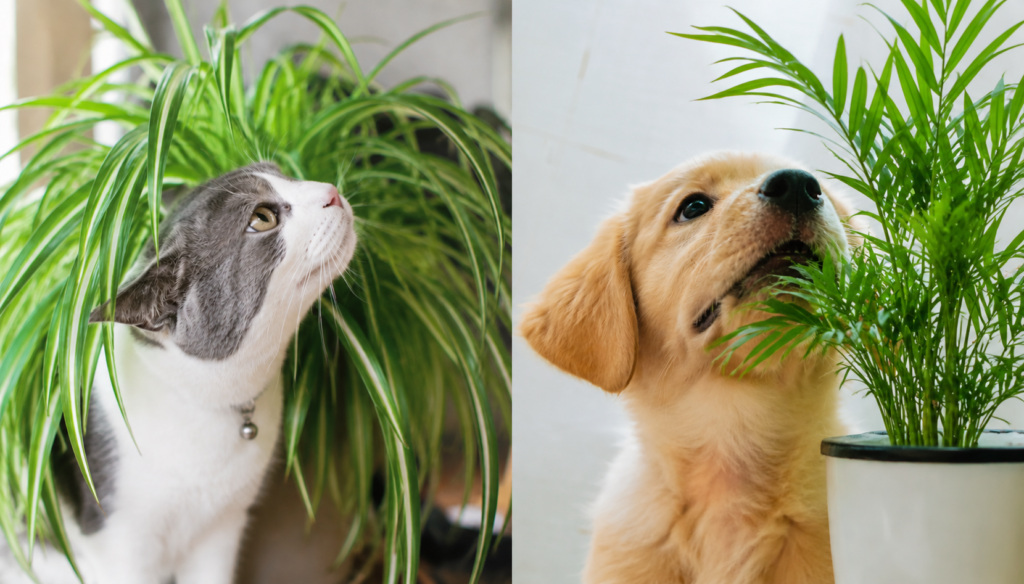
A good pet-friendly houseplant should first be confirmed as non-toxic to the pets in your home. For this article, the plants below are listed by the ASPCA as non-toxic to both cats and dogs.
But pet safety is not the only consideration.
The best indoor pet friendly plants should also match the conditions in your home. A plant may be safe for your cat or dog but still struggle if it is placed in a dark corner, watered too frequently, or kept in soil that stays wet.
A few common mistakes are worth avoiding:
- Assuming every houseplant is pet safe: Some very popular plants, including snake plants and aloe, are toxic to cats and dogs.
- Relying only on a common name: Different plants can have similar common names, so check the scientific name when possible.
- Putting a plant where a curious pet can easily chew it: Even non-toxic plants can cause stomach upset if eaten.
- Overwatering: Indoor plants generally use less water in lower light, so watering on a fixed schedule can keep the soil too wet.
- Expecting “low light” to mean no light: Every living plant needs light for photosynthesis. A low-light plant can tolerate less light, but it cannot thrive indefinitely in complete darkness.
With those points in mind, here are some of the best indoor plants pet friendly homes can grow.
Best Pet Friendly Indoor Plants
Below are some of the best pet friendly indoor plants to consider for apartments, bedrooms, living rooms, and other common indoor spaces.
1. Spider Plant
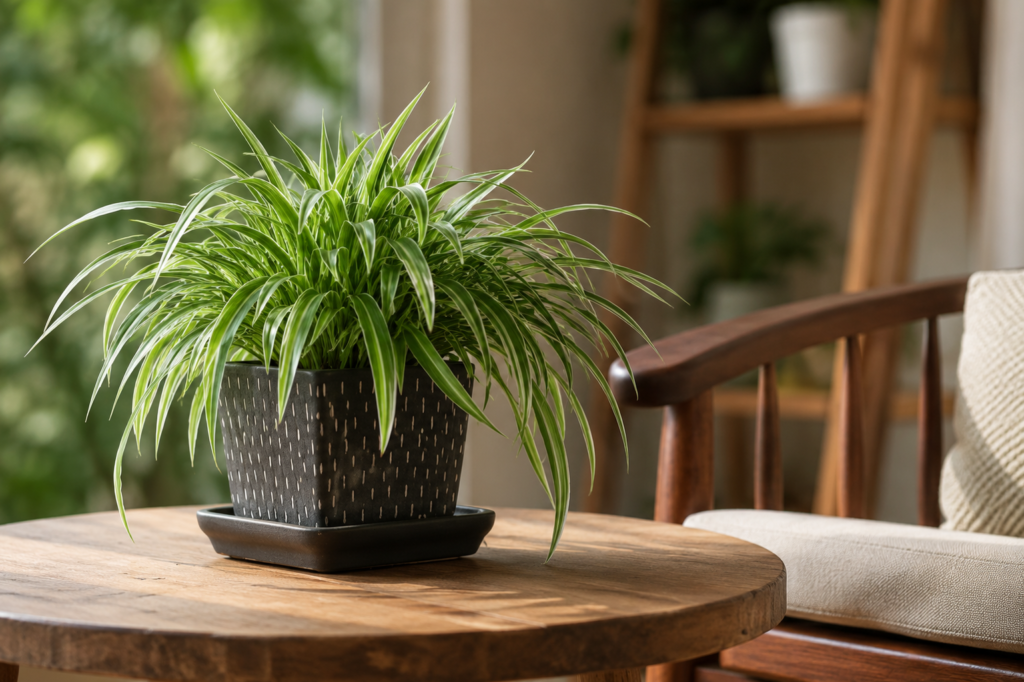
Scientific name: Chlorophytum comosum
Spider plant is one of the easiest choices for a home with cats or dogs. The ASPCA lists it as non-toxic to both cats and dogs, making it a practical option for pet parents who want a forgiving houseplant.
Why it works for pet-friendly homes: Spider plants are adaptable and produce long, arching leaves that give them a full appearance without requiring complicated care. Their hanging growth also works well in baskets or on high shelves, although placement should not prevent a determined cat from reaching them.
Light needs: Bright, indirect light is ideal, but spider plants can tolerate lower indoor light. Too little light can slow growth.
Watering: Water when the soil has started to dry rather than keeping it constantly wet. Allow excess water to drain from the pot.
Why beginners like it: It is forgiving, easy to propagate, and does not require complicated routines.
Potential drawbacks: Cats may find the long leaves tempting to chew. Although the plant is listed as non-toxic, eating plant material can still cause stomach upset.
If your spider plant develops brown leaf tips, see our guide to spider plant brown tips for the most common causes and fixes.
2. Parlor Palm
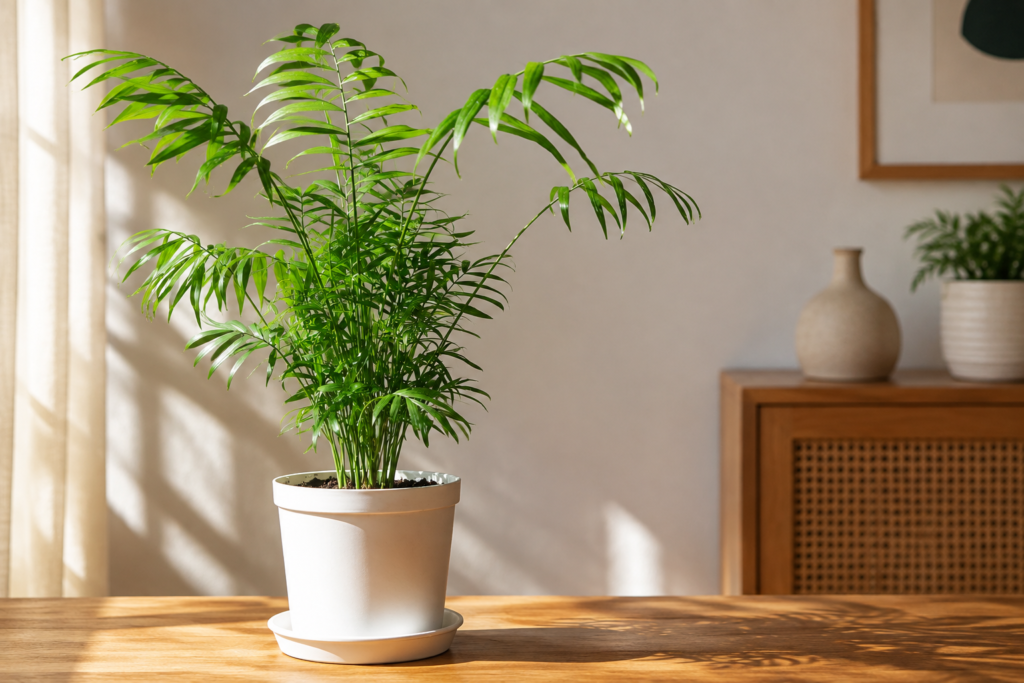
Scientific name: Chamaedorea elegans
If you want a small palm for a living room, bedroom, or apartment, parlor palm is one of the best indoor pet friendly plants to consider. The ASPCA lists it as non-toxic to cats and dogs.
Why it works for pet-friendly homes: Its soft, arching fronds give a room a leafy appearance without the sharp or stiff foliage found on some other indoor plants.
Light needs: Parlor palm tolerates relatively low indoor light. A location with bright, indirect light will generally support better growth. The University of Minnesota Extension includes parlor palm among plants suited to low-light indoor conditions.
Watering: Let the upper portion of the potting mix begin to dry before watering again. Avoid leaving the roots sitting in water.
Why beginners like it: It handles typical indoor lighting reasonably well and does not demand frequent attention.
Potential drawbacks: It is not a fast-growing plant, especially in lower light. It can also become much wider and taller than a small nursery plant suggests, so leave it some space.
3. Boston Fern
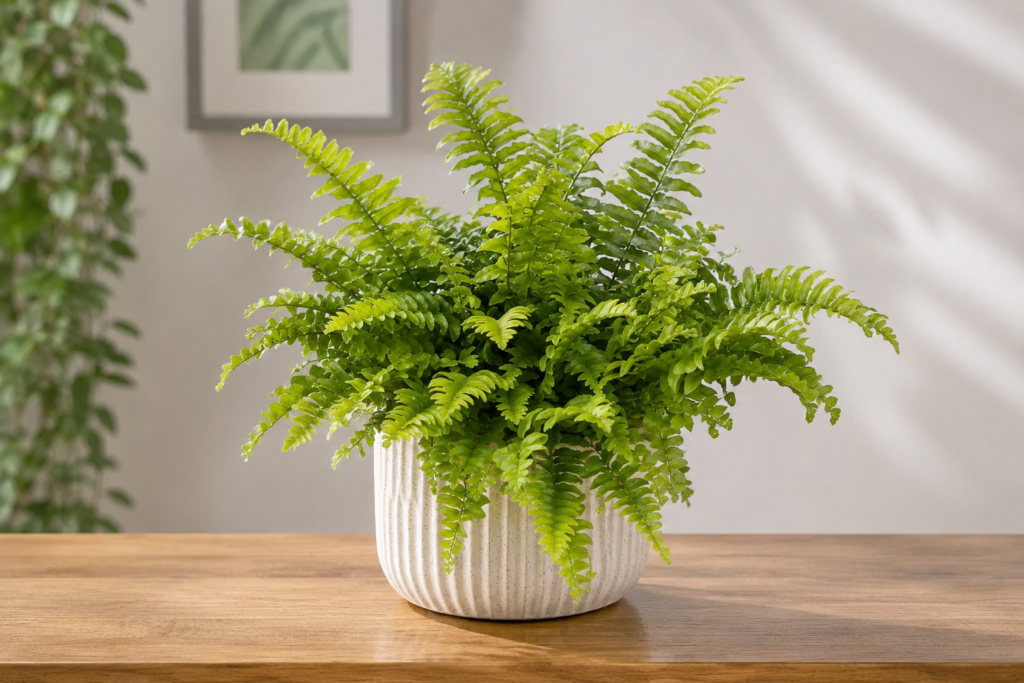
Scientific name: Nephrolepis exaltata ‘Bostoniensis’
Boston fern is a classic choice if you want a lush, soft-looking plant that is safe around cats and dogs. The ASPCA lists Boston fern as non-toxic to both.
Why it works for pet-friendly homes: Its feathery fronds create a full, flowing appearance and are particularly attractive in hanging baskets.
Light needs: Give it bright, indirect light. It can tolerate some lower light, but extremely dark rooms are not suitable for healthy long-term growth.
Watering: Boston ferns prefer more consistent moisture than many drought-tolerant houseplants. Check the potting mix regularly and water when it begins to dry, without leaving the pot sitting in water.
Why beginners like it: Its pet-safe status and attractive foliage make it a useful alternative to plants that are unsafe for pets.
Potential drawbacks: It is less forgiving of prolonged dryness than plants such as cast iron plant or peperomia. Dry indoor air can also make fern care more difficult, so it may need a little extra attention.
4. Calathea
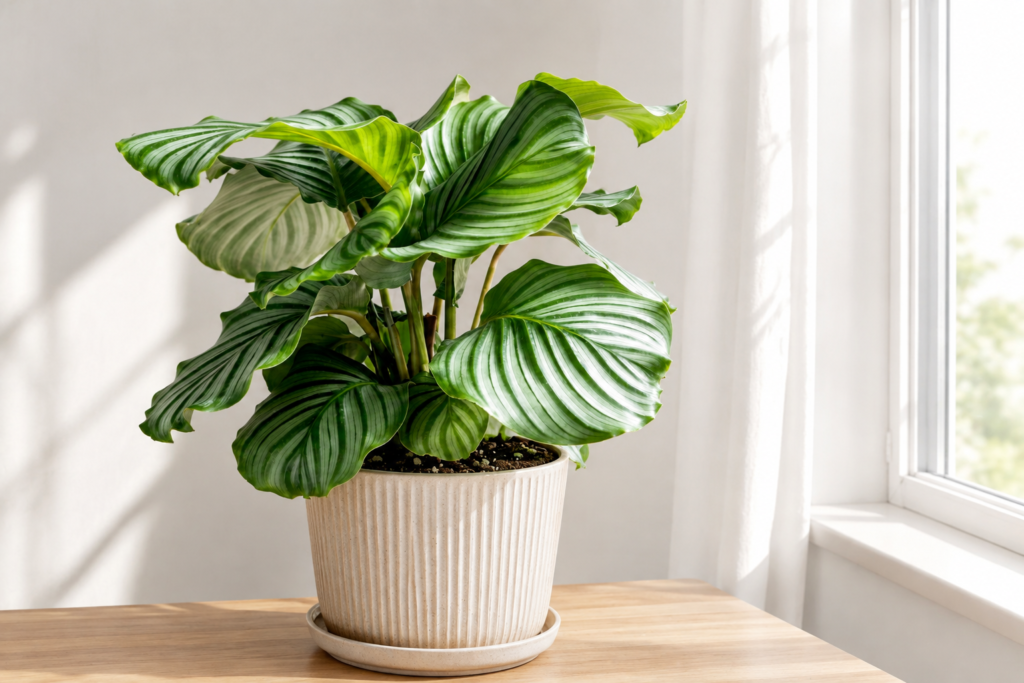
Scientific name: Calathea spp.
Calatheas are excellent choices if you want colorful foliage without relying on flowers. The ASPCA lists calathea species as non-toxic to cats and dogs.
Why it works for pet-friendly homes: Many calatheas have patterned leaves, giving you plenty of visual interest while keeping pet safety in mind.
Light needs: Bright, filtered or indirect light is generally suitable. Avoid harsh direct sunlight, which can damage the foliage.
Watering: Calatheas prefer consistently moist soil but should not sit in soggy conditions. Check the soil before watering rather than following a strict calendar. University of Minnesota Extension notes that calatheas prefer filtered or shaded light and consistently moist, but not soggy, conditions.
Why beginners like it: The main attraction is the foliage, and there are many varieties to choose from.
Potential drawbacks: Calathea is not the easiest plant on this list. It can be sensitive to dry conditions, inconsistent watering, and poor indoor conditions. It is better suited to beginners who are willing to pay attention to their plant.
5. Peperomia
Scientific name: Peperomia spp.
Peperomia is a broad group of compact houseplants, and several types are listed by the ASPCA as non-toxic to cats and dogs. The Green Ripple, Watermelon, Trailing, and other peperomias appear in the ASPCA database.
Why it works for pet-friendly homes: Peperomias are generally compact, making them useful for desks, shelves, small apartments, and other spaces where a large plant would be impractical.
Light needs: Bright to medium indirect light is a good starting point. They can tolerate some lower light, although growth may slow.
Watering: Allow the upper part of the soil to dry before watering again. Their thicker leaves can hold some moisture, so keeping the soil constantly wet is a common mistake. University of Minnesota Extension recommends watering peperomia when the top inch or two of soil has dried.
Why beginners like it: It stays relatively compact and generally does not need frequent watering.
Potential drawbacks: “Peperomia” covers many different species and cultivars, so care can vary. Always identify the specific plant before buying.
6. African Violet
Scientific name: Saintpaulia spp.
African violet is a good choice for pet parents who want flowers as well as foliage. The ASPCA lists African violet as non-toxic to cats and dogs.
Why it works for pet-friendly homes: It provides colorful flowers in a small package, making it especially useful for apartments, bedrooms, kitchen counters, and windowsills.
Light needs: A bright, cool location with indirect light works well. North, northeast, or northwest-facing windows can be suitable, while supplemental LED lighting can help when natural light is inadequate.
Watering: Keep the potting mix lightly moist but never soggy. Overwatering and poor drainage are common causes of problems.
Why beginners like it: It stays relatively small and can bloom several times a year when its needs are met.
Potential drawbacks: It needs more specific care than a cast iron plant or spider plant. Water sitting on its leaves can also cause leaf spotting, so watering the soil carefully is preferable.
7. Cast Iron Plant
Scientific name: Aspidistra elatior
Cast iron plant has earned its reputation for handling less-than-perfect indoor conditions. More importantly for pet parents, the ASPCA lists it as non-toxic to both cats and dogs.
Why it works for pet-friendly homes: It combines pet safety with good tolerance for lower indoor light, making it particularly useful for apartments and rooms that do not receive strong natural light.
Light needs: It tolerates low light and does not need a sunny window. Avoid assuming that it can live without light altogether.
Watering: Let the soil begin to dry between waterings. It is generally better to underwater slightly than keep the roots constantly wet.
Why beginners like it: It is slow-growing and does not require constant attention. The University of Minnesota Extension also lists cast iron plant among low-light houseplants.
Potential drawbacks: Its slow growth can be disappointing if you want a large plant quickly. It also has a fairly simple foliage appearance compared with patterned plants such as calathea.
8. Areca Palm
Scientific name: Dypsis lutescens
Areca palm, also called golden butterfly palm, is another pet-friendly option when you want something larger and more tropical-looking. The ASPCA lists it as non-toxic to cats and dogs.
Why it works for pet-friendly homes: It can create a substantial leafy display without using a plant that is toxic to cats or dogs.
Light needs: Bright, indirect light is a good choice. It can handle some lower light, but growth may be slower and less dense.
Watering: Water when the upper part of the soil has started to dry. Do not allow the pot to remain waterlogged.
Why beginners like it: It provides a larger visual impact and does not require complicated pruning.
Potential drawbacks: Areca palms need more floor space than compact plants such as peperomia or African violet. In a small apartment, the mature size should be considered before buying.
9. Prayer Plant
Scientific name: Maranta spp.
Prayer plants are closely related to calatheas and are known for their attractive patterned leaves. The ASPCA lists red-veined prayer plant, Maranta and related listings as non-toxic to cats and dogs.
Why it works for pet-friendly homes: It offers decorative foliage and a relatively compact form, making it suitable for shelves or tables.
Light needs: Bright, indirect or filtered light is preferable. Protect it from strong direct sunlight.
Watering: Keep the soil moderately and consistently moist, but avoid soggy conditions.
Why beginners like it: It is visually interesting and does not require a huge amount of space.
Potential drawbacks: Like calatheas, prayer plants can be sensitive to dry air, inconsistent moisture, and poor lighting. They are better for beginners who are comfortable checking their plants regularly.
10. Watermelon Peperomia
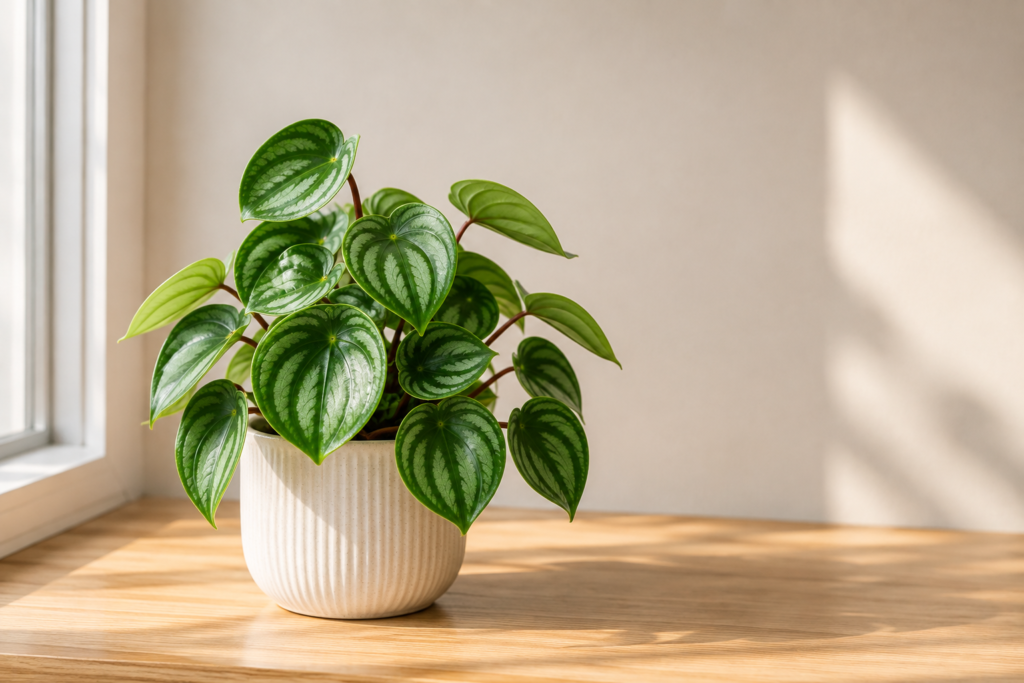
Scientific name: Peperomia argyreia
If you like the compact size of peperomia but want something more distinctive, watermelon peperomia is worth considering. Its rounded leaves have silver and green striping that resembles the pattern of a watermelon rind. The ASPCA lists it as non-toxic to cats and dogs.
Why it works for pet-friendly homes: It stays relatively compact and provides plenty of visual interest without taking over a room.
Light needs: Bright, indirect light is ideal. It can tolerate somewhat lower light, but growth may slow.
Watering: Let the top portion of the soil dry before watering. Avoid keeping the roots constantly wet.
Why beginners like it: It is compact, attractive, and generally easier to manage than many larger tropical houseplants.
Potential drawbacks: Its thick leaves do not mean it should be treated like a drought-tolerant succulent. Consistently soggy soil can still cause root problems.
11. Pilea
Scientific name: Pilea microphylla
Pilea gives pet parents another compact option, especially when space is limited. The ASPCA lists Pilea microphylla, commonly called artillery plant, as non-toxic to cats and dogs.
Why it works for pet-friendly homes: It is small enough for desks, shelves, and other compact indoor spaces.
Light needs: Bright, indirect light is a useful starting point. Avoid intense direct afternoon sun.
Watering: Water when the soil begins to dry. The exact frequency will depend on the pot size, light, temperature, and humidity in your home.
Why beginners like it: Its small size makes it easy to fit into an existing plant collection without needing a large pot or floor space.
Potential drawbacks: It can become thin or stretched when it does not receive enough light. That is not a sign that the plant needs more water. Move it toward a brighter location instead.
12. Trailing Peperomia
Scientific name: Peperomia prostrata
Trailing peperomia is a useful option for pet parents who want a plant that can spill over the edge of a shelf or hanging container. The ASPCA lists it as non-toxic to cats and dogs.
Why it works for pet-friendly homes: Its trailing growth makes it a good choice for vertical displays where floor space is limited.
Light needs: Bright, indirect light is best. A little morning light may be fine, but avoid harsh direct sunlight.
Watering: Let the soil dry somewhat between waterings. Water thoroughly and allow excess water to drain away.
Why beginners like it: It is compact and does not need a large container.
Potential drawbacks: Trailing stems can make it easier for an interested cat to reach the plant. Pet-safe does not mean chew-proof, so placement still matters.
Quick Comparison Table
Choosing from the Best Pet Friendly Indoor Plants becomes easier when you compare their light, watering, and care requirements side by side.
| Plant | Light tolerance | Watering difficulty | Beginner friendliness |
|---|---|---|---|
| Spider Plant | Low to bright indirect | Easy | Excellent |
| Parlor Palm | Low to medium | Easy | Excellent |
| Boston Fern | Medium indirect | Moderate | Good |
| Calathea | Low to medium indirect | Moderate | Fair to good |
| Peperomia | Medium to bright indirect | Easy | Excellent |
| African Violet | Medium to bright indirect | Moderate | Good |
| Cast Iron Plant | Low to medium | Easy | Excellent |
| Areca Palm | Medium to bright indirect | Moderate | Good |
| Prayer Plant | Medium indirect | Moderate | Good |
| Watermelon Peperomia | Medium to bright indirect | Easy | Excellent |
| Pilea | Medium indirect | Easy | Good |
| Trailing Peperomia | Medium to bright indirect | Easy | Good |
Light descriptions are practical indoor guidelines rather than guarantees. A plant that tolerates low light will generally grow more slowly there, and flowering plants may need brighter conditions to bloom well.
Tips for Growing Pet Friendly Indoor Plants
Once you’ve chosen one of the Best Pet Friendly Indoor Plants for your home, the next step is giving it the right light, water, pot, and placement.
1. Check the plant before bringing it home
Do not assume that a familiar houseplant is safe for pets. Snake plant, for example, is listed by the ASPCA as toxic to both cats and dogs, while aloe is also listed as toxic.
When buying a plant, check its scientific name against a reliable toxicity database.
2. Give the plant enough light
One of the biggest mistakes with indoor plants is confusing “low light” with “no light.” Plants need light to photosynthesize, grow, and maintain healthy foliage.
If a plant starts becoming stretched, pale, or sparse, it may be asking for more light.
3. Rotate plants occasionally
Plants naturally grow toward their main light source. Rotating a container every few weeks can help the plant develop more evenly.
You do not need to rotate the plant constantly. A simple occasional turn is enough.
4. Do not water according to the calendar
“Water every Sunday” sounds simple, but indoor conditions change throughout the year. Check the soil first.
Plants growing in lower light generally use water more slowly, so they can remain wet longer.
For many houseplants, checking whether the upper part of the soil has dried is more useful than following a fixed schedule.
5. Use pots with drainage holes
A drainage hole gives excess water somewhere to go. This is especially important for beginners because constantly wet soil can lead to root problems.
After watering, empty excess water from a saucer or decorative outer pot rather than allowing the plant to sit in it.
6. Consider your pet’s personality
A pet-safe plant is not necessarily the right plant for every pet.
A cat that ignores plants may be perfectly happy around a low shelf of peperomias. A cat that chews every leaf may require hanging baskets, plant stands, or another location that is harder to reach.
Dogs can also knock over floor plants, so stability matters.
7. Keep new plants clean and inspect them
Before adding a new houseplant to your collection, look carefully at the leaves and stems for insects or signs of damage. University of Minnesota Extension recommends regularly examining indoor plants for pests and isolating affected plants when necessary.
This is especially useful when you already have several plants indoors.
Frequently Asked Questions
What is the safest indoor plant for cats and dogs?
There is no single “safest” plant for every household, but spider plant, parlor palm, Boston fern, cast iron plant, African violet, calathea, and several peperomias are listed by the ASPCA as non-toxic to both cats and dogs.
What is the easiest pet-friendly houseplant?
Spider plant, cast iron plant, parlor palm, and peperomia are good starting points for beginners. They generally have simpler care requirements than more sensitive plants such as calathea or Boston fern.
Can cats eat pet-friendly plants?
You should still discourage pets from eating houseplants. A plant classified as non-toxic is not the same as a food plant. ASPCA notes that eating plant material can still cause vomiting or gastrointestinal upset in dogs and cats.
Are snake plants safe for cats and dogs?
No. Snake plant is listed by the ASPCA as toxic to both cats and dogs. It can cause symptoms including nausea, vomiting, and diarrhea if ingested.
Can I keep pet-friendly plants in a dark room?
Not indefinitely. All plants need light, and even low-light plants require some usable light to survive. A very dark room may require supplemental lighting.
Are low-light plants better for apartments?
They can be, especially in apartments with north-facing windows or rooms that receive limited natural light. However, low light still needs to be adequate for the particular plant. Cast iron plant and parlor palm are two pet-friendly options that tolerate lower indoor light.
What should I do if my pet eats a houseplant?
First, identify the plant and check whether it is toxic to your specific pet. If you suspect that your pet has eaten a potentially poisonous plant, contact a veterinarian or an appropriate animal poison-control service promptly. Do not assume that a plant is safe simply because it is a common houseplant. The ASPCA maintains a searchable database of toxic and non-toxic plants for this purpose.
Conclusion
The best pet friendly indoor plants are not simply plants that are labeled safe. They also need to match the light, watering routine, space, and habits of your household.
For an especially easy starting point, consider spider plant, cast iron plant, parlor palm, or peperomia. If you want flowers, African violet is a good option. For patterned foliage, calathea and prayer plant can add more visual interest, although they require a little more attention.
Most importantly, check the exact plant before buying it and consider where your cat or dog can reach it. Starting with one or two plants that genuinely suit your home is usually better than filling the room with plants that are difficult to maintain.
A pet-friendly indoor garden can be simple. Choose carefully, provide the right amount of light, avoid overwatering, and keep curious pets from treating your plants like snacks.